

Senior anthropology major Paige Topping recently spent a month in Tuscany, Italy, working with the IMPERO Project at the Monteverdi Field School. In this Q&A, she shares her firsthand experiences of living abroad, working on an active archaeological site, and how this experience deepened her appreciation for the field of archaeology.
What interested you in participating in this archaeology dig in Tuscany?
I was initially drawn to this dig site because of its location—Tuscany sounded incredible, and I had never been abroad before. I was also intrigued by Dr. Fenton’s work on skeletal analysis at a local burial site. Knowing I’d have an opportunity to work with him and his team made the experience even more appealing.
What was a typical day like at the dig site?
A day on-site ran from 8:00 a.m. to 5:30 p.m., with a lunch break at 1:00 p.m. Each morning began with grabbing tools and having a brief team discussion to review the goals for the morning. Then we got to work, which involved troweling, pickaxing, or shoveling. Once we completed a context, we transitioned to documentation, which included drone work, GPS mapping, photography and paperwork. After lunch, we would either continue the morning’s tasks or focus on documenting the finds from earlier in the day.
How did this experience enhance your understanding of archaeology or anthropology?
This experience gave me incredible insight into the daily life of a professional archaeologist, both from the perspective of a site manager and as a fieldworker. Our site manager was highly engaged and committed to our learning—he often had us help him with documentation and background tasks. Beyond fieldwork, we attended lectures led by staff members who shared their research interests and experiences in archaeology. Having both hands-on field training and classroom-style learning was extremely helpful in enhancing my understanding of the diverse career paths available within archaeology and anthropology.”

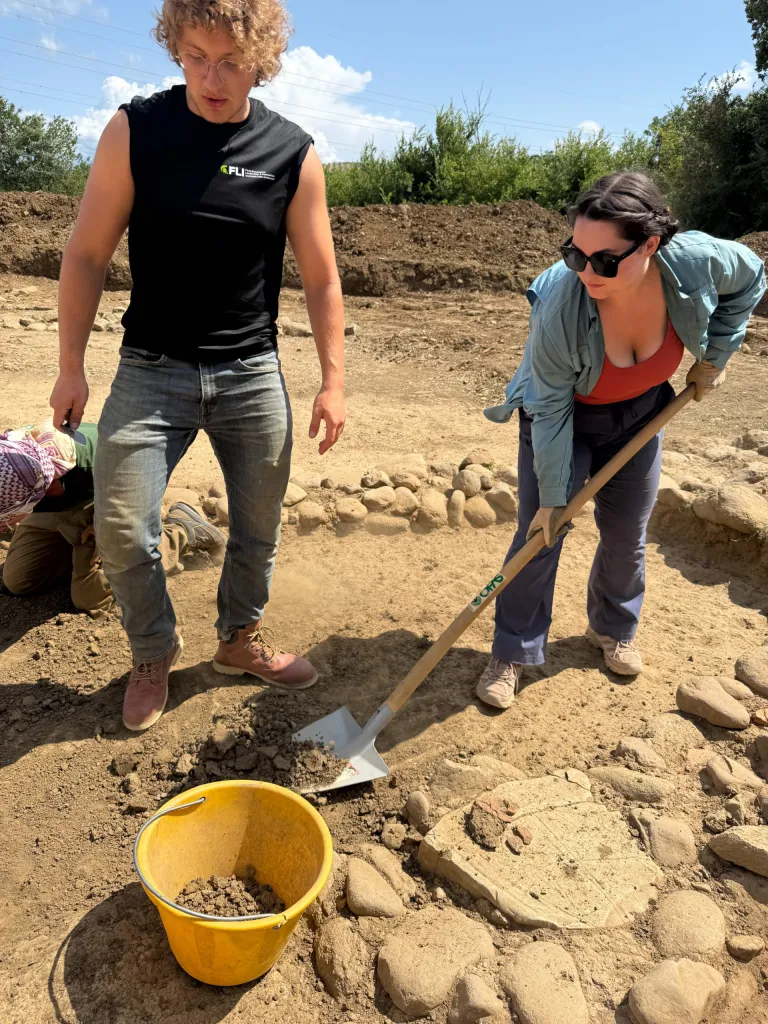
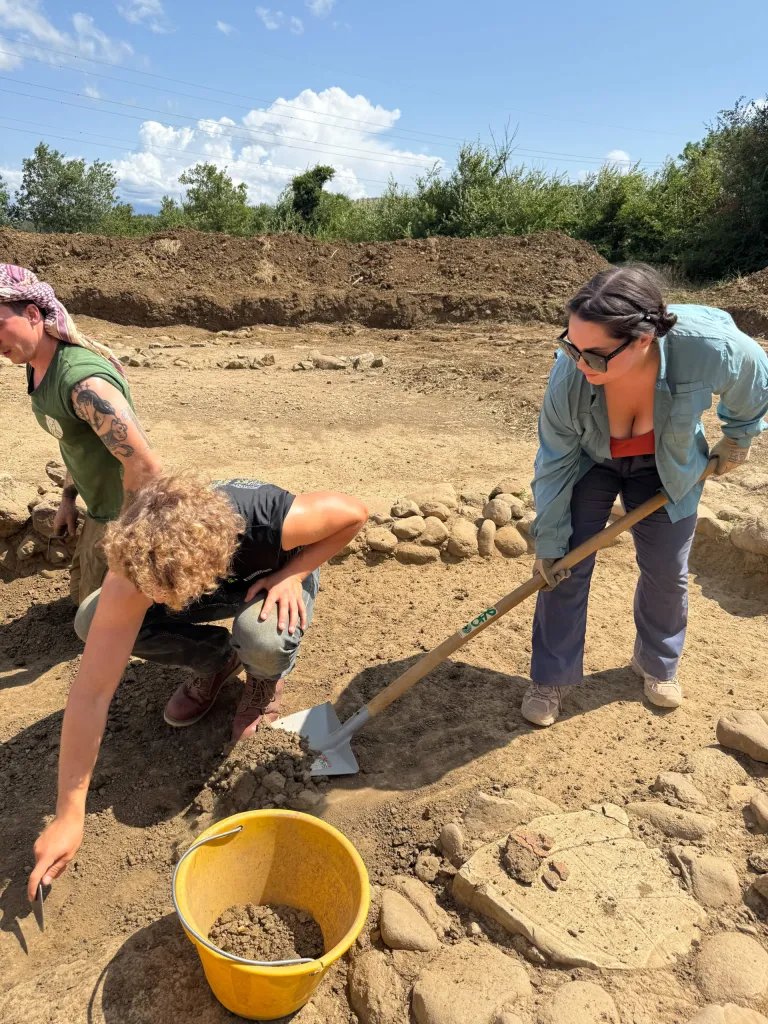
Students working at dig site.
Did you gain any new skills or insights that you’ll use in your future studies or career?
This experience significantly deepened my understanding of archaeological practices while also equipping me with transferable skills that I can use beyond the field. I’ve grown more confident in how I communicate about my work and engage with others professionally. Additionally, I built several relationships with both staff and students, expanding my network of social scientists and potential research collaborators.
Do you have a favorite memory from your time in Tuscany you would like to share?

One of my favorite memories was spending weekends cooking with my roommates or staying up late talking with everyone in someone’s apartment. Those small, everyday moments brought a real sense of community to the experience. They gave me a chance to learn so much about my fellow students and friends.
Is there anything else you’d like to share?
Archaeology is hard—but it is incredibly rewarding to see the physical work you have done. Being part of something bigger than yourself, something that will continue years after graduation is a truly surreal and humbling experience. If you’re a student even slightly curious about archaeology, I encourage you to explore it! It’s a multidisciplinary field filled with so many wonderful people.
By Louise Henderson