Sabrina Perlman, ANP graduate student, has won the Rita S. Gallin award for Best Graduate Student Paper from the Center for Gender in Global Context (GenCen). Her award-winning paper is entitled “Native American Women and Diabetes: Voices in Suffering and Solutions.”
-
Professor Emeritus Dr. Charles E. Cleland receives 2012 Midwest Archaeological Conference Distinguished Career Award
Professor Emeritus Dr. Charles E. Cleland received the 2012 Midwest Archaeological Conference Distinguished Career Award http://www.midwestarchaeology.org/distinguished-career-award/ from outgoing President George Milner at the Annual Business Meeting. Last year’s recipient was Department of Anthropology Professor, Dr. William A. Lovis.
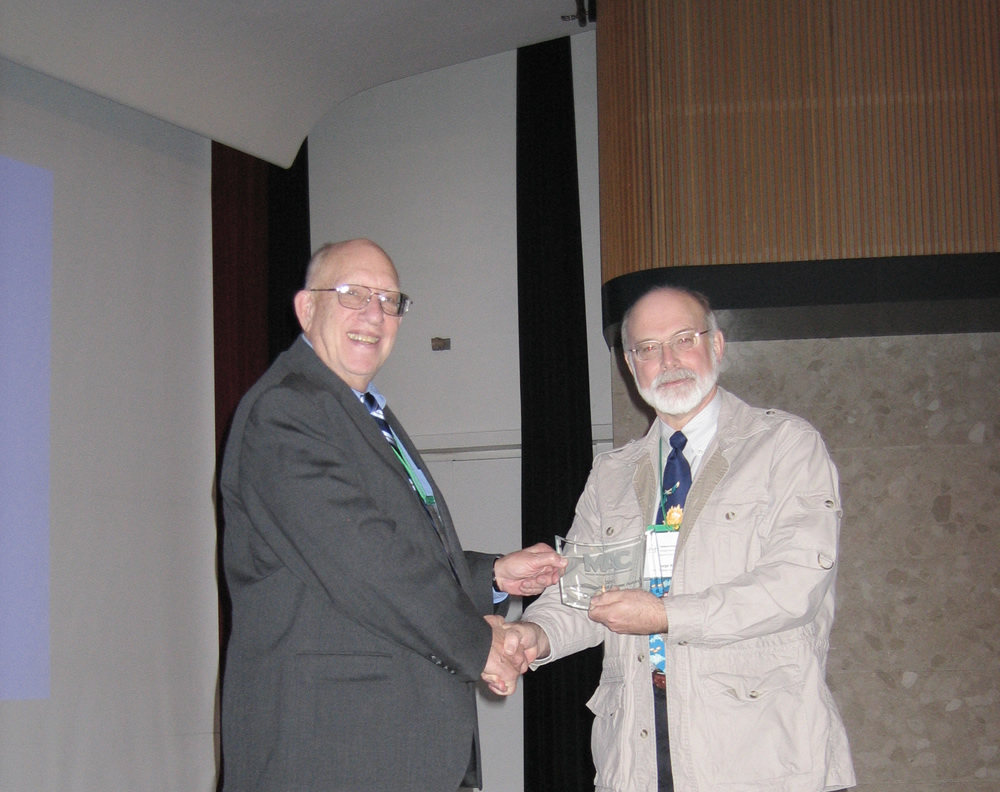
MSU Department of Anthropology Professor Emeritus Dr. Charles E. Cleland receives 2012 Midwest Archaeological Conference Distinguished Career Award from George Milner -
Andy Upton (ANP Graduate Student) on winning 2nd place in the Annual Student Paper Competition at the 2012 Midwest Archaeological Conference
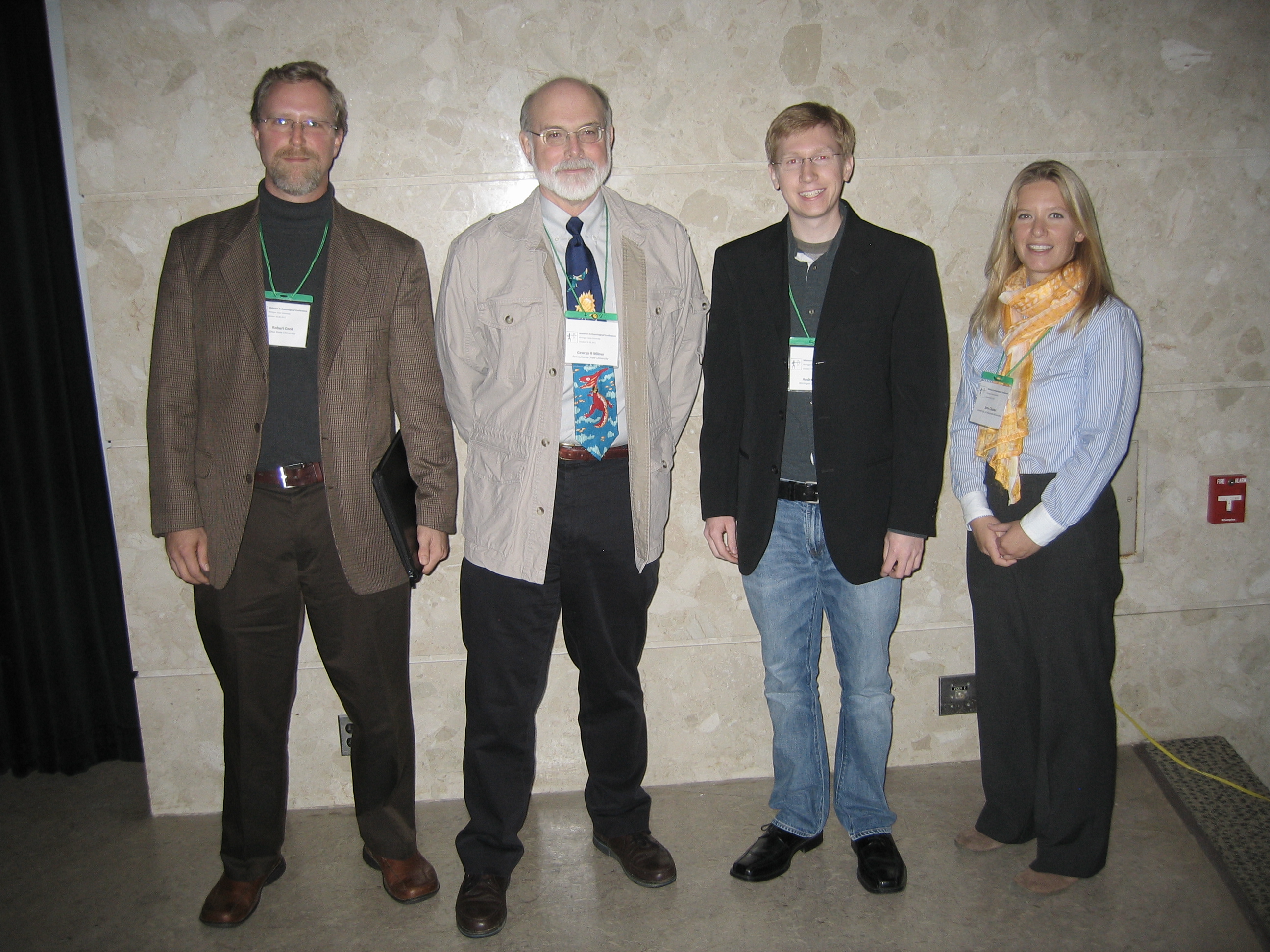
Congratulations to Andy Upton (Department of Anthropology PhD Student) who was awarded 2nd place in the Annual Student Paper Competition for his paper entitled: “Preliminary Testing of the Efficacy of Shell Tempering as a Proto-Hominy Processor.”

Andy Upton pictured (third from left) at 2012 Midwestern Archaeological Conference -
Sylvia Deskaj Receives AIA Graduate Student Travel Award
Sylvia Deskaj (Ph.D. Candidate) has been awarded an Archaeological Institute of America Graduate Student Travel Award. Sylvia will give a paper presentation at the 2013 Archaeological Institute of America (AIA) and the American Philological Association (APA) Joint Annual Meeting in Seattle, Washington. She will present a paper (co-authored by Dr. Anastasia Papathanasiou, Greek Ministry of Culture) entitled “Spatial Analysis of the Neolithic Mortuary Landscape at Alepotrypa Cave, Greece” in the session entitled “Mani: The DIROS Project and Alepotrypa Cave.” Last summer, Sylvia began work on the DIROS project in Greece, focusing on the massive Neolithic cave complex called Alepotrypa (Fox Hole), where she is studying the distribution of 100s of pieces of scattered human bone.
-
Fall 2012 – Newsletter
Great news – The Fall 2012 issue of the Department of Anthropology’s newsletter is out!
-
Department Involvement in Major Conferences – 2012
72nd Annual Meeting of
The Society for Applied Anthropology (SFAA)
-Baltimore, MD; March 27 – 31, 2012

Emily Altimare, graduate student, gave the following paper presentation: “Living and Learning: Exploring Education in a Residential College Setting.”
Dr. Keri Brondo (ANP alum) gave the following paper presentation: “A Vacation of Mud, Blood, and Sweat: Voluntouring to Save the Swamper (PESO)” and co-authored the following paper: “Urban Danger”: Greenlines, Greenways, and Cycling Lanes in Memphis, TN.”
Seven Bryant, Ph.D. Candidate, presented the following paper: “Entering the Fight: The Research of Dog Fighting.”
Dr. Andrea Freidus (ANP alum) co-authored the following paper presentation: “An Internal Brain Drain: The Urbanization of Malawi’s Most Qualified Health Personnel.”
Linda Gordon, graduate student, gave the following paper presentation: “When Is Enough, Enough?: Broad Considerations of Participant Compensation in Anthropological Practice.”
Dr. Linda Hunt gave the following paper presentation: “On Becoming a Chronic Health Care Consumer: Diagnosis and Treatment of Chronic Illness among Hispanic Immigrants in the U.S.”
Dr. Monir Moniruzzaman gave the following paper presentation: “Organ Maladies in Bangladesh: Silence of the Neoliberal State.”
Marcy Hessling O’Neil, Ph.D. Candidate, gave the following paper presentation: “My Dorm Room Is My Sanctuary: Campus Living at the University of Abomey-Calavi, Benin, West Africa.”
Fayana Richards, graduate student, gave the following paper presentation: “Navigating the Applied Terrain: Notes from an Anthropologist on Activism and Constructing a Professional Identity.”
Fredy Rodriguez-Mejia, Ph.D. Candidate, co-authored the following paper: “Fragile Memories: The Role of a Collaborative Initiative in Forging Collective Ethnic Identities.”
81st Annual Meeting of the American Association of
Physical Anthropologists (AAPA)
-Portland, OR; April 11 – 14, 2012
Graduate students Julie Fleischman, Emily Niespodziewanski, Ashley Kendell, and Dr. Angela Soler (ANP alum) co-authored the following paper presentation: “An example of ischiopubic hypoplasia in medieval Nubia.”
Dr. Masako Fujita co-authored the following paper presentation: “In poor families mothers’ milk is richer for daughters than sons: an example of Trivers-Willard effects on mother’s milk in northern Kenya.”
Dr. Lindsey Jenny, ANP alum, presented the following paper: “The spatial distribution of skeletal stress indicators in a 4th century Romano-British sample: a study using ArcGIS.”
Dr. Nicholas V. Passalacqua (ANP alum) co-authored the following paper presentation: “Investigation into human sacral fusion with regard to skeletal age.”
Dr. Angela Soler (ANP alum), Carolyn Hurst (Ph.D. Candidate), and Dr. Todd Fenton co-authored the following paper presentation: “The Mis Island Medieval Nubian Skeletal Collection at Michigan State University.”
Graduate students Jennifer Vollner and Carolyn Hurst (Ph.D. Candidate), along with Dr. Todd Fenton, co-authored the following presentation: “Mortuary practices of a medieval cemetery in southern Italy.”
77th Annual Meeting of
The Society for American Archaeology (SAA)
-Memphis, TN; April 18 – 22, 2012

Dr. Jennifer Bengtson presented a paper co-authored by Dr. Jodie O’Gorman and Ryan M. Tubbs, Ph.D. Candidate, entitled: “Impacts of Social Interaction among Women in the Past: A Central Illinois River Valley Case Study.”
Soon-to-be-Dr. Charlotte Cable presented a poster entitled: “A Multitude of Monuments: Characterizing and Interpreting the Distribution of 3rd Millennium BC Monuments in North – Central Oman.”
Adrianne Daggett, Ph.D. Candidate, presented a poster entitled: “Preliminary Spatial Analysis of Early Agricultural Settlements at Sowa Pan, Botswana.”
Sylvia Deskaj, Ph.D. Candidate, organized and chaired a symposium entitled: “Recent Trends in Albanian Archaeology: A Decade in Review.” Sylvia also presented a co-authored paper in this symposium entitled: “The 2011 Field Season of the Projekti Arkeologjikë Shkodrës.” A total of nine scholars from both American and European universities participated.
Sean Dunham, Ph.D. Candidate, presented his SAA award-winning paper entitled: “Late Woodland Landscapes in the Eastern Upper Peninsula of Michigan.”
Dr. Sarah Surface – Evans, an MSU alum, co-organized and co-chaired a symposium entitled: “Resources, Networks, Landscapes, and Family: Recent Directions in Hunter-Gatherer Research.” In this symposium, Dr. Marieka Brouwer (MSU alum) presented a paper entitled: “Dynamic Landscapes, Dynamic Decision-Making: Hunter-Gatherer Land Use Strategies in the Central River Valley of the Netherlands.” Also in this symposium, Dr. William A. Lovis presented a paper entitled: “Network Maintenance in Big Rough Spaces with Few People: The Labrador Naskapi or Inuu.”
Kate Frederick, graduate student, presented a co-authored poster entitled: “When the Wild Strawberries are in Bloom: Pre – Contact Food Caching in Northern Michigan.”
Katy Meyers, graduate student, presented a paper entitled: “Co-Occurrence of Cremation and Inhumation in Cemeteries: A Case Study at Isola Sacra, Italy.”
Amy Michael, Ph.D. Candidate, presented a co-authored paper entitled: “Mortuary Patterns and Use of Space at the Sapodilla Rockshelter, Belize.” This paper was co-authored with Dr. Gabe Wrobel et al.
Dr. Helen Pollard presented a paper entitled: “Ruling ‘Purépecha Chichimeca’ in a Tarascan World.”
Dr. Duane Quates (ANP alum) presented a co-authored paper entitled: “The Magic Box and the Gravestones of the Displaced: Using Remote Sensing for the Enhancement, Inventory, and Public Investment of the Historic Fort Drum Cemeteries.”
Frank Raslich, graduate student, presented a paper entitled “Testing Applications of LA – ICP – MS in Lithic Analysis.”
Dr. Maria Raviele, MSU alum, co-organized a symposium entitled: “Reflecting on the Role of Women in Archaeology.” In addition, Maria presented a poster entitled “Winter, Spring, Summer, or Fall?: Palynological Evidence for Seasonal Mound Construction of Angel Mound A.”
Karin Rebnegger, Ph.D. Candidate, and MSU Alum Dr. Amy Hirshman co-organized and co-chaired a symposium entitled: “Mesoamerican Tarascans, Their Forbearers and Neighbors: Essays in Honor of Helen Pollard.” Karin presented a paper in this symposium entitled: “Obsidian Sources used by the Tarascan Empire Elites and Commoners in the Pátzcuaro Basin, Michoacán, Mexico.” Christopher Stawski, Ph.D. Candidate, authored a paper entitled: “Modeling Settlement in the Prehispanic Lake Pátzcuaro Basin, Michoacán, Mexico.”
Dr. Beverley Smith, MSU alum, organized and chaired a symposium entitled: “Stone Street Ancestral Recovery & Reburial Project, Flint, MI.” In this symposium, Nicole Raslich, graduate student, presented a paper entitled: “Artifact Analysis of Stone Street Burial Ground.” Frank Raslich, graduate student, co-authored a paper entitled: “Mitigation through Collaboration.”
Andy Upton, graduate student, presented a paper co-authored by Dr. Jodie O’Gorman entitled: “A Statistical Approach to Mississippian and Oneota Ceramics at Morton Village.”
Dr. Ethan Watrall was a discussant in a forum entitled: “Capacity-Building for Archaeology in the 21st Century: How Will People Manage the Information Explosion?”
111th Annual Meeting of the American
Anthropological Association (AAA)
-San Francisco, CA; November 14 – 18, 2012

Dr. Marietta L. Baba gave the following paper presentations: “Business, Organizational, and Institutional Anthropology: A Century of Anthropology in the Making”; and “Negotiating Boundaries in an Institutional Field.” Dr. Baba was a discussant in the following session: “Work and Migration: Global Borders as Barriers and Bridges”; in this session, she was the co-author of the following paper presentation: “Labor Migration and Language Policy in Practice: A Process of Re-Bordering.”
Soon-to-be Dr. Charlotte Marie Cable presented the following paper: “Permanence and Impermanence: Structuring Social and Spatial Identity In Ancient Oman.”
Dr. Anne Ferguson was the Chair of the following session: “Global Shifts: Water Politics, Water Rights and Environmental Justice in the Era of Climate Change”; she also gave a paper presentation in that same session, entitled: “Malawi’s Shifting Water Policies: Implications for Women’s Rights.”
Dr. Andrea L. Freidus (ANP alum) gave the following paper presentation: “Children and Pageantry: Gendered and Childhood Constructions In the Learning Channel’s Toddlers In Tiaras.”
Dr. Lynne Goldstein organized and presented in the following workshop: “How to Find an Academic Job.”
Dr. Najib B. Hourani gave the following paper presentation: “Hizballah’s Promise: An Urbanism of Resistance?” In addition, he was the Chair and Discussant of the following session:“Of People and Things: Historical Anthropologies of Law and Landed Property in the Contemporary Middle East.”
Dr. Linda M. Hunt co-authored the following paper presentation: “Genes, Class and Culture In Primary Care: Clinical Profiling of Latin American and African American Patients.”
Anna Jefferson, Ph.D. Candidate, presented the following: “Who’s the Investor?” Financialization, Debt, and Ownership in Mortgage Modification Programs.
Rowenn Kalman, Ph.D. Candidate, co-organized the following session: “Andean Encounters Across Difference: New Frontiers, Familiar Stories?” In addition, she gave a paper in that session, entitled: “Environmental Promoters and Contemporary Cosmovisions: Cultivating ‘conciencia’ In Ancash, Peru.”
Tazin R. Karim, Ph.D. Candidate, was the Chair of the following session: “Drug AB/Use: Border Constructions and Crossings in the Anthropology of Psychoactive Substances.” In this session, she gave the following paper presentation: “The Moral Economies of Adderall: Reshaping Health and Performance in the American University.” In addition, Taz was also the Chair of “Alcohol, Drugs & Tobacco Study Group Business Meeting” and co-organizer of “Anxieties and Vantage Points: Drug Use Between the Boundaries of Moralized Health Discourses.”
Dr. Andrea Louie was the Chair of the following session: “Transformations in Chinese Views of the World and the World’s Views of China”; in that session, she gave the following paper: “How Adoptive Parents From the US See China and Chinese Culture.”
Dr. Laurie K. Medina gave the following paper presentation: “Environmental Government, Sovereignty, and the ‘truth of the Market’”
Dr. Mindy J. Morgan gave the following paper presentation: “Genre Bending and the Creation of Indigeneity In Indians At Work, 1933-1945.”
Dr. John Norder was a discussant for the following session: “Indigenous Spaces: Pushing the Borders and Boundaries of Histories, Bodies, Geography and Politics.”
Dr. Brandt G. Peterson presented the following paper: “Indigenismo’s Activist Turn: Anthropologists and the Government of Culture In Mexico, c. 1970.”
Fayana Richards, graduate student, presented the following paper: “Life for Me Ain’t Been No Crystal Stair: Chronic Illness Management Among African American Women In Detroit, Michigan.”
Dr. Chantal M. Tetreault presented the following paper: “What Do You Think about Having Beauty Marks On Your–Hashek!”: Innovative and Impolite Uses of An Arabic Politeness Formula Among French Teens. She was also a discussant for the following session: “Beyond Borders and Crossings: Hybridity and Fluidity in Physical and Ideological Boundaries.”
Heather M Yocum, Ph.D. Candidate, gave the following paper presentation: “It Becomes Scientific”: Creating REDD+ Projects in Malawi’s Protected Areas.
Meryem Zaman, Ph.D. Candidate, gave the following paper presentation: “Transforming Discourses: Sacred Stories, Islamic Revivalist Movements and Women.”
-
Najib Hourani
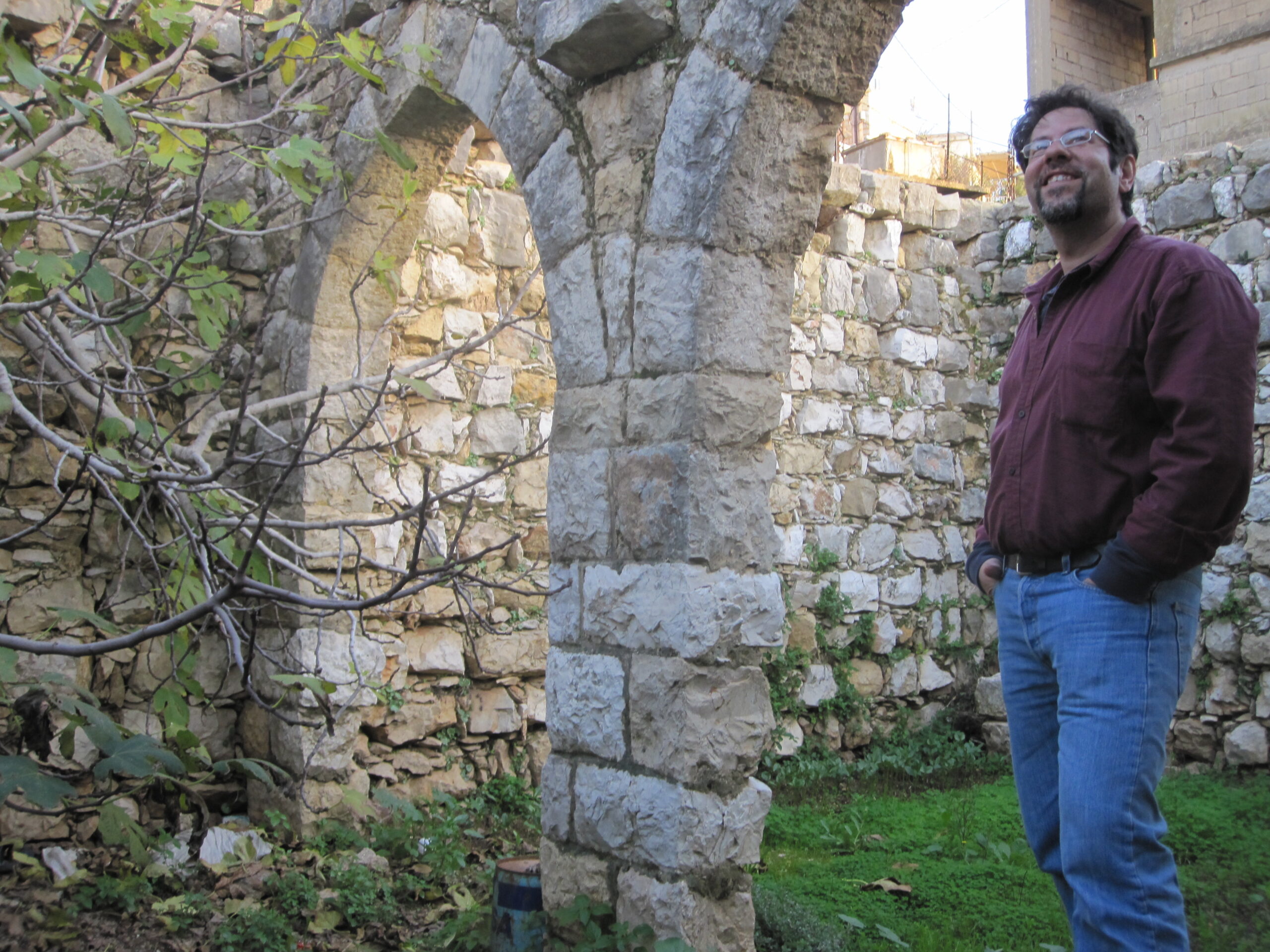
 As an Assistant Professor appointed in Anthropology and the graduate Global Urban Studies Program (GUSP), Najib Hourani’s research and teaching reflects the commitment of both the College of Social Science and the Department of Anthropology to furthering interdisciplinary research at MSU. Trained in Middle East Politics (PhD NYU, 2005), and having taught History at Fordham University and International Affairs at the New School, Dr. Hourani engages in historically-anchored research that addresses the larger questions anthropologists today ask concerning the formation and transformation of cities, states and economies in post-colonial settings. “I feel lucky to work and teach at MSU,” Hourani says. “GUSP has been wonderfully supportive, and I am constantly impressed by my colleagues in Anthropology, who are doing research that is cutting edge in terms of the field and relevant to real world issues.”
Hourani’s primary research – in urban anthropology – examines the internal relations between the political and the economic in the production of space, place and power. He draws upon tensions between political economy approaches, Foucault’s notion of governmentality and Actor-Network Theory’s concept of assemblage to investigate why neoliberal policies – such as those the World Bank and USAID advocate – not only fail to bring about the promised prosperity, but actually strengthen decidedly illiberal politico-economic forces instead. His work on neoliberal landscapes of consumption in Beirut and Amman – shopping malls and other elite enclaves – reveals that these are not simply “deterritorialized” spaces of global capital. Rather, he shows, they are produced by and, in turn, productive of powerful oligarchic networks that operate within Lebanon and Jordan and across the region. It is precisely the struggle against such ‘territorialized’ forces, Hourani argues, that animates the Arab Uprisings today.
While Hourani has been busy writing and lecturing on the Arab Uprisings, his focus remains upon the urban agenda. In addition to a book chapter appearing in Peterson and McDonogh’s Global Downtowns (2011), he is co-editing, with Ahmed Kanna (Anthropology, University of the Pacific) a special issue of the Journal of Urban Affairs on neoliberal urbanism in the Arab World that features his most recent research on Amman. He is also co-editing a book with Edward Murphy, an Anthro-Historian (History, MSU) that explores how notions of house and home – central to internal relations between state and society and polity and economy – are pivotal in struggles for space, place and dignity in neoliberalizing cities around the world. “I was delighted that Ed asked me to help on this project. It is a fascinating topic; and never having edited a volume such as this, I have learned a great deal from him in the process.” Both projects will be published in 2013.
Hourani’s other research track, on the anthropology of civil conflict in the context of globalization, focuses on the Lebanese Civil Wars (1975-90). Rather than examining questions of sectarianism, Hourani’s work, published in The New Centennial Review, GeoPolitics, Middle East Policy and a forthcoming volume on post-conflict environments (Monk and Mundy 2013), traces the transnationalization of the militia economy through financial networks that extended from Lebanon to Europe, the Persian Gulf and the United States, and explores the role of such networks in perpetuating the conflict, and, even today, obstructing the achievement of positive peace.
-
PhD Candidate Terry Brock Launches “All of Us Will Walk Together” Digital Project
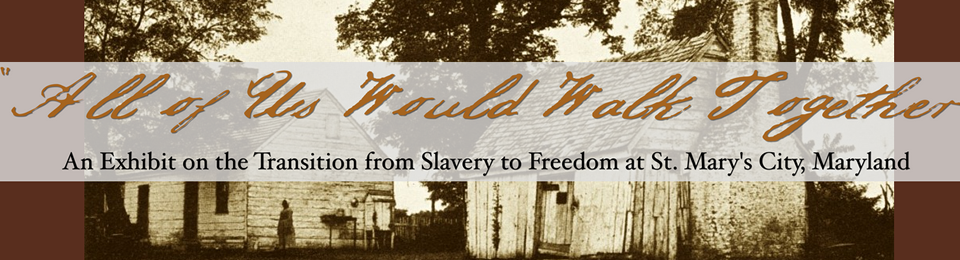
Although most people think of 17th-century archaeology when they think of St. Mary’s City, its space contains many more stories from later eras. One is the 19th-century story of slavery and freedom at a large slave plantation. This story is being told on a digital exhibit and blog, All of Us Will Walk Together (www.stmaryscity.org/walktogether), published by MSU Department of Anthropology PhD candidate Terry Peterkin Brock. Support for the project has been generously provided by the National Trust for Historic Preservation, the Ford Foundation, and the SRI Foundation.
Brock is studying the lives of the slaves and tenant farmers who live at the St. Mary’s Manor Plantation, which stood in what once was the heart of St. Mary’s City. Brock is conducting the research project under the direction of Historic St. Mary’s City’s Director of Research, Henry Miller, who received his PhD from MSU’s Anthropology Program in 1984. His objective is to open a window into lives that have been often neglected in the history of St. Mary’s City, yet were vital to the sustainability of its land and people. Brock traces these African American laborers from the erection of the slave quarters in 1840, through the Civil War, and into the post-slavery era, where they lived and worked as tenant farmers. One building, a duplex quarter, continued to serve as a tenant home until 1950. St. Mary’s City is currently in the process of turning this structure into a physical exhibit through funding from the Maryland Commission on African American History and Culture and the Maryland Historical Trust. The digital exhibit and blog will include a discussion of the process.
Visit All of Us Will Walk Together to see the findings of Brock’s research and learn about how researchers use archaeology, history, and preservation to discover the African American past. The website and blog are designed for audience participation: please comment and ask questions on the site, and learn how you can participate by sharing your stories, see if you are a descendant of those who lived on the plantation, or help to preserve the duplex quarter. Follow the project on Twitter at @WalkTogethr
-
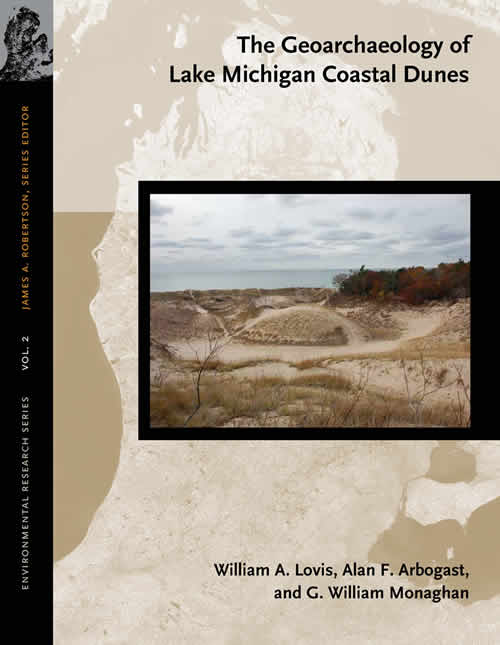
New Book published by Dr William Lovis – The Geoarchaeology of Lake Michigan Coastal Dunes
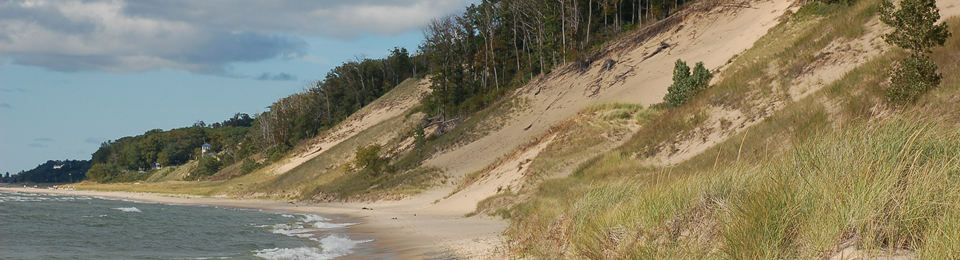

The Geoarchaeology of Lake Michigan Coastal Dunes, the recently released book coauthored by Drs. William Lovis (MSU Anthropology), Alan Arbogast (MSU Geography), and G. William Monaghan (Indiana University), is the culmination of almost seven years of research and writing. Published in the Michigan Department of Transportation Environmental Series, edited by MSU alumnus James Robertson, and produced by MSU Press, the volume explores the taphonomy and differential temporal and spatial preservation of archaeological sites in the Lake Michigan coastal dunes. The research employed innovative approaches to paleoenvironmental reconstruction focusing on the relationship between changing climate and the activation of coastal sand supply. With funding from the Intermodal Surface Transportation Enhancement Act or ISTEA, through the Michigan Department of Transportation, the research reported in this book has significant policy implications for land managers responsible for the protection of Michigan’s archaeological and heritage resources on public lands at the Federal, State, and more local levels. The research complements prior work by Lovis and colleagues on site preservation on the alluvial floodplains of southern Michigan.
-
Anthropology PhD Student Meskerem Glegziabher awarded a Fulbright-Hays Doctoral Dissertation Research Abroad
The Department of Anthropology is very pleased to announce that PhD Student Meskerem Glegziabher has been awarded a Fulbright-Hays Doctoral Dissertation Research Abroad award
Her research project is entitled “India Rising: Understanding Development, Gender and Urban Poverty Alleviation in Delhi’s Jhuggi Jhopris.” She will be conducting ethnographic and archival research in Delhi, India and will examine contemporary development and women’s empowerment initiatives that target Delhi’s slums by government agencies and NGOs and examining how understandings and applications of broader notions of gender, identity, and belonging bear upon the structure of these development initiatives and how such understandings rest upon and engender differential conceptions of citizenship in Delhi and impact ultimate access to public space and basic resources.