Department of Anthropology Ph.D. Student Grace Shu Gerloff published an op-ed in the special issue of the Alliance for the Study of Adoption and Culture journal, Adoption and Culture. The op-ed, titled, “Beyond Feelings: What’s Missing from Trauma-Centered Adoption Narratives,” problematizes overly pathological framings of adoption and encourages consideration for the ways adoption—and trauma—exist as products of institutional failures.
Abstract:Many have criticized adoption as an abortion alternative due to the emotional trauma involved. However, these critiques often miss a more concerning aspect of adoption: what factors produce “adoptable” children? This essay problematizes overly pathological framings of adoption and encourages consideration for the ways adoption—and trauma—exist as products of institutional failures.
The Department of Anthropology is pleased to announce that Associate Professor Dr. Ethan Watrall has been named a Fellow of the Society of Antiquaries.
Founded in 1707 and granted a royal charter in 1751, the Society of Antiquaries is based in London and charged with furthering the study and preservation of heritage and archaeology in Britain and around the world.
The Society’s 3000 elected members include some of the most prominent scholars and professionals in heritage and archaeology, national museum directors, curators, directors of heritage preservation trusts and non-profits, and members of the UK parliament.
Fellows are nominated internally and elected by existing members of the Society in recognition of their significant achievement in the fields of heritage and archaeology and are entitled to use the initials FSA after their names.
Dr. Watrall was nominated and elected in recognition of his work in publicly engaged digital heritage, digital preservation in heritage and archaeology, and digital museum collections.
Dr. Watrall is the first and only Fellow elected from Michigan State University.
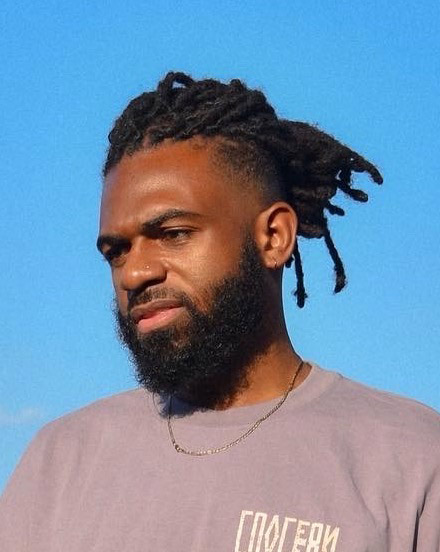
The MSU Department of Anthropology welcomes Dr. Ampson Hagan as their new College of Social Science Dean’s Research Associate. Dr. Hagan earned his PhD in anthropology from University of North Carolina Chapel Hill and joined MSU in fall semester 2022.
“I applied to the College of Social Science Dean’s Research Associate Program at MSU because it looked like it was one of a kind,” he said. “The dedication to supporting and nurturing scholars from diverse backgrounds caught my eye, and the program’s commitment to doing the work of putting scholars in positions to succeed, with institutional resources, intrigued me.”
Dr. Hagan’s research interests surround humanitarianism and rescue, broadly focusing on how Black African migrants crossing the Sahara Desert encounter and navigate the humanitarian and policing nexus that seeks to intercept them.
He grew up watching cartoons where superheroes saved others, and then he worked in large NGOs in which people engaged in heroic acts of humanitarianism and rescue. In 2015, during his PhD research at UNC, he often saw news reports of African migrants getting stranded and shipwrecked in the Mediterranean.
“I began to wonder about the paths they took to reach the sea, and I began to see more reports of migrants stuck in the Sahara. After reading about humanitarianism in the Sahara and other regions of Niger and Algeria, I decided to go and see what I could learn about the lives of migrants in those countries.”
Over the course of 12 months of ethnographic research with unauthorized migrants and inside a migrant camp in Niger, this research is the body of his dissertation, Deserving Humans in the Desert: How Black trans-Saharan Migrants Experience the Logics of Liberal Humanism via Humanitarian Care in Transit.
He has ambivalences towards the field of humanitarianism, as well as the practice of rescue.
“The inherent politics of both are complex and involve contradictions to their stated goals,” he said. “Articulating those politics and contradictions is something I think is incredibly important. That would allow stakeholders, organizations, and governments to speak more openly and think more critically about how concepts of humanity, and understandings of who is considered human, are at stake in humanitarian rescue operations and structures.”
He thinks that the rescue as a concept needs to be critically analyzed as a tool that reflects who is worthy of being saved and who is not and that these issues are important for anthropology and for society to consider.
“I hope that others continue to question the concepts of rescue and humanitarianism on their ‘human’ grounds. A humanitarianism that fails to influence or even attempt to improve the abject and dangerous conditions that humans face, is a failure to intervene in crisis. What does that say about humanitarianism? About rescue? I want this research and its fundamental questions to exist in conversations outside of my narrow slice of academic discourse.”
In spring, he will teach ANP 330 Race, Ethnicity and Nation, and this semester, he’s focusing on writing.
“As a very new member of the department, my most meaningful experiences have been all the support from my colleagues, and all the time I have had to write!” he said.
Dr. Hagan joins the department of Anthropology as a Dean’s Research Associate, a program established in 2018 aimed at promoting an inclusive scholarly environment in which outstanding scholars in the social sciences support the advancement of diversity, equity and inclusion in the academy.
“We’re delighted that Dr. Hagan has joined our faculty and we are excited about the important perspectives and dynamic research he brings to our department,” Dr. Todd Fenton said, chair of the department.
The Dean’s Research Associates have a minimal teaching load, will be mentored and supported, and will participate in a Dean’s Research Associate Development Institute with the goal of possibly transitioning them into tenure-system positions at MSU.
“Offering more than just words, the program has put in place institutional resources that will promote the development of scholars of color, and I am excited for the opportunity to grow as a researcher and a future faculty member at MSU,” Dr. Hagan said.
In addition to his research, writing and teaching, Dr. Hagan enjoys learning new skills.
“I want to learn how to skate. I have plenty of pursuits and skills that I want to attain in the near future and learning to in-line and roller skate are important skills to learn,” he said. “Two more things: I’d like to volunteer on a farm, and I want to learn how to drive a car with a manual transmission.”
To learn more about Dr. Hagan, visit https://anthropology.msu.edu/author/haganam1/.
Caption: The MSU Forensic Anthropology Lab facilitated a training session in Lansing for members of the Michigan State Police force. The training involved how to properly excavate and handle remains. The skeletons used for the training were made of plastic. Photo credit: Jacqueline Hawthorne, MSU College of Social Science photographer.
In September, the MSU Department of Anthropology offered their four-day, Human Remains Excavation Course for Michigan State Police officers and laboratory personnel.
“This training is important for us to expand our skillset and provide the best and highest quality response for the community,” Christina Rasmussen said. She works for the Michigan State Police in the Lansing Forensic Lab and was one of 17 participants in the training.
This training provides an overview of how forensic anthropology can contribute to investigating deaths, and the appropriate methods investigators should follow when they are searching for and recovering actual human remains (although the skeletons used for training are made of plastic).
“This training is important, as service to the community is a pillar of our practice,” Dr. Carolyn Isaac said. She is an assistant professor in the Department of Anthropology in the College of Social Science, and the director of the MSU Forensic Anthropology Laboratory (MSUFAL). She collaborated with Anthropology Associate Professor Joe Hefner, PhD., on the training, in addition to receiving help from graduate students including Rhian Dunn, Micayla Spiros, Clara Devota, and Holly Long.
“We often partner with law enforcement to aid in the search and recovery of human remains and it is essential that we all understand the appropriate techniques to ensure all of the skeletal remains and evidence at the scene are collected. We also want to create relationships with our law enforcement colleagues so they know they can call us to assist in such recoveries.”
The training includes a combination of lectures and hands-on experience. Lectures feature topics such as how to assess sex, age, ancestry, and stature from skeletal remains; identifications using comparative radiography, skeletal trauma analysis; and forensic archaeology.
The department also provides a hands-on osteology (bone) laboratory so participants can try to identify the various features of the biological profile in the skeletal remains.
One afternoon is dedicated to forensic entomology (how the study of insects can contribute to the death investigation) and a field demonstration of decomposition and the collection of insects of interest. Ryan Kimbirauskas, PhD, a board-certified forensic entomologist and MSU faculty in the Center for Integrative Studies in General Science hosted this part of the training.
“On the third day (excavation day) teams search for, systematically excavate, recover, and document simulated clandestine burials (plastic skeletons that we buried back in May),” Dr. Isaac said. “From this exercise, they prepare presentations on their excavations and present them on the last day.”
Caption: The MSU Forensic Anthropology Lab facilitated a training session in Lansing for members of the Michigan State Police force. The training involved how to properly excavate and handle remains. The skeletons used for the training were made of plastic. Photo credit: Jacqueline Hawthorne, MSU College of Social Science photographer.
On excavation day, participants are divided into a number of teams to perform line searches and probing to detect where the simulated clandestine burials are located. Once the burial locations have been determined, they begin the systematic excavation, ensuring thorough mapping and photography of the process are completed.
“The goal is to expose the skeleton to understand the position of the remains and any associated evidence when they were placed into the ground,” Dr. Isaac explained. “During this process they learn how to detect clandestine graves or soil disturbances, utilize soil probes to determine the outline of the burial, set up a grid over the burial for mapping, carefully remove soil from above the remains to ensure they are not disturbed, screen soil to find any small portions of bones or evidence, pedestal the bones (i.e. removing enough soil to expose the bones but not too much where they will fall out of place), and how to take coordinates of the skeletal remains to produce a map for documentation purposes.”
For Rasmussen, one key takeaway was the need to approach each scene differently but collaboratively.
“I learned the importance of being creative and innovative since each scene is different,” she said. “Working together as a team is the only way to effectively process a scene.”
The Human Remains Excavation course has a rich and long history that spans several decades. The training course was established by Dr. Norm Sauer, founder of the MSU Forensic Anthropology Laboratory, back in the 1990s, and it continued when Dr. Todd Fenton took over the directorship of the lab in 2012.
“The MSUFAL relationship with the MSP has been around for a long time and represents years of working together on complex forensic recoveries, death investigations ranging from suspicious deaths to multiple homicides, and everything in between,” Dr. Hefner said. “We are fortunate to have such a strong bond with the state law enforcement, and these courses provide us an opportunity to give back to the community outside of our normal academic duties.” To learn more about the MSU Forensic Anthropology Lab, visit anthropology.msu.edu.
Department of Anthropology Ph.D. student Aubree Marshall and co-authors Jessica S. Wollmann (Radford University, University of Toronto), McKenzie Schrank (Radford University, University of Colorado), and Laura Tobias Gruss (Radford University) published in the American Journal of Biological Anthropology. The title of the article is “Tibial torsion and pressures in the feet during walking: Implications for patterns of metatarsal robusticity.” This article presents the result of six years of research conducted through the Biomechanics Lab at Radford University. This research explored the relationship between tibial torsion and foot angle during standing and walking, and how the findings compared to the metatarsal robusticity found at the site of Dmanisi.
Objectives: The Dmanisi Homo fossils include a tibia with a low degree of torsion and metatarsals with a pattern of robusticity differing from modern humans. It has been proposed that low tibial torsion would cause a low foot progression angle (FPA) in walking, and consequently increased force applied to the medial rays. This could explain the more robust MT III and IV from Dmanisi. Here we experimentally tested these hypothesized biomechanical relationships in living human subjects.
Materials and Methods: We measured transmalleolar axis (TMA, a proxy for tibial torsion), FPA, and plantar pressure distributions during walking in young men (n=40). TMA was measured externally using a newly developed method. A pressure mat recorded FPA and pressure under the metatarsal heads (MT I vs. MT II–IV vs. MT V).
Results: TMA is positively correlated with FPA, but only in the right foot. Plantar pressure under MT II–IV does increase with lower TMA, as predicted, but FPA does not affect pressure. Body mass index also influenced plantar pressure distribution.
Discussion: Lower tibial torsion in humans is associated with slightly increased pressures along the middle rays of the foot during walking, but not because of changes in FPA. Therefore, it is possible that the low degree of torsion in the Dmanisi Homo tibia is related to the unusual pattern of robusticity in the associated metatarsals, but the mechanism behind this relationship is unclear. Future work will explore TMA, FPA, and plantar pressures during running.
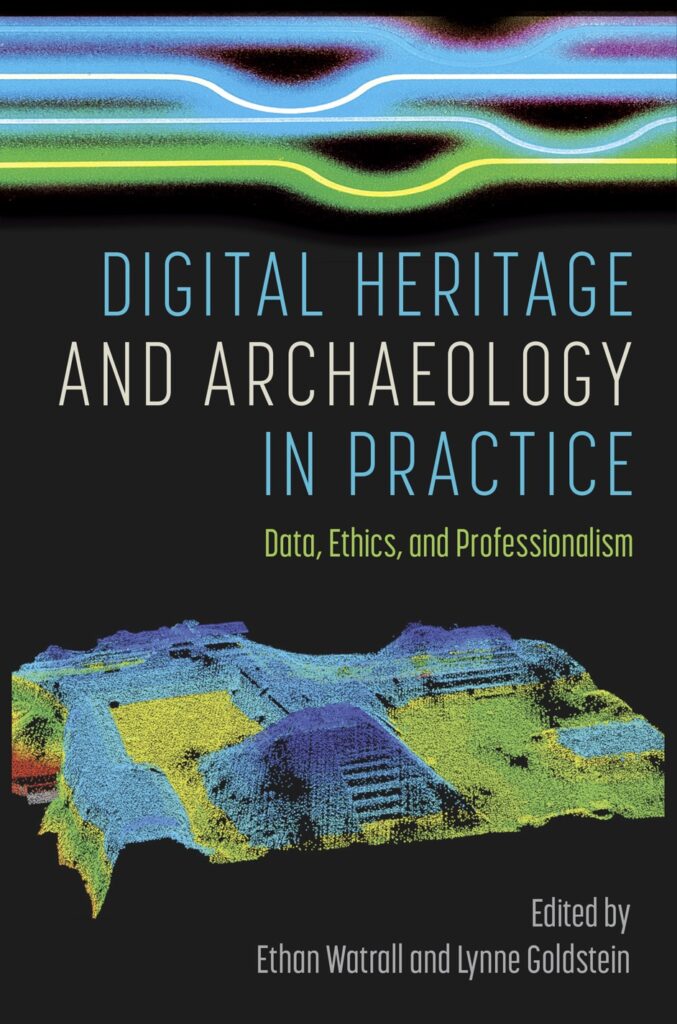
The Department of Anthropology is pleased to announce that Associate Professor Dr. Ethan Watrall and Professor Emerita Dr. Lynne Goldstein have published two edited volumes with the University Press Florida on Digital Heritage and Archaeology – Digital Heritage and Archaeology in Practice: Presentation, Teaching, and Engagement (https://upf.com/book.asp?id=9780813069319) and Digital Heritage and Archaeology in Practice: Data, Ethics, and Professionalism (https://upf.com/book.asp?id=9780813069302)
The two volumes bring together a diverse group of archaeologists and heritage professionals from private, public, and academic settings to discuss practical applications of digital and computational approaches to the field. Contributors thoughtfully explore the diverse and exciting ways in which digital methods are being deployed in archaeological interpretation and analysis, museum collections and archives, and community engagement, as well as the unique challenges that these approaches bring. In particular, the volumes highlight the importance of community, generosity, and openness in the use of digital tools and technologies.
The volumes represent one portion of a larger project that was originally funded by a National Endowment for the Humanities Institutes for Advanced Topics in the Digital Humanities grant – The Institute for Digital Archaeology Method and Practice (digitalarchaeology.msu.edu). The institute, which was directed by Watrall and Goldstein, sought to build community and capacity among private sector, public sector, student, and scholarly archaeologists and heritage professionals around ethical, thoughtful, and practical applications of digital methods and computational approaches in archaeology and heritage. Many of the authors represented in the volumes were original institute attendees.
Dr. Masako Fujita is an Associate Professor in biological anthropology, specializing in contemporary human variation. She also directs the Biomarker Laboratory for Anthropological Research. She regularly teaches the graduate course Quantitative Methods in Anthropology and undergraduate courses such as Introduction to Physical Anthropology and Human Adaptability.
Dr. Fujita joined MSU as an Assistant Professor in 2008. She remembers that period of time as “a little hectic” because when she moved to East Lansing to join MSU Anthropology, she had submitted her final dissertation copy only about ten days prior. Even though the abrupt transition to becoming a professor was challenging, things got better over time. “I have been fortunate to work with friendly office staff, graduate assistants, and colleagues,” she says.
In terms of research, Dr. Fujita is interested in women’s health and wellness, particularly women in vulnerable life stages like pregnancy and lactation. Her research thus far has focused on maternal nutrition and health, breastfeeding, and mothers’ milk. Her Master’s research focused on the impact of sedentarization on maternal diet, nutrition, and morbidity among formerly nomadic pastoralists in northern Kenya. For her PhD dissertation, she continued with people of northern Kenya and investigated how mothers cope with food insecurity amid repeated and increasingly severe droughts.
More recently, Dr. Fujita’s research has focused more on mothers’ milk, investigating the notion of maternal buffering – “there is this assumption that mothers can maintain high-quality milk to nourish infants even under nutritional or infectious disease stress. But in some harsh environments, I feel that it is unrealistic to expect mothers to pull this off. So, I have been trying to address this question in my research, working with my collaborators”.
Dr. Fujita is excited about the current research she is involved in with her collaborators investigating iron nutrition and COVID-19 risk among healthcare workers. Iron is a vital nutrient for both humans and microorganisms. This means that humans have walked a fine line between too much iron (which can fuel infections) and too little iron (which can compromise health) through evolutionary history. Dr. Fujita and colleagues are testing the optimal iron hypothesis, predicting that having somewhat low iron in the blood will be protective against infections, including COVID-19. The research team has collected data among healthcare workers in Nigeria, and they are about to begin data analysis. She looks forward to disseminating the results from this research.
Dr. Fujita always had a passion for anthropology. She initially took an introduction to anthropology course as an elective in British Columbia and learned some fundamental concepts such as holism and ethnocentrism. She says, “I was an international student, and anthropology helped me adapt to the life in the host country. Born and raised in a more homogeneous country, it was my first time to live among people with different cultural backgrounds. Anthropology helped me navigate life.” When asked to share a piece of advice for her students, Dr. Fujita mentioned important advice she received from her loving mother: “Enjoy the process – my mother said that at her age nearing the end of life, what she has come to treasure the most is the process – being in the midst of it – rather than her achievements. Looking back at my own years as a student, I too treasure the journey part – it was lengthy and at times unsure if I would ever finish, but in hindsight those were invaluable years!”
Department of Anthropology Associate Professor Dr. Masako Fujita, Ph.D. Candidate Nerli Paredes Ruvalcaba and co-authors recently published in the American Journal of Human Biology. The article, titled, “Human milk lactoferrin variation in relation to maternal inflammation and iron deficiency in northern Kenya” explored how nutritional and disease stress among breastfeeding mothers might influence the immune content in mothers’ own milk, focusing on an iron-binding protein called lactoferrin. Lactoferrin is abundant in fluids such as saliva, tears, and milk. In milk, it serves to protect infants against infection. Lactoferrin has come under the spotlight recently because of its preventive and therapeutic potential against COVID-19 when taken as a supplement (made from cow’s milk). The study found that human milk lactoferrin content did not differ between mothers with and without iron deficiency, suggesting that mothers under nutritional stress are able to maintain their delivery of lactoferrin to infants. Moreover, the study found that mothers undergoing inflammation (likely due to infections) delivered more lactoferrin when raising younger infants than mothers without inflammation raising similarly young infants, suggesting that mothers under infectious disease stress might upregulate milk lactoferrin delivery and therefore bolster immune protection for young infants who are at heightened vulnerability to infection.
Background: Milk lactoferrin is a multi-functional, iron-binding glycoprotein with immunomodulatory effects, protecting infants against infectious diseases.
Aims: This study explored how maternal inflammation/infection and iron-deficiency anemia (IDA) might influence human milk lactoferrin. Lactoferrin might be elevated with maternal inflammation resulting from infectious disease processes. Conversely, lactoferrin might decrease with IDA, corresponding to scarce maternal iron for transfer in milk. In these two hypothesized scenarios, the degree of lactoferrin elevation or decrease might vary with infant vulnerability to infectious diseases or malnutrition. Alternatively, lactoferrin might be unassociated with inflammation/infection or IDA if mothers could buffer it against these conditions.
Materials & Methods: We used cross-sectional data from Ariaal mothers of northern Kenya (n = 200) to evaluate associations between milk lactoferrin and maternal inflammation/infection, IDA, infant age/sex, and the mother-infant variable interactions in multivariate regression models.
Results: Maternal inflammation was associated with higher lactoferrin for younger infants (<~5 months of age) but with lower lactoferrin for older infants. Maternal IDA was unassociated with lactoferrin alone or in interaction with infant variables.
Discussion & Conclusion: Results suggest that mothers of vulnerable young infants deliver more lactoferrin when they have inflammation/infection but mothers with older infants do not, and that maternal delivery of lactoferrin is unaffected by their IDA. Longitudinal research should verify these findings.
Department of Anthropology Associate Professor Dr. Masako Fujita and co-author Eleanor Brindle recently published in the Cambridge University Press’ Experimental Results. The article, titled, “Comparing the creamatocrit of human milk before and after long-term freezing” evaluates the effect of long-term cryogenic storage on the creamatocrit, a technique for estimating the milk lipid content. This study found that the creamatocrit of human milk undergone 10 years of storage at ultra-low temperatures can provide values in high correlation with creamatocrit values obtained prior to storage. However, the results suggest a systematic bias that may vary with the amount of lipids that were in the milk in the first place. This bias may result in a subtle but systematic underestimation in the lower creamatocrit range and overestimation in the higher creamatocrit range. The authors call for future research to evaluate the correctability of this bias – if correctable, milk specimens in deep freezers of universities and milk banks can facilitate opportunities for research on human milk variation across time and space.
Abstract: Objectives: The creamatocrit is a simple technique for estimating the lipid content of milk, widely adopted for clinical and research purposes. We evaluated the effect of long-term cryogenic storage on the creamatocrit for human milk.
Methods: Frozen and thawed milk specimens (n = 18) were subjected to the creamatocrit technique. The specimens were reanalyzed after long-term cryogenic storage (10 years at <70°C). The correlation between pre- and post-storage values was tested, and their differences were analyzed using the Bland–Altman plot.
Results: The pre- and post-storage values were highly correlated (r = 0.960, p < .0001). The Bland–Altman plot revealed a positive association between their differences and means (Pitman’s test r = 0.743, p < .001), suggesting the presence of nonconstant bias across the creamatocrit range. Long-term storage of human milk may introduce subtle bias to the creamatocrit in replicating pre-storage values. Further research should evaluate whether this bias is statistically correctable.
Department of Anthropology Associate Professor Dr. Mara Leichtman published an article in The Conversation, which is a nonprofit independent news organization.
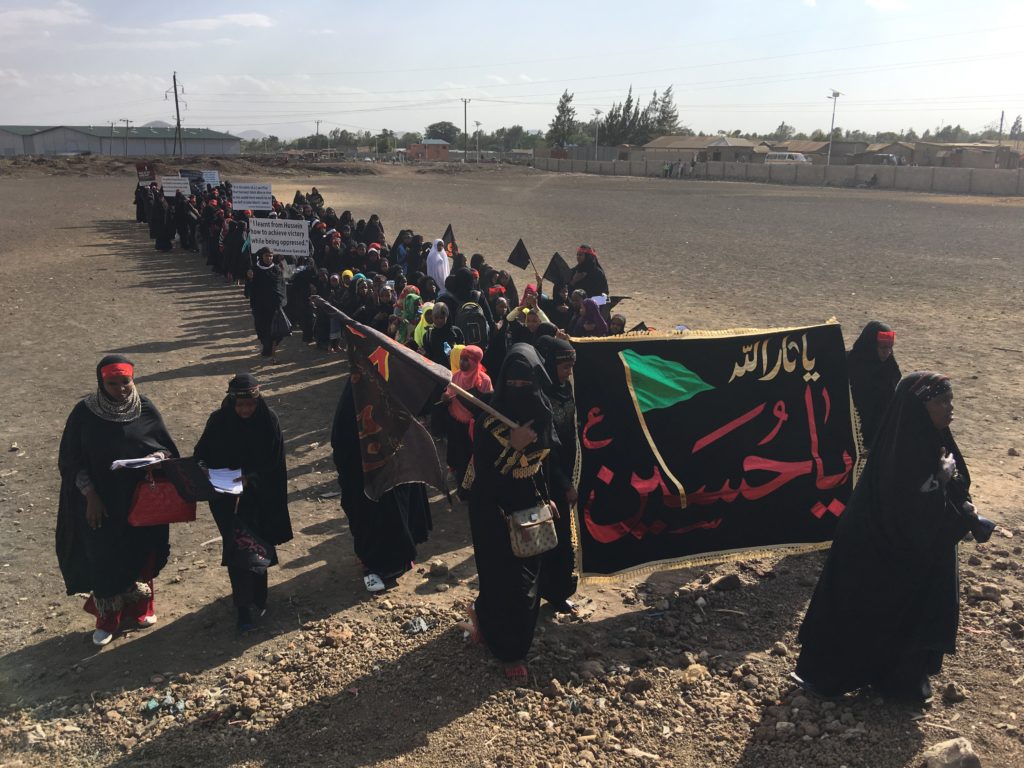
Dr. Leichtman’s article, titled, “How Shiite Islam reached Tanzania, and Ashoura processions became an annual tradition,” is based on her fieldwork conducted in Tanzania this past summer. This article provides a brief history of Shiite Islam in East Africa followed by a detailed description of how Ashoura processions became an annual tradition in Tanzania. According to Dr. Leichtman, “In Tanzania, the government protects freedom of religion. And that is evident in the unique processions of the Indian and African religious communities sharing the peaceful message of Imam Hussein.”
Dr. Leichtman acknowledges the funding she received from the Luce/ACLS Program in Religion, Journalism & International Affairs and the Center for Islam in the Contemporary World at Shenandoah University to pursue this research.