• Memorial for MSU Anthropology Alumnus Herb Whittier (1941-2021)

    MSU Department of Anthropology alumnus Herbert (Herb) Whittier, Ph.D. died June 6, 2021 in East Lansing, Michigan. Whittier studied Anthropology at University of South Florida (B.A. 1963), and Florida State University (B.S. 1965) where he also met his wife and research collaborator Patricia (Pat) Ruth Jenks, and later received a Ph.D. in Anthropology at MSU in 1973. 

    The MSU Department of Anthropology was a formative intellectual environment for Herb Whittier; he took coursework, studied Bahasa Indonesian, honed writing skills, and successfully applied for research funding. Whittier worked with Dr. Al Hudson, the Anthropology Department Borneologist, focusing on Kenyah communities found both in Indonesia (East Kalimantan) and Malaysia (Sarawak, Fourth Division). His doctoral dissertation was titled: Social Organization and Symbols of Social Differentiation: An Ethnographic Study of the Kenyah Dayak of East Kalimantan (Borneo). It synthesized geographic and historical information on the Lepo Tau Kenyah – their migration, religious conversion, village and longhouse organization, social class, swidden farming, ritual – but focused on the mediating role of the ba’ (beaded baby carrier) in the Lepo Tau symbolic system.  Herb then joined Pat Whittier, a cultural linguist, on her Borneo dissertation fieldwork. Supported by National Geographic Society grants, the photographs, fieldwork data, and artifacts from Whittier’s Borneo research are now curated in the anthropological collections at the Field Museum of Natural History, Chicago.

    After completing his Ph.D., Whittier used his anthropological expertise in a variety of positions, including Senior Community Planner with Gilbert/Commonwealth Associates, and as Rural Development Advisor in Surabaya, Indonesia, and Rampur, Nepal. His final professional role was as Associate Director of the Kellogg Foundation-funded MSU Institute of International Health in the College of Osteopathic Medicine. 

    Herb was a dynamic polymath rife with surprises.  He played and built stringed instruments, could hold conversations in a dozen languages, and repair a motorcycle with a butter knife and pie plate (almost!). Herb was devoted to his partner and collaborator Pat, and their boys Robert and James. His good humor is sorely missed.  
    Adapted from The Borneo Research Bulletin, authored by colleagues and friends Al and Judy Hudson, Richard Drake, Judith Tordoff, and William Lovis.
  • MSU Anthropology Undergraduate Spotlight: Senior Jackson Schooley

    MSU Anthropology Undergraduate Spotlight: Senior Jackson Schooley

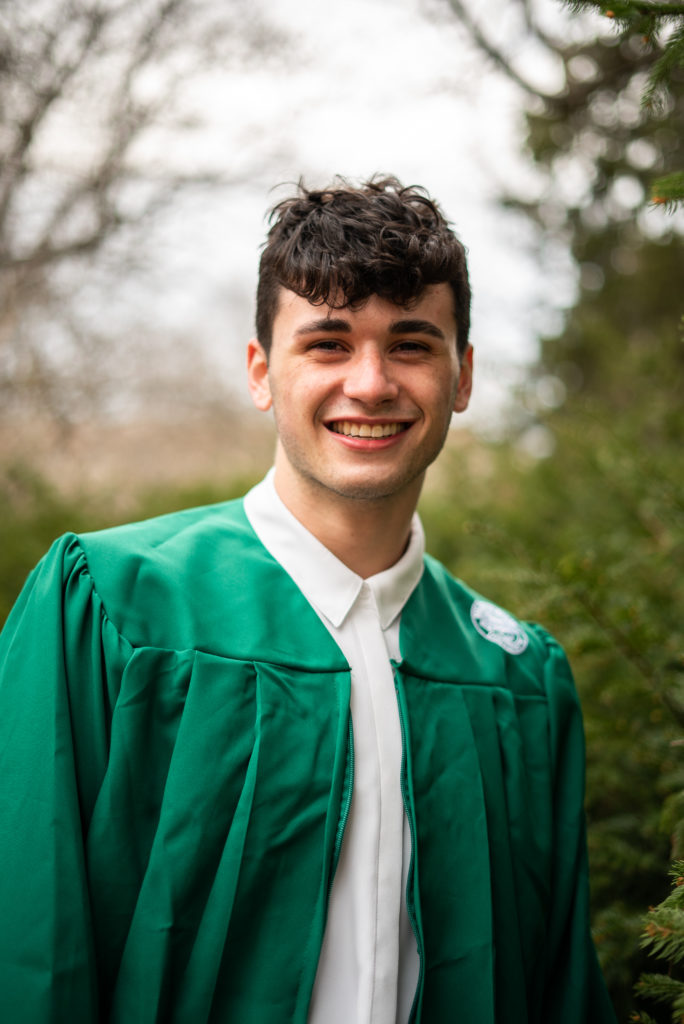
    “I’ve made life-long friends that I have met in my Anthropology classes,” said senior Jackson Schooley, who graduated May 2022 with a degree in Anthropology. A lifelong learner of language and people, Jackson found the human-centric discipline in the MSU Department of Anthropology to be a perfect marriage of his interests.

    “Anthropology gives us a unique role to play in the fight against injustices: one characterized by empathy, curiosity, and a deep understanding of the ways contemporary issues intersect with other aspects of our lives and identities.”

    Schooley sees his major as a tool that can help address the things that affect people across the planet. 

    “It’s a way to understand the diversity of the world and a vital medium to connect, study, and analyze different ways to mitigate issues we are seeing and experiencing now,” he said. 

    During his time at MSU, Schooley’s favorite class he took was ANP 420, Anthropology of Language and Culture, with Professor Chantal Tetreault. This class focuses on the ways in which languages influence our worldviews and the cultural context of languages. 

    “I think the format of the classes, which are discussion based, collaborative, etc., truly lets you make connections with really cool people.”

    As an undergraduate research assistant, Schooley worked under Dr. Emilio Moran researching Michigan’s aging dam infrastructure and its ties to economics and climate resilience, along with issues of energy injustice within the state. He worked in the position for three and a half years exploring the realm of community energy, advocating for local marginalized communities and writing articles to be published in journals. 

    “I truly feel as though my efforts and time in this position have contributed to making this world a more just place- which is always the ultimate goal of my work.” 

    The MSU Department of Anthropology selected Schooley as the 2022 outstanding graduating senior. 

    “Jackson is the most promising and best prepared undergraduate in sociocultural anthropology I have met during my time at MSU,” Dr. Lucero Radonic said,  Associate Professor of Anthropology and nominator for the award. “He is a brilliant young scholar and a kind student with a disposition towards collective learning in class.”

    After his graduation, Schooley will have an internship in sustainability management for the City of Lansing. Upon its conclusion, he has a goal of going into policy work, strengthening the preexisting texts and “introducing new, more comprehensive, and intersectionality-cognizant policy that is aimed at increasing climate resilience in infrastructure.” After a few years in the job market, he plans on attending graduate school to further his training and better prepare himself to support the causes he believes need help on a larger scale.

    “My advice to those considering Anthropology is to not worry about what other people’s perceptions of this discipline are and its applicability to career options/success- this discipline can prepare you for a plethora of fields/environments,” he said. “As long you have that drive and urge to contribute to making this world a better place for all, I’m certain you will feel as though you made the right choice.” 
    To learn more about the MSU department of Anthropology visit https://anthropology.msu.edu/.

  • MSU Anthropology professor receives Fulbright Scholarship for linguistic anthropology research in France

    MSU Anthropology professor receives Fulbright Scholarship for linguistic anthropology research in France

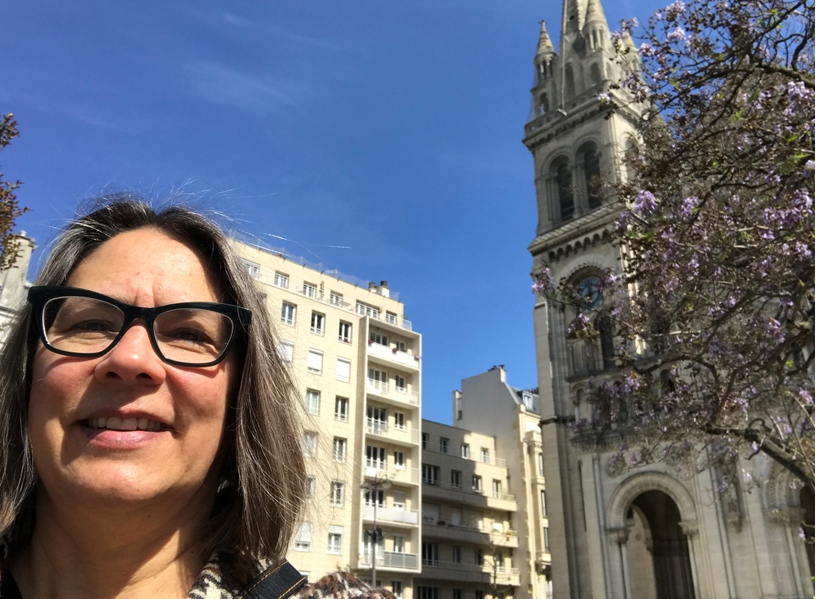
    Dr. Chantal Tetreault, MSU Department of Anthropology associate professor, received a Fulbright Scholarship to research Arabic language education and policy in Paris, France, for six months. 

    Dr. Tetreault’s academic background is linguistic and cultural anthropology, and her research focuses on the connection between language change and cultural change. In past research, she has focused on youth in France of Algerian or North African descent.

    “Some of the basic kinds of principles that I work with regarding language practices have to do with social identity, notions about belonging, social exclusion, and particularly as they relate to gender and ethnicity,” she said. 

    Her Fulbright Scholarship began January 1, 2022 and ran through June 2022, encompassing the ethnographic phase of her research while in Paris.

    “My current project has to do with language education, particularly Arabic language education in France,” she said. “Arabic is the second most widely spoken language in France, and France itself has more immigrants of Arab descent or Arab heritage than any other European country. And yet Arabic is not taught very often in public schools.”

    Dr. Tetreault remarked that a similar scenario would be if the United States didn’t teach Spanish in public schools. In France, students are more likely to encounter the opportunity to learn Arabic through post-secondary education or through community institutions. Her first interest as a linguistic anthropologist is to understand why this is the case in France. She also hopes to contribute to the understanding of the social institutions where Arabic is taught currently in France such as local associations and religious institutions. Ultimately, she hopes her work will contribute to public discourse and policy decisions around increasing availability of Arabic in French public schools. 

    “I think there is increasingly a desire for more clarity and openness around the need to teach more Arabic, both from the perspective that we should teach more dialectal Arabic and also more written Arabic or Modern Standard Arabic,” she said. “There’s a kind of understanding that people need to come together to work toward better policies around language education regarding Arabic in France. So from my research, I hope that there can be some potential policy outcomes that bring together teachers of multiple varieties of Arabic (Darija and Fusha) in addition to some research products such as a book.”

    Dr. Tetreault’s research involves interviewing policymakers, educators, students and administrators.

    “One thing that’s just been so gratifying, humbling, and wonderful is that both educators who are teaching Arabic in after-school programs in France and also university students of Arabic are very excited to be interviewed,” she said. “I’ve had wonderful experiences with people being very enthusiastic about taking time out of their schedule, to make time for an interview. And I’m thrilled that there’s a willingness, but also an enthusiasm to share stories with me about their experiences, either learning Arabic, or teaching Arabic, or wanting to learn Arabic and not being able to in some cases.” 

    Dr. Tetreault captured a photo of artwork by artist el Seed in Paris, France, known for his Arabic calligraphy and distinctive style which he uses “to spread messages of peace, unity and to underline the commonalities of human existence.” – https://elseed-art.com/

    After she completes her interviews, Dr. Tetreault plans to publish several research articles and she hopes to write a book. Because every Fulbright Scholar needs a sponsor institution, Dr. Tetreault has been working with the Institut National des Langues et Civilisations Orientales (INALCO) as her sponsor institution.

    “It is just an incredibly wonderful place because so many different languages are being taught,” she said. “There’s a kind of richness and diversity of students from all over the world and also from all different kinds of backgrounds and heritages in France. And I’ve really connected with the faculty at INALCO who teach both kinds of Arabic: dialectal Arabic (Darija) and Modern Standard Arabic (Fusha).”

    Dr. Tetreault would also like to encourage others to apply for a Fulbright Scholarship, which is available to undergraduates, graduate students, postdocs, and also advanced researchers. 

    “It’s a wonderful way to create a situation for academic and scholarly exchange,” she said. “ I have really enjoyed an even deeper scholarly exchange than I expected.”

  • MSU Campus Archaeology Program assists with replacement of a WWI veteran’s plaque on campus

    MSU Campus Archaeology Program assists with replacement of a WWI veteran’s plaque on campus

    MSU recognizes former student, WWI veteran ahead of Memorial Day

    University corrects name on plaque, hosts private rededication ceremony

    As the nation honors the sacrifices of the veterans who have fought for its freedoms and made the ultimate sacrifice, Michigan State University is honoring the legacy of one Spartan veteran in particular for his lasting impact on campus. 

    World War I veteran Cosmer Magnus Leveaux served in the U.S. Army as Corporal, Battery A, 1st Battalion, 119th Field Artillery, 32nd Division. Leveaux was a student in forestry and part of the class of 1918. He enlisted in the Army on May 10, 1917, and was killed in battle in France on Aug. 10, 1918. 

    Leveaux’s name appears on a freestanding brass plaque commemorating him in West Circle near Cowles House on MSU’s campus. However, it wasn’t until recently that MSU multimedia coordinator Derrick Turner noticed Leveaux’s name was misspelled on the plaque and the date of his death was incorrect. 

    Turner made the discovery through his own passion for both photography and history and took his curiosity to the internet where several sources, including MSU Archives and Historical Collections, confirmed the inaccuracy. He then informed Dan Bollman, vice president for Infrastructure Planning and Facilities, and Steve Troost, campus planner, about the error. 

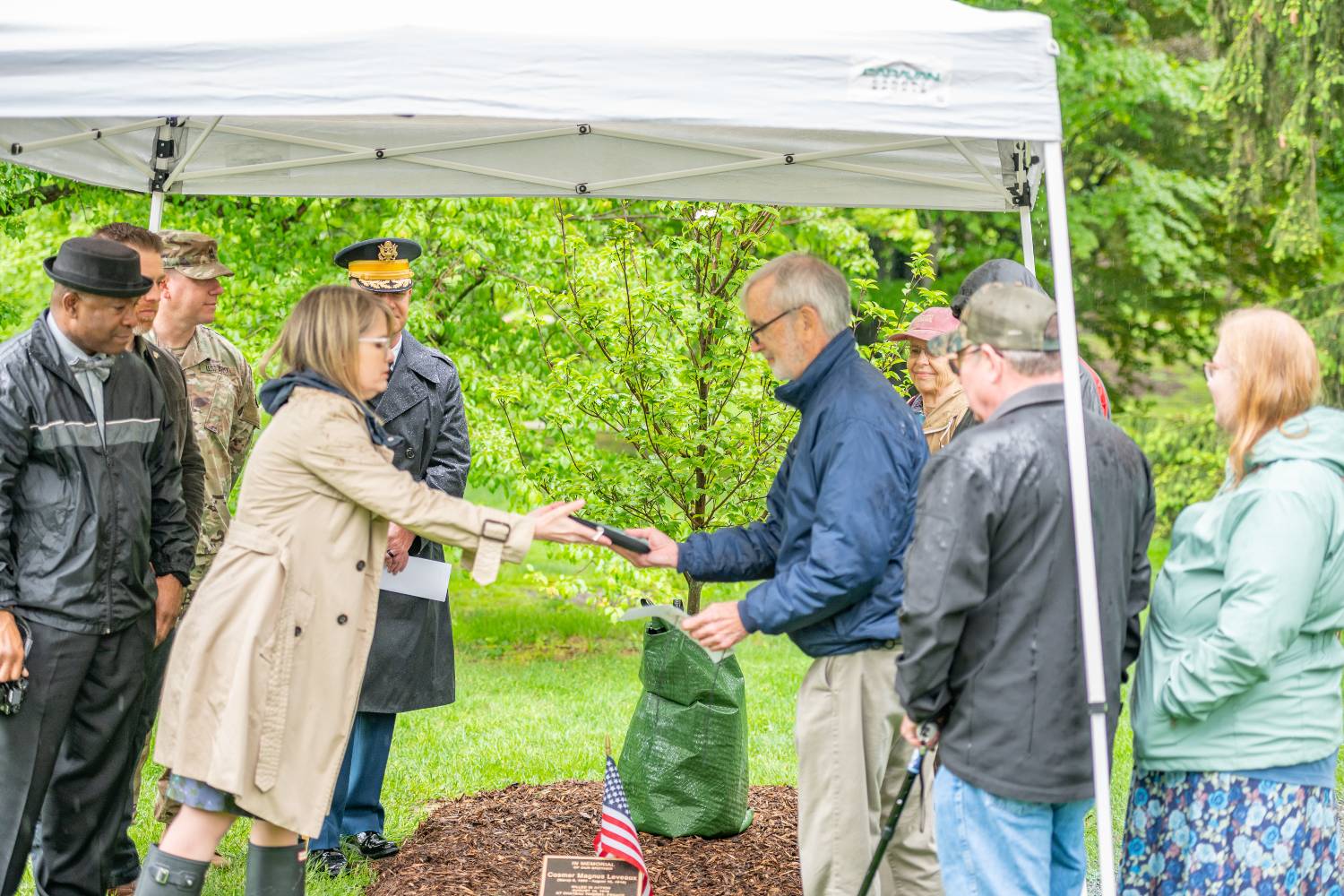
    So, on May 18, after coordinating with the Campus Archaeology Program, the Alumni Office and Leveaux’s family over the past year, MSU fixed its error and properly honored Leveaux and his sacrifices during a private ceremony with some of Leveaux’s family members. There, the university dedicated a new plaque in Leveaux’s honor and with his correct information. The original plaque was turned over to Leveaux’s family. 

    This is MSU handing the old plaque to the family of Cosmer Leveaux.


    “Memorial Day is a time to reflect and honor the brave heroes who have sacrificed their lives for our country and our freedoms,” said MSU President Samuel L. Stanley Jr., M.D. “It is an honor to rededicate this plaque in memory of Corporal Leveaux and pay tribute to the life of a remarkable Spartan.”

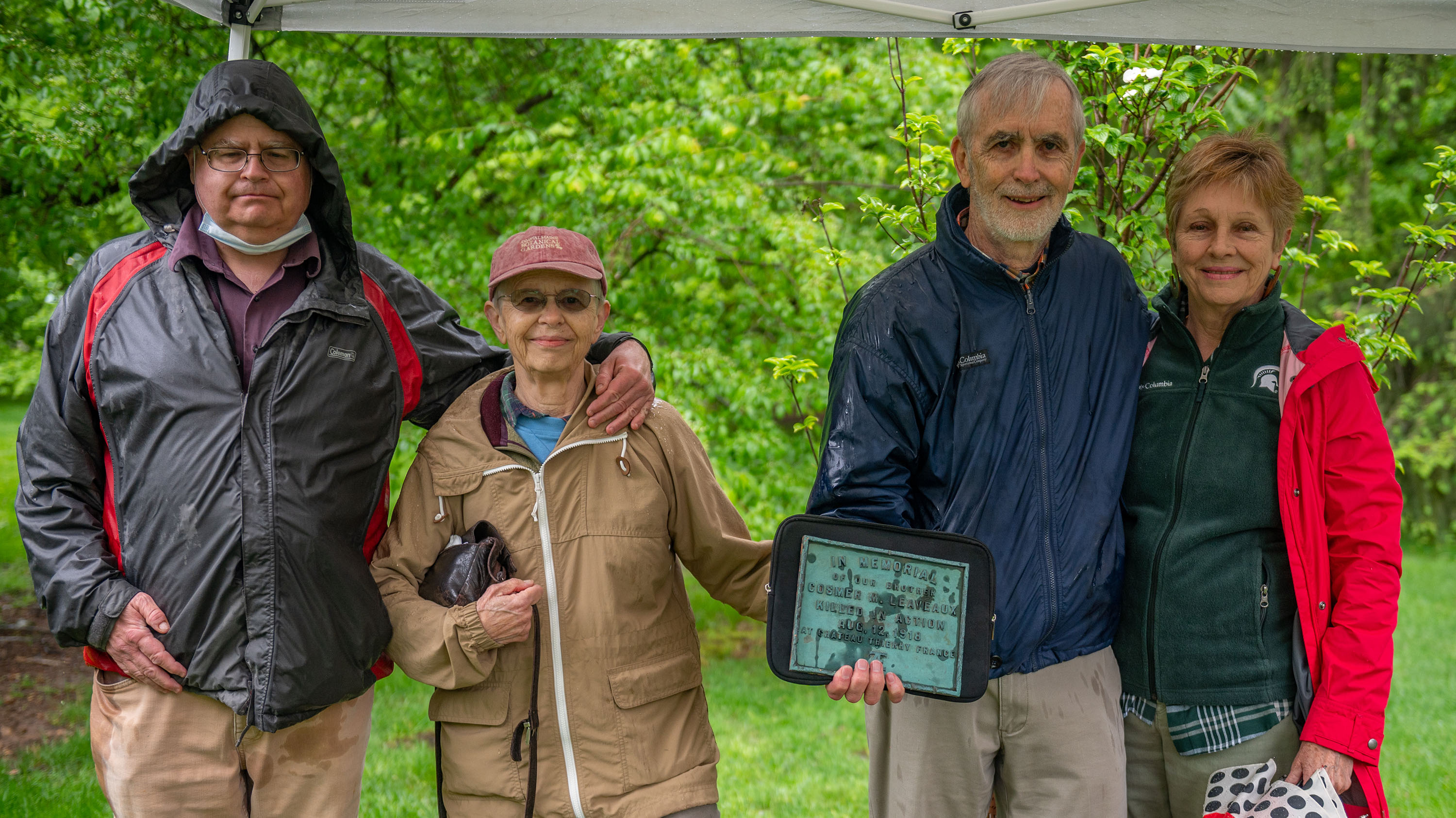
    Leveaux’s niece, Mary Abbott, her son Mark, nephew John LesVeaux and his wife, Jennie, attended the event. 

    “We have been amazed at the attention given to this single veteran who gave the ultimate sacrifice 104 years ago,” said John LesVeaux. “It speaks volumes of the dedication of MSU that all of the sacrifices of our veterans shall not be forgotten.

    Mark/Mary Abbott and John/Jennie Lesveaus at the rededication ceremony for MSU Alumn Cosmer M. Leveaux


    “I am sure that if Cosmer were here with us today, he would be equally as amazed and gratified as we are at this tribute to his sacrifice. We thank MSU for its efforts.” 

    Leveaux began his work for the U.S. Forest Service as a forest guard in the Superior National Forest in Ely, Minnesota, in May 1916. After an almost four-month stint, Leveaux decided to leave his job and continue his education. During his time at MSU, then named Michigan Agricultural College, Leveaux was actively involved in the international honors forestry society, Xi Sigma Pi. He was also active in the AE Theon, a local social fraternity established in 1915 that is no longer active on campus.

    Leveaux’s name also is inscribed on a plaque inside the Memorial Grove of the Great War in West Circle on campus, which commemorates 33 soldiers who lost their lives during WWI. The plaque originally was dedicated on the college’s commencement day in June 1919. 

    For Turner’s part, he said he was glad to play a role in helping to accurately recognize Leveaux. 

    “It’s an honor to be university photographer, where the entire campus is my office,” Turner said. “Helping to preserve our campus for future Spartans to enjoy is good stewardship of our beloved campus and community. 

    “All of the people involved with correcting and reproducing the plaque shows Spartans care about everyone in the Spartan family — even those who lived over 100 years ago. It’s the ultimate demonstration of Spartans Will.” 

    Original story link: https://msutoday.msu.edu/news/2022/cosmer-leveaux-plaque-rededication

    Story also covered on Fox News: https://www.fox47news.com/neighborhoods/msu-campus/msu-honors-world-war-i-veteran-and-fixes-a-103-year-old-mistake

  • Announcing the Retirement of Joan Reid, Department of Anthropology Academic Program Coordinator

    Announcing the Retirement of Joan Reid, Department of Anthropology Academic Program Coordinator

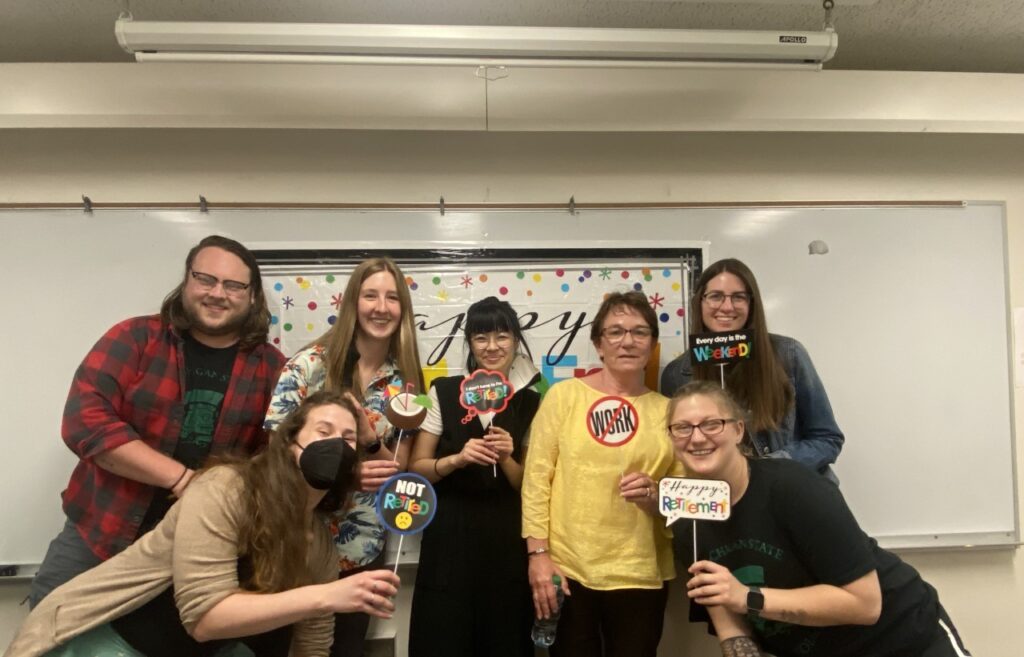
    Joan Reid is retiring from Michigan State University after 32 years, having served in three other campus roles before becoming the Academic Program Coordinator for the Department of Anthropology in 2015.

    Reid plays an invaluable role in helping Anthropology graduate students matriculate through the program, assisting them from their prospective student visits  all the way until graduation. In her role as Academic Program Coordinator, Reid keeps graduate students informed of important deadlines and program requirements, assists with paperwork and department procedures, compiles reports, maintains academic and personnel files for graduate students, and provides key support to the department chair, graduate program director, and faculty members. Further, Reid can always be found advocating for students and attending department and GSA events and fundraisers. When asked about what she enjoys about her job, Reid stated: “Working with graduate students has been the most rewarding aspect of my entire career. I am very grateful for the appreciation and respect shown by graduate students when they thank me for my help throughout their program matriculation. The feeling of accomplishment that I played a small role in helping students succeed through a very rigorous Ph.D. program and I am so happy when they graduate!”

    Reid’s impact on student success is echoed by students across the department, with students praising her dedication to their success, her helpful and supportive attitude, and her quick email responses to last minute questions. Cara Jacob, a fourth year socio-cultural Ph.D. candidate was effusive about her working relationship with Reid, saying: “We have been so lucky to have her- for all the reasons people know and for the ones they don’t. It truly won’t be the same without her.” Jacob recalls how helpful Reid was in navigating the GradPlan process, among many other ways she received above and beyond assistance from Reid during her time in the program. Micayla Spiros, also a fourth year Ph.D. candidate, said that it is difficult to put into words how integral Reid has been during her graduate experience, and that she has felt welcomed and supported by Reid since her first visit as a prospective student. She says of Reid: “The diligence, knowledge, communication skills, and innovation that Joan provides for the Anthropology department is unparalleled”, and also states that the department will not be the same without her. Emma Zblewski, a second year Ph.D./M.D. student, says Joan has been instrumental in helping her navigate her dual degree program, and that she “helps us balance our priorities and stay up-to-date with department happenings during our med school years.”

    Dr. Todd Fenton, Department of Anthropology Chair and Professor, says: “It’s difficult, if not impossible to list all the achievements, support, and dedicated service Joan has provided MSU and the Department of Anthropology. For over 30 years, Joan had dedicated her career to Michigan State University. Having joined the Department of Anthropology in spring of 2015, she has provided exceptional support to our graduate students. We’re beyond grateful for Joan’s effort and the joy she’s brought to our department for the last 7 years. We will really miss her.”

    When asked about her retirement plans, Reid says she looks forward to sleeping in, spending time with family and friends, traveling, and celebrating her 39th wedding anniversary with her husband, Tom, in June. Joan will be missed by students and faculty alike, and we wish her all the best in her retirement.

  • Ph.D. Students Emily Milton and Jeff Burnett Awarded Department Funding for Research in Archaeology

    Ph.D. Students Emily Milton and Jeff Burnett Awarded Department Funding for Research in Archaeology
    Photo taken by Ph.D. student Emily Milton taken during her archaeological research in Peru.

    We are happy to announce the award recipients for the Department of Anthropology Archaeology Fellowships. Ph.D. student Emily Milton received funding from the William A. Lovis Research Fund in Environmental Archaeology, the Lynne Goldstein Fellowship, and the Alumni and Friends Expendable Fund for Archaeology; and Ph.D. student Jeff Burnett received funding from the Lynne Goldstein Fellowship.

    Each of the funds support archaeology students in the Department of Anthropology at MSU: for the Alumni and Friends Expendable Fund for Archaeology, the fund is intended to encourage archaeology students who have demonstrated the capacity to achieve educational and professional goals, the motivation to achieve these goals and the initiative to seek opportunities to further their progress. The fund is open to undergraduate and graduate students studying archaeology, and can be used for scholarships for fieldwork, fellowships, research, and travel. 

    The Lynne Goldstein Fellowship is awarded to graduate students enrolled in the MSU Anthropology Department with preference given to those students who have participated in the Campus Archaeology Program, and is intended to assist students doing their dissertation research. 

    With the William A. Lovis Research Fund in Environmental Archaeology, the endowment is intended to support interdisciplinary environmental archaeological research bridging anthropological archaeology and the natural, physical, biological and earth sciences. It is designed to underwrite and enhance the work of graduate students who investigate human/environment interaction for deeper time periods prior to Euro-American colonization episodes worldwide.

    Ph.D. student Emily Milton received funding from the William A. Lovis Research Fund in Environmental Archaeology to support exploratory analyses for a potential new approach for reconstructing Andean and Pacific coastal diets in southern Peru. As part of her dissertation, she will be investigating how isotopic methods can inform on Early Holocene diet in Peru. Her samples will include environmental substrates including water and plants; data from these materials will also inform on anthropogenic change in the present-day environment. 

    Milton was also awarded the Lynne Goldstein Fellowship to help her to create outreach materials for her research. She plans to use Storywork, an approach centered on visual art and storytelling, to share her findings with one of the communities she has worked with. Department funding will support both translated and interactive booklets, as well as support a new online project she hopes to begin this fall that will communicate her field and lab methods through immersive visual and audio media.  

    Lastly, Milton was awarded the Alumni and Friends Expendable Fund for Archaeology to complete data collection for her first dissertation manuscript, which is focused on isotopic measures of seasonal change in the south-central Andes of Peru. She hopes her findings will inform best practices of how archaeologists can isotopically study the archaeological materials from Central Andean sites. The award will support 140 isotopic measurements of water and plants that she will collect in her 2022 field seasons. 

    Ph.D. student Jeff Burnett received funding from the Lynne Goldstein Fellowship, and the funding will be used to support his dissertation project and to prepare him to apply for the Wenner-Gren Engaged Research Grant program, which supports engaged, community-based anthropological projects that work collaboratively with community groups. His dissertation project is an archaeological investigation of African American homeownership, community formation and memory-making in the historic Highlands area in the resort community of Oak Bluffs, Massachusetts. The Lynne Goldstein Fellowship will allow him to organize and host in-person research design meetings with a core group of collaborators.

  • Ph.D. Student Priyanka Jayakodi wins Dr. Delia Koo Global Student Scholarship and 3rd place in Shao Chang Lee Scholarship Fund Best Paper Competition

    The Department of Anthropology is pleased to announce that Ph.D. student Priyanka Jayakodi has won two awards from the MSU Asian Studies Center this past year: the Dr. Delia Koo Global Student Scholarship; and 3rd place in the Shao Chang Lee Scholarship Fund Best Paper Competition. The Dr. Delia Koo Global Scholarship is administered by the Asian Studies Center to provide scholarships to students from Asia and to further MSU’s interest in obtaining the educational benefits that flow from a diverse student body. The Shao Chang Lee Scholarship Fund was established by friends and colleagues of the late Professor Lee to provide scholarship awards for students who have made outstanding accomplishments in Asian studies and are pursuing or planning to pursue a program that includes Asian studies.

    Priyanka is a Sociocultural Anthropology Ph.D. student specializing in medical and environmental anthropology. Her research interests include the intersections of health, gender and environment, state violence, and social suffering. Her Ph.D. dissertation will examine the social and political aspects of water insecurity in the context of Chronic Kidney Disease of uncertain etiology (CKDu) in Sri Lanka. At the same time, she is also interested in studying how state violence and militarism in Sri Lanka affect health and wellbeing of certain communities more than others. Priyanka says that although these two research areas are seemingly unrelated, they focus on broader entanglement of lived experiences of marginalized groups in times of crisis.

    Priyanka’s previous education and research experiences were critical preparation for her current work: She obtained her BA and MA in Sociology from University of Peradeniya, Sri Lanka. Through her research there, she explored daily occurrences of stigma and how it’s manifested through different meanings attributed to CKDu and how the social values, healthcare system, and media influence stigmatization of patients diagnosed with CKDu. It’s through this research experience she became interested in studying water insecurity in the context of CKDu. At MSU, Priyanka has found success in building upon her ethnographic research prior to joining the Department of Anthropology Ph.D. program.

    Priyanka won 3rd place in the Shao Chang Lee Scholarship Fund Best Paper Competition for her paper titled: “Chronicity of Militarism: Sri Lanka’s Militarized Response to the COVID-19 Pandemic”. This paper was written for Dr. Heather Howard’s course, ANP 834: Medical Anthropology. Priyanka presented this paper at a panel entitled “Covid’s Chronicities” at SfAA 2022 Annual Meeting and she is working on publishing a book chapter based on this paper in a volume edited by Dr. Lenore Manderson and Dr. Nancy Burke. Priyanka is continuing to work with Dr. Howard to expand this research with ethnographic data and plans to publish a paper.

    Priyanka will use the funds she received from the Dr. Delia Koo Global Scholarship during her initial summer fieldwork in 2022 in Sri Lanka, where she will explore the multiple socio-economic and political dimensions of water insecurity in the context of Chronic Kidney Disease of uncertain etiology (CKDu) in the North-Central Province in Sri Lanka. Most of the time, dominant approaches to water insecurity focus on solutions that are technocratic, depoliticized and environmentally deterministic. Priyanka says: “I believe my study is significant because it aims to explore lived experiences of water insecurity at multiple levels (scale of the body or individual, household, and community) and how water insecurity is entangled with CKDu, poverty, gender dynamics, as well as neoliberalism”. Following the completion of her summer fieldwork project, Priyanka plans to host a collaborative photography exhibition on water security at MSU and initiate a reading group with fellow doctoral students in the college of social science who are studying water-related issues. Priyanka says these activities are especially significant because “Climate change is unarguably the number one global challenge faced by human beings around the world and specifically in underprivileged communities, and requires a broader discussion among fellow graduate students who are interested in studying water justice and water governance.”

    When asked about her long-term goals, Priyanka says: “I hope my research in Sri Lanka will make a positive impact on water policies there. My long-term goal is to become a professor in Anthropology at a public university in Sri Lanka through which I could disseminate knowledge, conduct research, and continue to work with the communities that are marginalized in multiple ways.” Priyanka would like to express her gratitude to the Asian Studies Center, whose funding makes her upcoming Summer research in Sri Lanka and photography exhibits at MSU possible. And she says that she really appreciates the mentorship of her advisor, Dr. Lucero Radonic whose work on water governance and water justice inspires her. She says Dr. Radonic encourages her to explore various innovative methods for doing ethnographic research. She also acknowledges Dr. Heather Howard’s continuous and unwavering support and guidance on her research.

  • MSU Anthropology professor and undergraduate participate in Smithsonian global oyster study

    MSU Anthropology professor and undergraduate participate in Smithsonian global oyster study

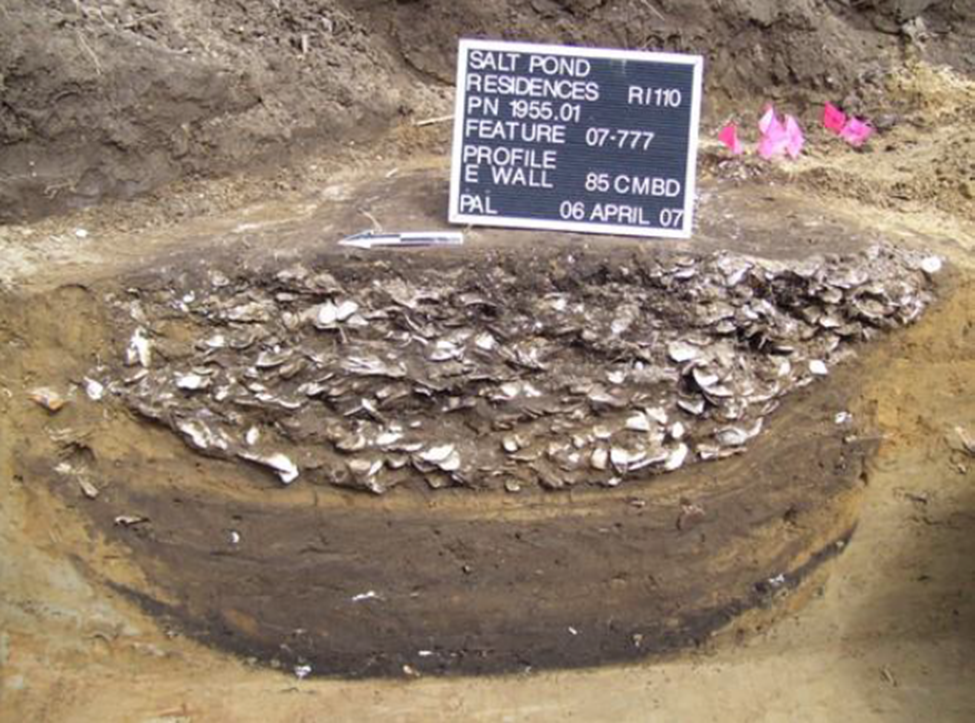
    Small “pit feature” or accumulation of oyster, other shellfish, animal bone and artifacts in Rhode Island dated to 100-500 years ago. Sites like this show the full range of sites used in the study, with this representing the smaller end of accumulation of oysters. Photo courtesy of Kevin McBride.

    Dr. Sanchez, MSU Department of Anthropology assistant professor, and his colleague Dr. Michael Grone, California Department of Parks and Recreation, contributed to the global study of Indigenous oyster fisheries, which synthesized over a century of archaeological findings from the San Francisco Bay Area. The synthesis of these data was supported by MSU Anthropology major Emily Westfall. 

    “I participated in the research to contribute to reimagining Indigenous-environmental relationships, specifically Indigenous fisheries, within archaeological, biological, and ecological literature,” Dr. Sanchez said. “So often, Indigenous relationships with culturally important species, such as oysters, are often minimized. I believe it is critical to center long-term Indigenous relationships with species, ecosystems, and landscapes within the academy and beyond.”

    Their research was a part of a global study co-led by Smithsonian’s National Museum of Natural History anthropologist Torben Rick and Temple University anthropologist Leslie Reeder-Myers. The study, published May 3 in Nature Communications, shows that oyster fisheries were hugely productive and sustainably managed on a massive scale over hundreds and even thousands of years of intensive harvest.

    Drs. Sanchez and Grone summarized the findings from over 30 San Francisco Bay Area archaeological sites. The study includes the earliest known archaeological site within the San Francisco Bay Area that provides evidence of human-oyster relationships that span the last 6,000 years, known as the West Berkeley (CA-ALA-307) site. Sanchez and Grone recently reanalyzed the West Berkeley site with several colleagues from the University of California, Berkeley, including Professor Kent Lightfoot, with the support of the National Science Foundation.       

    Westfall joined the project at the beginning of the 2020-2021 school year and conducted literature searches of all of the archaeological sites of interest to find historical data regarding the presence of oyster use by humans to support current data.

    “The research was important to me because even though I could not practice the hands-on methods due to the pandemic, it allowed me to gain insight into the other side of archaeology: the side involving writing articles and the background research,” Westfall said. “It was an invaluable experience as an anthropology major to be able to experience the whole process of archaeology research during my three semesters working with Dr. Sanchez.”

  • MSU alum named Executive Director of the Hispanic Latino Commission of Michigan

    MSU alum named Executive Director of the Hispanic Latino Commission of Michigan

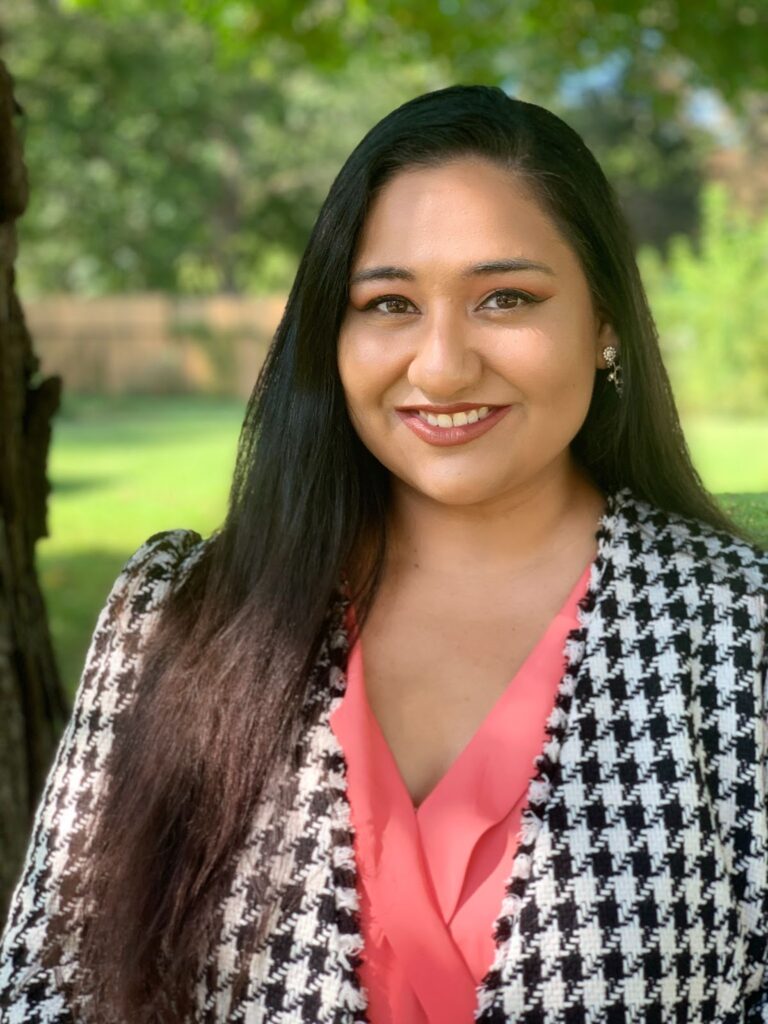
    In September 2021, the Hispanic/Latino Commission of Michigan (HLCOM) named MSU alumna Dr. Isabel Montemayor-Vazquez the executive director, and she began her role  that same month. Dr. Montemayor-Vazquez received both her master’s and doctorate’s degrees from the MSU Department of Anthropology. 

     “I was interested in this position because it marries my political science background and applied activist driven anthropology background perfectly,” Dr. Montemayor-Vazquez said. “In this position, I can advocate for the needs of the community, work with non-profit organizations serving the Latinx community, train different state agencies on structural and systemic inequities, and most importantly, contribute to policy change.”

    According to their website, the commission exists to advocate for the well-being of the Hispanic/Latino population with the vision of achieving an environment of social justice and economic parity for the Hispanic/Latino population. As executive director of the commission, Dr. Montemayor-Vazquez is charged with organizing the activities of the commission and working directly with the commissioners to serve as a bridge between state government and the communities of constituents they serve. 

    “It’s an incredible and humbling leadership role, where I am able to amplify the voices of the community through various grants, partnerships, and programs we have established. Working for the state of Michigan as a civil servant, there are few Latinas in positions of leadership, and so it’s an exceptional opportunity to serve as a mentor for young first-generation Latinas who have a similar background and family history .”

    As executive director, her first goals were to hold individual listening sessions with each of the commissioners to better understand how they see their role as commissioner. Another immediate goal was to recruit a legislative intern to assist in producing a legislative report in Spanish and English that follows legislative bills and their impact on the Latinx community. Increasing job opportunities and improving economic prosperity for the Latinx community are priorities found in the mission and vision of the commission, so a third goal was to create a Latinx job fair for recent college graduates.

    “I am proud to say that all three ofthese immediate goals along with improving the on-boarding process for our new commissioners have come to fruition.”

    Dr. Montemayor-Vazquez received both her master’s and doctorate degrees at MSU in cultural anthropology. During her time at MSU, she felt the most meaningful opportunity she experienced was being able to teach. Her teaching experience at MSU prepared her for accepting a professorship at UTA Arlington where she taught Sociology and Anthropology for six years. As executive director, she still has opportunities to teach on many of the topics that were interesting to her as a student and are pertinent to the Latinx community of Michigan. 

    Another meaningful experience during her time at MSU was when the department funded her and several other graduate students to present their research at the Society for Applied Anthropology conference in Merida, Yucatan. 

    “My research was centered around Michoacan and I had never ventured as far as Merida. It was such a unique experience to travel with fellow anthropology students to present in such an accepting environment, on a panel together, and also learn about the indigenous history of Yucatan together.” 

    Dr. Montemayor-Vazquez looks back on receiving her advanced degree in anthropology as a wonderful and useful tool in being able to give back to her community. 

    “I never could have imagined I would be able to use my degree in the community where I grew up and make a difference in so many people’s lives. The Hispanic/Latino Commission does a lot of work behind the scenes to ensure the Latinx community has the necessary platforms to voice their concerns. Additionally, the commission strives to provide ample opportunities for the Latinx community to thrive in the state of Michigan. It’s a privilege to work in this capacity and serve my community.” 

  • Dr. Heather Howard publishes in Syndemic Magazine

    Department of Anthropology associate professor Dr. Heather Howard recently published an article in Syndemic Magazine. The article is titled “First Nations, Contagion, and Canada: The Lineages of Pandemic Colonialism the Americas.” In examining the pandemic’s ties to colonialism, the article states: “If the overall “trick” of settler colonialism is to convince settlers they are natives of the lands they subjugate, in the pandemic a further trick consists of treating colonialism’s consequences as so many particular cases of “disparities,” “susceptibilities,” or “local emergencies.” What might be called a syndemic clustering of settler colonialism, systemic racism and gender discrimination has been systematically obscured.”

    Read the full article at: https://syndemic.ca/2022/04/25/article-2/