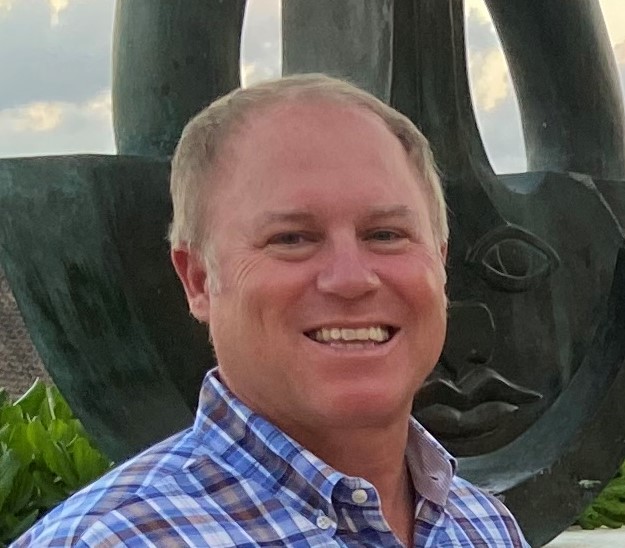
The Michigan Archaeological Society, the oldest and largest avocational archaeological organization for citizen scholars in the state of Michigan, has conferred its highest award on Professor Emeritus William A. Lovis. The MAS Merit Award honors individuals “for sustained, outstanding, and significant contributions to Michigan archaeology”. This award recognizes Dr. Lovis’ half century of research into Michigan’s past, with scholarship resulting in numerous books, monographs and journal articles, as well as his long-standing association with and support for Michigan’s avocational archaeological community.
The Department of Anthropology is happy to announce that Professor Dr. Gabe Wrobel has received the 2022 Undergraduate Research Faculty Mentor of the Year Award for Michigan State University. This award is presented annually and recognizes faculty who have demonstrated an outstanding commitment to mentoring undergraduate researchers. This award is completely student-driven; only undergraduate student researchers can submit nominations, and the University’s Undergraduate Research Ambassadors choose the finalists. Honorees are selected with the following criteria: faculty members who demonstrate a commitment to undergraduate research, provide strong professional mentoring, and serve as role models in their field of study. Dr. Wrobel was nominated by Department of Anthropology undergraduate students Alison Weber, Collin Sauter, and James Waltermeyer.
Dr. Wrobel’s work in bioarchaeology focuses on the analysis and interpretation of skeletal remains from archaeological contexts in cave and rock shelters in Maya communities in Belize. He established the MSU Bioarchaeology Laboratory in 2012, which provides opportunities for undergraduate and graduate students to maintain and care for skeletal collections, work with databases, understand how skeletal remains provide insights about past human lives, and even publish or present work at academic conferences. Through projects and collaborations at MSU Bioarchaeology Laboratory, Dr. Wrobel provides exemplary mentorship to undergraduate and graduate students alike, inspiring future careers in bioarchaeology, forensic anthropology, and archaeology.
One of those students is Alison Weber, who is working on her Bachelor of Science in Anthropology with a minor in Social Science Quantitative Data Analytics. Her primary interest is in Forensic Anthropology, and she is currently working in Dr. Wrobel’s lab studying how Macromorphoscopic Trait Data can be utilized from past populations. She has also had the opportunity to take a graduate level seminar with Dr. Wrobel. Weber nominated Dr. Wrobel because of the emphasis he puts on undergraduate research, which she says is “crucial to MSU producing successful and well-rounded anthropologists”. She said she also appreciates that Dr. Wrobel makes himself available to students, understands the stresses of being a student-researcher, and is especially supportive in the research design process and making dense topics digestible and understandable.
Another student is Collin Sauter, who is working on his Bachelor of Science in Anthropology and Chemistry and is interested in digital archaeology and bioarchaeology. Sauter says he nominated Dr. Wrobel for the Undergraduate Research Mentor of the Year Award because “he is always readily available to guide me in my research, and he also helps me prepare for my academic future. I have a lot of freedom and control over my research project, but Dr. Wrobel is incredibly helpful when I need advice and guidance.” Through research and mentorship at the MSU Bioarchaeology Laboratory, Sauter has also found opportunities to present and publish his work, providing excellent preparation for a continued education and career in anthropology.
Congratulations again to Dr. Wrobel for winning the prestigious 2022 Undergraduate Research Faculty Mentor of the Year Award for Michigan State University. We are proud to have such a supportive mentor and excellent researcher in the Department of Anthropology.
On April 8th, 2022, over 220 international scholars and professors came together online to engage with pedagogical questions and practical case studies for a day-long virtual workshop on “Teaching the City”. The workshop designed around two core questions: “How do we teach about the city? What sits at the core of our educational and pedagogical explorations of urban spaces and socialities within Anthropology and its sibling disciplines? The organizing team was composed of MSU Department of Anthropology assistant professor, Dr. Lucero Radonic, Dr. Suzanne Scheld from California State University Northridge, Dr. Angela Storey from University of Louisville, Dr. Megan Sheehan from the College of St Benedict/St John’s University, and Dr. Claire Panetta from Pace University of New York. The organizing team also included three graduate students: Marwa Bakabas and Cara Jacob from MSU, and Hanadi Alhalabi from California State University Northridge. The event was sponsored by the Critical Urban Anthropology Association (CUAA).
The workshop began with a roundtable discussion on “The Challenges and Opportunities of Urban Teaching: Thinking Across Pedagogies and Practices” that featured Hiba Bou Akar (Columbia University), Najib Hourani (Michigan State University), Martha Radice (Dalhousie University), and Maria Vesperi (New College of Florida). Scholars discussed how to work with diverse student bodies to interrogate and learn from both the banal and extraordinary aspects of cities across the globe.
In the afternoon, the conference hosted two concurrent lightning talk sessions for which panelists prepared five-minute presentations to set up the floor for group conversations on pedagogical practices and approaches to teaching about and in the city. Panelists offered in depth discussions of syllabi and readings, writing exercises, and fieldwork projects.
The first session was titled “Teaching Tools: Methods, Outcomes, and Engagement”. Drawing on teaching experiences from cities in Scotland, Canada, United States, Philippines, and Indonesia, presenters discussed the use of different techniques –including digital maps, participatory mapping, and photo-elicitation— to engage students in interrogating the urban experience that surrounds them.
The second session was titled “Experiential Teaching and Big Concepts”. Panelists drew on course-based activities that took place on and off campus, virtually and in person, to discuss how they approached teaching core and complex concepts including inequality, infrastructure, affect and emotion. Presentations also highlighted how in teaching the city students (and faculty) are offered the opportunity to query the relationship between their institutions and the surrounding urban environment(s).
The event closed with a keynote address by John L. Jackson Jr. who is the Richard Perry University Professor at the University of Pennsylvania. This talk was titled “What Anthroman Might Still Teach Us about Urban Ethnography” and it discussed the many demands and expectations of ethnographic research and how to mitigate some of the methodological (and even psychological) challenges of qualitative urban research.
Reflecting on the workshop, Dr. Radonic highlighted how “the online format allowed us to create a learning community across borders and across disciplines to exchange insights on pedagogy and the potential intersections between teaching and research in and about the city. It was inspiring to see how the zoom chat was always active as participants exchanged recommendations for exercises, readings, and engaged in discussions about accessibility, inclusion, and ethics.” MSU Ph.D. student and co-organizer Marwa Bakabas echoed Dr. Radonic, saying that the conference was an excellent opportunity to engage with a “wide variety of research centered on urban anthropology being conducted globally”, and that she enjoyed taking part in planning the workshop, reviewing proposals, handling logistics, and networking.
As a next step the organizing team is planning to create a repository for syllabus and teaching materials to be hosted on the website for the Critical Urban Anthropology Association (https://cuaa.americananthro.org). Recording from the panel and lightening talks will also be made available there. Dr. Radonic remarks that “the fact that people are already sending materials to us speaks to the generosity and collegiality that can be fostered in academia.”
Department of Anthropology Ph.D. student Kelly Kamnikar and assistant professor Dr. Joe Hefner recently published a chapter in Avances en Antropología Forense. This chapter reviews population affinity estimation using macromorphoscopic trait analysis. The authors focus on the application of this method to Latin American groups and discuss refining broad categories used in population affinity estimation, like Hispanic. They aim to provide a starting point for investigation into biological distance and population affinity for practitioners working with Latin American populations to improve methodology used in identification of migrant remains at the Mexico-US border, and victims of violence that may occur in transit from one country to another.
Department of Anthropology Ph.D. student Kelly Kamnikar, assistant professor Dr. Joe Hefner, and co-authors Dr. Timisay Monsalve, and Dr. Liliana Maria Bernal Florez recently published an article in Forensic Anthropology. The article is titled “Craniometric Variation in a Regional Sample from Antioquia, Medellín, Colombia: Implications for Forensic Work in the Americas.” This publication examines a sample from Antioquia, Colombia within a population affinity estimation framework. The authors aim to investigate intraregional variation via social labels within Antioquia and craniometric variation on a broad level, when pooled, as compared to other global, comparative samples. This research directly contributes to the refinement of the ‘Hispanic’ category in population affinity estimation models. While Colombians are not considered as one of the top clandestine migration groups to the U.S., the country has hosted a decades-long civil war where the missing and unidentified number into the 100,000s. Additionally, Colombia is geographically proximate to Venezuela and involved in current migration events, which could have forensic implications. This paper serves as a tool for forensic practitioners in the region who may encounter unidentified remains in their casework as a means for identification.
Abstract: “Population affinity estimation is frequently assessed from measurements of the cranium. Traditional models place individuals into discrete groups―such as Hispanic―that often encompass very diverse populations. Current research, including this study, challenges these assumptions using more refined population affinity estimation analyses. We examine craniometric data for a sample of individuals from different regions in Antioquia, Colombia. We first assessed the sample to understand intraregional variation in cranial shape as a function of birthplace or a culturally constructed social group label. Then, pooling the Colombian data, we compare cranial variation with global contemporary and prehistoric groups. Results did not indicate significant intraregional variation in Antioquia; classification models performed poorly (28.6% for birthplace and 36.6% for social group). When compared to other groups (American Black, American White, Asian, modern Hispanic, and prehistoric Native American), our model correctly classified 75.5% of the samples. We further refined the model by separating the pooled Hispanic sample into Mexican and Guatemalan samples, which produced a correct classification rate of 74.4%. These results indicate significant differences in cranial form among groups commonly united under the classification “Hispanic” and bolster the addition of a refined approach to population affinity estimation using craniometric data.”
“Rarely is there another person in any meeting room that I’m in that has the background that I have,” MIchigan State University alumnus Jeffrey Bennish laughed good-naturedly. Bennish is the Vice President of QuVA Pharma Inc., a 503B pharmacy drug manufacturer, who graduated with a degree in anthropology.
“I think you can use a lot of the skills from an applied anthropology standpoint that translate incredibly well into business environments, and find yourself with a unique skill set amongst your peers and those business environments that make you stand out,” he said.
Bennish attributes his success to his early training in anthropology from MSU.
“I actually found that the skills that I learned, in particular, the skills of ethnography (the scientific description of the customs of individual peoples and cultures) and the ethnographic toolkit that you pick up translates incredibly well into the world of business, especially on the sales side, where you’re really trying to build relationships with people that don’t know you, and create a pathway in that relationship for business to occur,” Bennish said.
Bennish knew he wanted to study anthropology in high school because he was drawn toward a major that focused on other cultures.
“In high school, I was most interested in my humanities courses, and multidisciplinary courses: about that intersection of different cultures and geographies and histories,” he said. “And really, just the opportunity to expand on that with the undergraduate degree in anthropology, Michigan State was just a perfect fit for what I was interested in in life.”
Bennish values the training he received, although his path isn’t quite what he imagined when he first began as an anthropology major at MSU. During his senior year, Bennish realized that he would have to attend graduate school if he wanted to continue on to a career in anthropology academia. Because he wanted to graduate after four years and begin his career, he decided to try working in medical sales, and never left.
“To graduate with a degree in anthropology, you really have to learn how to be a writer,” he said. “And so that translates incredibly well into business in terms of developing business plans, developing proformas and focusing on other people’s voices. Because really, when you write an ethnography, you are trying to emphasize other people’s voices, not your own. You learn how to write from other’s perspectives, and that is a very unique skill.”
To further his education, he received a graduate degree in Medical Anthropology from the University of Colorado. Throughout his career, he increasingly took on leadership roles and felt that his skills transferred to each new position.
“In anthropology, there’s a lot of focus put on agency and the emotional attachment that people have with with different interests, and I think it sets you up incredibly well for acting as a leader in a complex organization, because you can definitely use your skills to help make sure that you’re connecting with people at different levels and different layers based on what they’re looking for out of their careers.”
Bennish realizes he has taken a unique path, and is often surrounded by peers with more traditional degrees in his career field.
“When I compare my skills to people who had more traditional business degrees or marketing degrees – not that you can’t learn a lot in those disciplines – but as it pertains to business development and in the world of sales within business, you have those cultural skills that you that you pick up through anthropology that really allows you to see a lot of nuances in people’s behaviors,” he said. “What you learn is how people emotionally attach themselves to certain perspectives and experiences. And you learn how to deconstruct those meanings. So that you can find ways to create connections there.”
Bennish is hoping to attract more graduating anthropology majors to his field.
“I talk to people in our human resources department about wanting to find incredible sales talent, I always tell them they should be looking in the anthropology departments of the undergraduate programs,” he said.
His advice for current anthropology undergraduates or high school students considering anthropology as a major.
“I wouldn’t shy away from a career in business if you decide you’re not going to work in academia or continue on to grad school,” he said. “I think you can use a lot of the skills from an applied anthropology standpoint that translate incredibly well into business environments. You’ll find yourself with a unique skill set amongst your peers and those business environments that make you stand out.”
Ph.D. students Micayla Spiros, Amber Plemons, and Jack Biggs co-authored a paper in a special issue of Science & Justice on the Future of Teaching, Training and Learning in Forensic and Crime Sciences. Their paper, entitled: “Pedagogical Access and Ethical Considerations in Forensic Anthropology and Bioarchaeology” focuses on access, ethics, and pedagogy in fields using skeletal collections. It also incorporates the digital tools Spiros, Plemons, and Biggs created during their tenure as CHI fellows into the greater narrative.
Abstract: “Traditional education in biological anthropology relies primarily on hands-on, highly visual experiences. Forensic anthropologists, bioarchaeologists, and osteologists in general should aim to collaborate in developing widespread digital pedagogy suitable for our discipline, increasing digital technologies used for education and training. Considerations and suggested pathways toward a biological anthropology digital pedagogy include accommodating for varying levels of digital fluency, understanding global perspectives and cultural beliefs, equity in accessibility, ethical strategies, prioritization levels of content that should be made publicly available, appropriate platforms and forms of media for disseminating different types of content, and the necessity of multiple modalities. Using three online resources as case studies, this paper focuses on the discussion of pedagogy, access, and ethics surrounding digital osteology. These three digital tools, 3D MMS, MapMorph, and J-Skel, can be used to teach students topics ranging from human variation methods and theory to juvenile age estimation. Developing a pathway forward, we encourage the anthropology community to think critically about the desired outcome of pedagogical tools in order to properly align the framework with the intended pedagogy, level of accessibility, and ethical codes. The ideal model would aim for equitable access to training materials on a global scale. Implementing these practices can foster a more adaptable and encompassing learning experience for students and researchers in biological anthropology who may have dissimilar access to resources.”
The Department of Anthropology is pleased to announce that Ph.D. student Priyanka Jayakodi has been awarded the 3rd place prize in the Shao Chang Lee Scholarship Fund Best Paper Competition through the Michigan State University Asian Studies Center. The Shao Chang Lee Scholarship Fund was established by friends and colleagues of the late Professor Lee to provide scholarship awards for undergraduate and graduate students enrolled at MSU who have made outstanding accomplishments in Asian studies and are pursuing or planning to pursue a program that includes Asian studies.
Priyanka’s paper is titled “Chronicity of Militarism: Sri Lanka’s Militarized Response to the COVID-19 Pandemic”, and was written for Dr. Heather Howard’s course, ANP 834: Medical Anthropology. Priyanka is continuing to work on her paper, and plans to publish it soon.
Abstract: “This paper examines how the containment of COVID-19 in Sri Lanka has been represented as a war, and thus justifies and legitimizes the chronic use of military forces in everyday life. I reveal this through the alignment of militarization and containment of COVID-19 with those aimed at marginalized groups. I demonstrate how these alignments shore up boundaries and inequities that sustain the order of dominance and hierarchies. I underscore how militarization of everyday life in Sri Lanka reinforces structural violence to silence and/or further marginalize and control certain communities more than others. Further, the involvement of the military in healthcare during the pandemic has fundamentally impacted the conceptualization of care. Utilizing government policy documents, government media briefings, social media posts, and news reports on COVID-19 as examples, I explore how these along with socio-historical and economic factors together constitute a state of chronic militarism that permeates and traffics through the three overlapping domains of public, institutional, and personal spaces.”
The Department of Anthropology is pleased to announce that Ph.D. student Priyanka Jayakodi has been awarded the Dr. Delia Koo Global Student Scholarship. The Dr. Delia Koo Global Scholarship is administered by the Asian Studies Center to provide scholarships to students from Asia and to further MSU’s interest in obtaining the educational benefits that flow from a diverse student body.
Priyanka will use the funds during her fieldwork in summer 2022 in Sri Lanka, where she will investigate environmental and health issues related to water justice and water governance in the context of Chronic Kidney Disease of uncertain etiology. Following the completion of her summer fieldwork project, Priyanka plans to host a collaborative photography exhibition on water security at MSU, and initiate a reading group with fellow doctoral students in the college of social science who are studying water-related issues. Priyanka says these activities are especially significant because “Climate change is unarguably the number one global challenge faced by human beings around the world and specifically in underprivileged communities, [and requires] a broader discussion among fellow graduate students who are interested in studying water justice and water governance.” Priyanka’s work will be carried out under the guidance of her advisor, Dr. Lucero Radonic.
Department of Anthropology Ph.D. candidate, Alexis Goots, MSU Anthropology alumna, Dr. Mari Isa, Anthropology Department Chair, Dr. Todd Fenton, and Dr. Feng Wei recently published an article in Forensic Science International: Reports. The article is titled “Blunt force trauma in the human mandible: An experimental investigation.” The article discusses the number and types of fractures produced in controlled blunt force trauma experiments to the human mandible, and provides a comparative sample of known blunt force trauma cases for practitioners to use in their own analyses.
Abstract: “There exist sparse data associating known points of mandibular impact with resultant fracture patterns. These data may provide an important foundation for interpreting mandible fractures in forensic cases. The current study illustrates results of experimental blunt force impacts to five locations on the mandible: the ramus, posterior body, mid-body, anterior body, and midline. The experimental sample comprised thirteen intact heads from non-edentulous, unembalmed human adult male cadavers. Three key findings resulted from this study: (1) each impact produced a fracture at or adjacent to the impact site; (2) ramus and midline impacts produced more fractures than mandibular body impacts; and (3) fracture locations varied among mandibles impacted at the same location and exhibited similarities among mandibles impacted at different locations, suggesting there are limitations in estimating mandibular impact sites based on fracture location alone. Overall, these results contribute a comparative sample of known blunt force trauma cases for practitioners evaluating mandibular fractures in forensic cases.”