• Access Champion: Nicolas Gisholt

    Access Champion: Nicolas Gisholt

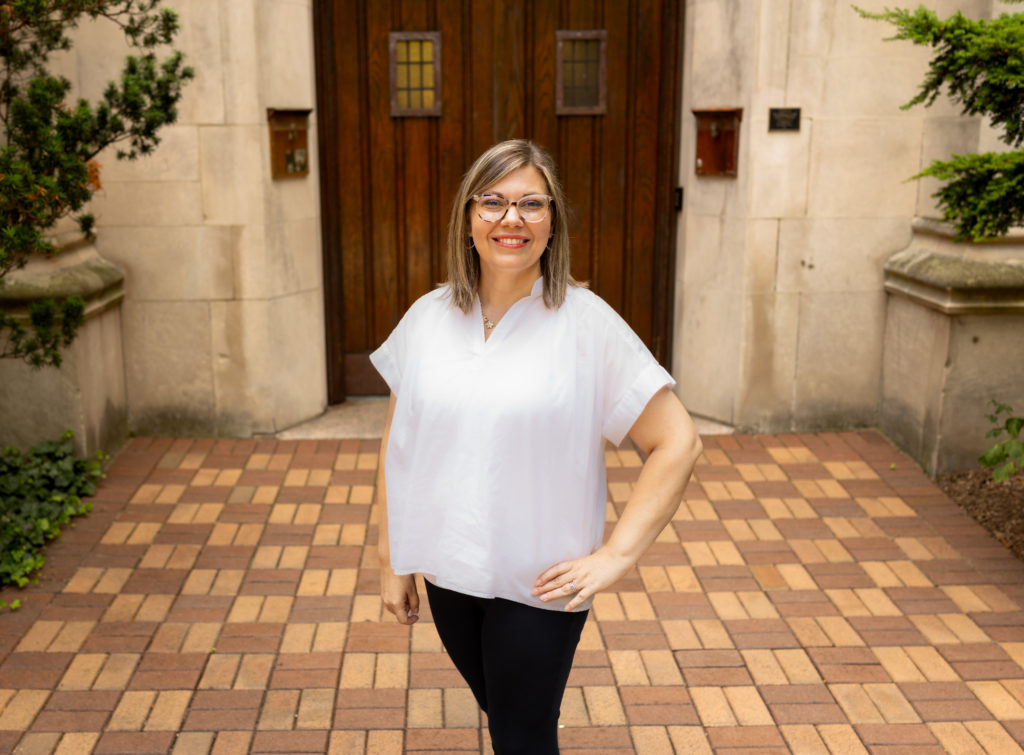
    Nicolas Gisholt is a Senior Specialist Academic Advisor for the College of Social Science at the Center for Integrative Studies and the Department of Anthropology, former Specialist representative for the Chicanx Latinx Association, and advises the Chicano Latino Studies minor. Gisholt is passionate about advocacy for the Latino community, equitable distribution of resources for students; retention and graduation rates for students of underserved groups; and mental health in university students. He is our Access Spotlight for the month of September as we celebrate Hispanic Heritage Month.

    Gisholt originally began his academic career in Mexico City, studying psychology. It was a homecoming of sorts. Gisholt grew up in Mexico and moved to the United States as a teenager for his stepfather’s new job. After earning his degree, he settled in Boston to live near family. Expecting to find a job in the psychology field, his career trajectory shifted after he applied and was offered a job teaching Spanish at a private Catholic school in Massachusetts.

    “It was kind of a surprise for me,” he said. “I didn’t plan it that way, but I said, ‘Let’s just try it.’ Not many jobs for something in psychology called me back; this one called back, and it sounded interesting.”

    Gisholt ended up enjoying the experience of teaching, but his aspirations in psychology were still on his mind. He applied to a few PsyD programs but didn’t hear back. Then, similar to his teaching opportunity, a new path presented itself. After moving to Michigan with his wife, he learned of the Social Work program at University of Michigan and its rolling admissions. He had taken a few social work-adjacent classes in undergrad while studying clinical psychology and his interest was piqued. He applied, and was accepted.

    “Social work was a very different way of looking at things compared to psychology,” Gisholt said of his time earning his MSW. “It’s given me a very good perspective about many things in life.”

    After earning his master’s, Gisholt and his wife moved to East Lansing and began the job application journey anew. Gisholt drew on his academic and teaching background to apply for an advisor position at Michigan State. “I knew that I was able to do things related to social work, psychology, and education,” he explained. While in undergrad, Gisholt participated in several internships that gave him the opportunity to interact with people from a wide variety of backgrounds, in different social situations, giving him a very open-minded perspective. Studying social work in particular taught him the importance of being involved in positive change on the grassroots level, and he saw advisory work as the perfect way to support students in similar situations to the ones he encountered on his own journey.

    “If you want society to change, then you have to be involved in some way or another,” he explained. “For me, that’s involving myself in committees, whether it’s advocacy for our Latino community or something else … you cannot just complain and hope that things change.”

    One of the most important things to Gisholt as an advisor is making sure that students have space to thrive at Michigan State and feel like they belong. This idea of belonging, Gisholt says, should extend to students from all backgrounds, some needing more support and greater access to resources than others.

    “We want to make sure we are including everybody,” he said. “First generation students, people from both urban and rural places, in and outside of Michigan, for instance. That sense of belonging is very important for every one of our students.”

    For Gisholt, the role of advising extends far beyond the academic realm. It’s about listening to students and guiding them through their college journey, which involves more than just attending classes and taking tests. He strives to make his office a trusting space where students feel like they can talk about whatever is going on in their lives.

    “I realized that as long as you give students the space, they are willing to and want to talk about what’s going on, and I try to make them feel like they have someone they can trust one on one,” he explained. “You don’t just talk about what classes they need. You have to take into consideration the variety and sense of newness they are experiencing.”

    Gisholt also enjoys that his job is always evolving; he likens it to the changing of the seasons or the start of a new season for the football and basketball teams. “I like the fact that we have to come up with new ideas about how to better serve our students,” he says. In his advisory meetings and in working with the Chicanx Latinx Association, he always opens up the floor for opportunities for students to discuss the resources they need, their experiences on campus, and encourages them to learn more about each other in the classroom and make personal connections.

    The idea of being among individuals with a shared identity also plays a role in Gisholt’s own ability to thrive at Michigan State. During Hispanic Heritage Month and the celebratory events put on by the Chicano Latino Studies program and the Chicanx Latinx Association, he especially feels like he has a home away from home where he can speak his native language and celebrate his culture.

    “I have lived here in the United States much longer than I have lived in Mexico, but I will always identify as being from Mexico and it’s a very important part of my identity,” he explained. “That’s why just being there, in a place where you have people that you can talk to and share similar values about family, culture and other things, is so important.”

    By: Emily Jodway

  • Exploring Medical Anthropology with Dr. Heather Howard

    Exploring Medical Anthropology with Dr. Heather Howard
    Dr. Heather Howard teaching.

    Recently, we had the opportunity to visit a medical anthropology class taught by Dr. Heather Howard. During this visit, students explored how Indigenous peoples’ health is defined, understood, and researched from multiple perspectives.

    We spoke with Dr. Howard about her favorite part of teaching the course, how it prepares students for their future careers, and what she hopes they take away from the experience. Here’s what she shared:
    What’s your favorite part of teaching ANP 425?

    “I love to see students respectfully learning from Indigenous peoples’ experiences, strengths, and insights— and getting excited about how they can connect these with their passions for science, health, bioethics, and the human story.”

    How do you see this class preparing students for their future careers or professional goals?

    “Many of the students who take this class are planning careers as health care providers, health researchers, or health system professionals. This course prepares them with an understanding of human diversity that is crucial to addressing some of the greatest challenges to health and well-being on the planet. For example, they learn about policy, environmental, and cultural contexts that impact Indigenous peoples’ health. These contexts prompt critical thinking about the structural processes that shape major disease trajectories—and what we can do about them.”

    What’s the biggest takeaway you hope students leave this class with? 
    “Understanding Indigenous peoples’ health is not just about being aware of the specific challenges and solutions experienced by a specific population—though that is certainly important. It’s also about how Indigenous peoples are speaking to all of us and to the future of how we all may continue to live well together as human beings. For example, 80% of the world’s remaining biodiversity is located in Indigenous peoples’ territories. Their emphasis on sustainable food systems and land and water protections is key to the future of planetary health. We can all learn from this—and act on it.”

    By Louise Henderson

  • Michigan State welcomes Dr. Phyllis Johnson to launch its first cultural resource management lab

    Michigan State welcomes Dr. Phyllis Johnson to launch its first cultural resource management lab

    With cultural resource management (CRM) accounting for up to 90% of archaeology jobs in the United States, Michigan State University (MSU) has taken a major step forward by hiring Dr. Phyllis Johnson, a new assistant professor of anthropology, to launch the university’s first CRM lab and training program.

    The CRM Lab, currently in development, hopes to support students with paid, hands-on experience in cultural resource management while completing archaeological contracts and generating revenue. Johnson envisions using the money generated from contract work to support the lab with equipment costs, graduate student assistantships, undergraduate internships and summer jobs. Once established, it will be the only lab of its kind in Michigan. Johnson said that while about 15 programs nationwide teach CRM in a serious way, only five have labs that both train students and generate revenue. Of those, just two are affiliated with Ph.D. programs—making MSU one of only three in the country to offer paid CRM training from the undergraduate to Ph.D. level.

    This training prepares students for work in a field shaped by federal regulations. Under Section 106 of the National Historic Preservation Act, any project involving earth-moving activities that uses federal or, in some cases, state funding or permitting must first be evaluated by professional archaeologists. These CRM specialists assess the land to ensure historical and cultural sites are identified and protected before construction begins.

    To help train the next generation of Spartan archaeologists, Johnson will teach CRM courses all designed to provide hands-on experience and better prepare students for the wide range of opportunities available in the field.

    “Academic archaeology makes up about 10% of the job market, and with the number of Ph.Ds increasing every year, those jobs are becoming more and more competitive,” Johnson said. “Providing CRM training to our students will give them a real advantage as they enter the workforce.”

    Becoming an Anthropologist

    Johnson knew she wanted to be an archaeologist by age 9. Growing up in Ohio, her school’s history curriculum focused on the state’s past, and within the first few weeks of fourth grade, she and her classmates were introduced to archaeology.

    “I remember asking my teacher if this archaeologist thing could be a real job, and she responded, ‘I don’t actually know,’” Johnson said.

    Curious to learn more, she went to the library and checked out books on archaeology.

    “I was hooked from the minute I learned that this was a job,” she said.

    Johnson earned her undergraduate degree at Wright State University in Ohio before heading to the University of Tennessee, Knoxville, for her master’s. There, she worked in an archaeology research lab that also operated as a CRM firm.

    “The lab allowed students to obtain paid training opportunities in CRM and many of these students went on to have very successful careers in both academia and CRM,” Johnson said.

    After completing her master’s, Johnson spent six years working for a CRM firm in Kentucky before pursuing a Ph.D. at Vanderbilt University.

    Research and Fieldwork

    Johnson’s research spans a wide range of topics, from analyzing use-wear on flake tools in eastern Tennessee to studying Maya archaeology. Her dissertation fieldwork in Guatemala focused on obsidian and chert production at a Maya site.

    She also brings her current research to MSU, which examines soil samples from the Fort Ancient culture—a group that lived approximately 600 to 800 years ago in the Ohio Valley, Indiana, Kentucky and parts of Illinois, around the same time as the Mississippian people. Her work focuses on microartifact analysis, specifically microdebitage: the tiny flakes of stone produced during the creation of tools.

    “Looking at these teeny tiny little pieces is really the only way to identify specific areas where stone tools have been made, because those tiny pieces stick into the ground and don’t get moved away like a physical tool would,” Johnson said.

    Teaching Philosophy

    This semester, Johnson is teaching Introduction to Archaeology, and in the spring, she’ll launch MSU’s first course in cultural resource management. As a first-generation college student who grew up in poverty, Johnson said her teaching philosophy centers on empathy and accessibility.

    “I try to always remember that students are people first,” she said. “They come from all kinds of backgrounds and experiences.”

    Through her classes, she hopes students gain a deeper understanding of how societies function, both in the past and present. She emphasizes that many ancient populations still exist today and that structural barriers continue to affect communities.

    Johnson is especially passionate about mentoring women and marginalized students. She’s involved with the Fairfield Foundation, a nonprofit that supports early-career women in archaeology.

    Joining MSU

    Now at MSU, Johnson is excited to contribute to the Spartans Will legacy.

    “Willpower resonates deeply with me—when I decide to do something, I make it happen,” she said. “Whether it was becoming an archaeologist at nine or returning to grad school with kids, I’ve never been one that allowed anything to stand in my

  • Anthropology grad wins grand prize award for innovative archaeology research

    Anthropology grad wins grand prize award for innovative archaeology research

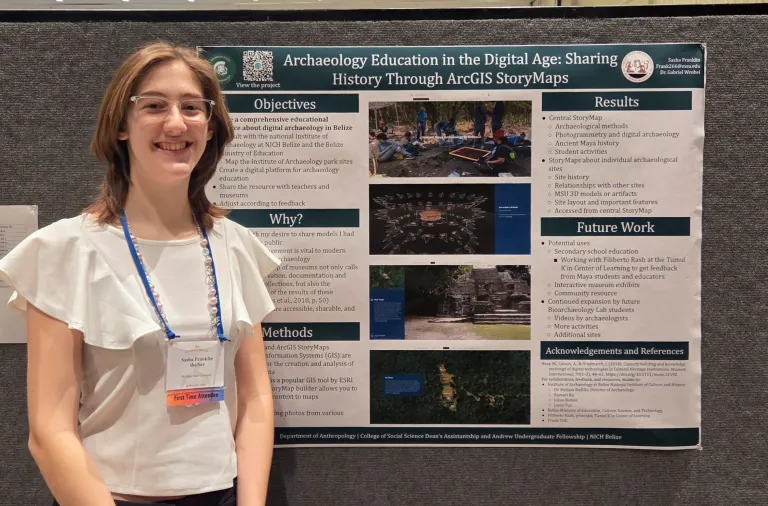
    Sasha Franklin at UURAF 2025.

    With more than 1,100 students participating in the University Undergraduate Research and Arts Forum (UURAF), only three grand prize winners were named. Among them was 19-year-old recent anthropology graduate Sasha Franklin whose nontraditional project has already gained attention.

    Franklin’s research project, Archaeology Education in the Digital Age: Sharing History Through ArcGIS StoryMaps, won the UURAF grand prize in the Social Sciences, Humanities, and Arts category. Her project used an interactive platform called ArcGIS StoryMaps. ArcGIS technology is widely used by archaeologists because it allows geographic information systems (GIS) to transform spatial data into interactive digital maps. With ArcGIS StoryMaps, photos, videos, explanations, and even 3D models can be embedded, allowing viewers to explore archaeology sites and their artifacts all in one place.

    “I was really excited this type of project was recognized,” Franklin said.

    Franklin presenting her project at UURAF 2025.

    Franklin developed the idea for her project while working in the Bioarchaeology Laboratory at Michigan State University (MSU) under Dr. Gabriel Wrobel, a professor of anthropology and the lab’s director. There, she worked with a collection from the National Institute of Culture and History in Belize (NICH). Her main role involved using photogrammetry—a technique that transforms still images into detailed 3D models of artifacts.

    “Photogrammetry and other 3D models are really accessible—you can share them with anyone, anywhere, and they offer a much clearer sense of an artifact than a photo,” Franklin said. “Additionally, since our models are made to scale, measurements can be taken on them which is helpful when doing research.”

    Knowing these models would be valuable to NICH and the public, Franklin shaped her research around making them widely accessible. Her goal was to present them in a narrative format, creating a more engaging and educational experience. Her work was made possible through several College of Social Science scholarships including the Provost’s Undergraduate Research Initiative, the Dean’s Scholarship, and the Andrew Undergraduate Fellowship, which supported her research and development of the project.

    “I’m so proud of Sasha for receiving this award—it’s wonderful to see her recognized for all the hard work she spent in the Bioarchaeology Lab these past three years,” Dr. Wrobel said. “Her project not only contributes valuable insights into Maya history and Belize, but she’s also laid a strong foundation for other students to carry this work forward.”

    To design this type of innovative experience, Franklin used ArcGIS StoryMaps—a platform she first encountered during a National Science Foundation-funded Research Experience for Undergraduates at a field school hosted by St. Mary’s College of Maryland. The platform allowed her to build an interactive website featuring multiple archaeological sites in Belize, with content covering the fundamentals of archaeology, digital techniques such as photogrammetry, 3D scanning and LiDAR, as well as classroom activities like a mock excavation and a lesson on writing names in Maya glyphs—all in one place.

    Images from Franklin’s research project, Archaeology Education in the Digital Age: Sharing History Through ArcGIS StoryMaps.

    “It can be difficult to fully understand something based on a description alone,” Franklin said. “Digital tools like StoryMaps make history easier to understand by letting people explore archaeological sites and stories in a more interactive and accessible way.”

    Franklin presenting her research at the 2025 Society for American Archaeology Annual Meeting.

    While working on the project, Franklin collaborated with archaeologists and educators in Belize—individuals looking to find new ways to share history with future generations—and received valuable feedback throughout the process. She also presented her research at this year’s Society for American Archaeology Annual Meeting, where she hopes fellow archaeologists recognized the potential of digital storytelling.

    “I hope archaeologists continue to make education and outreach a priority and work collaboratively with the communities that are invested in their projects,” Franklin said.

    Franklin in Greece.

    Continuing her work in archaeology after graduation, Franklin recently had the opportunity to join Dr. Jon Frey, associate professor of Classical Studies, Art History & Visual Culture at MSU, at an excavation site in Isthmia, Greece. There, she worked in two trenches, excavating a Roman foundation and part of a Roman bath.

    “It’s amazing to be around archeologists like Jon— whether he was chatting in Greek at the grocery store or with local artisans, he reminded me how important it is to build relationships and meet people where they are,” Franklin said.

    That’s the kind of archaeologist Franklin hopes to be. With minors in Classical and Ancient Mediterranean Studies and Women’s and Gender Studies, she’s interested in how culture shapes perception. She’s currently exploring opportunities in politics, advocacy and the nonprofit sector, with plans to return to graduate school after gaining more experience.

    By Louise Henderson

  • Graduate voice: My archaeology journey excavating Fort Michilimackinac

    Graduate voice: My archaeology journey excavating Fort Michilimackinac

    Kelly Sullivan graduated in 2024 with a degree in biology from Lyman Briggs College and in anthropology from the College of Social Science. This summer, Sullivan is working as an archaeologist at Michigan’s Colonial Michilimackinac, an 18th-century fort and fur trading village located in Mackinaw City.

    Growing up, my family has always made it a point to explore the best places that Michigan has to offer. We went to museums, campgrounds, state parks, lighthouses, historical sites, nature trails and more. One such location happened to be Fort Michilimackinac. Because of that, I have always been interested in the history that surrounds us.

    I originally started at MSU with plans to go into veterinary medicine and maybe take a few anthropology classes here and there, but in the spring of my first year, I took “Introduction to Archaeology” with Dr. Stacey Camp and found that I just couldn’t let archaeology go. By my second year in, I had added anthropology as my additional major. 

    Digging into my passion at MSU

    Kelly Sullivan at an excavation site at Colonial Michilimackinac. Photo courtesy of Mackinac State Historic Parks.

    During my time at MSU, I had the wonderful opportunity to work with both Dr. Camp and Dr. Jon Frey both in and out of class. I was able to take Dr. Camp’s “Method and Theory in Historical Archaeology” and her “Lab Methods in Archaeology” classes, where I learned more about how to do archaeology. Outside of class, I spent time in the lab cataloging data for ceramics and glass artifacts from the Kooskia Internment Camp in Idaho, and I also was part of the MSU Campus Archaeology crew in the summer of 2023, where we collaborated with Infrastructure Planning and Facilities at MSU and excavated where the first observatory was on campus. 

    Additionally, I had the chance to go on Dr. Frey’s Art and Archaeology in Ancient Greece study abroad trip in the summer of 2022. During this trip, I worked on organizing photo negatives of the artifacts. After the study abroad trip, I worked with Dr. Frey and a few other undergraduates on transcribing some photo slides for the Gregory Archive, which is a collection of the work of Dr. Timothy Gregory of Ohio State University. 

    While I was a student at MSU, Dr. Camp had talked about some of her past students working as archaeologists at Fort Michilimackinac, and considering I had such fond memories of the fort, I applied soon after graduating. Getting hired was like a dream and, working as an archaeologist at Fort Michilimackinac is an amazing opportunity. I get to be an archaeologist here, and sometimes it still surprises me. 

    Unearthing pieces of Michigan history 

    Sullivan’s tools include water sprayers and trowels of various sizes to delicately remove dirt around artifacts. Photo courtesy of Kelly Sullivan.

    Life at Colonial Michilimackinac feels like history. Our days as archaeologists here begin at 8:45 a.m. at our equipment shed, where we grab our things and walk as a group past the palisade walls and into the gates. Our excavation is near the parade grounds of the fort, so we get to see much of what is going on. The location of our excavation immerses us in the narrative of life at the fort, with interpreters in their historical garb, demonstrations, tours and the love that people have for the fort. 

    Our work is a product of history itself, through our use of the original grid system implemented in 1959 when excavation first began. Our current excavation unit was opened in 2007 and was a fur trader’s house during both the French and British occupations of the fort. The rowhouse our building is a part of was originally built in the 1730s when the French expanded the walls of the fort the first time, was rebuilt in the 1760s by the British, and then torn down by the British in 1781 during the move to Mackinac Island. 

    Sullivan and her colleagues at Colonial Michilimackinac. Photo courtesy of Mackinac State Historic Parks.

    This particular excavation had been open for many years due to its complexity with there being two root cellars and a tree planted over the north wall of the home around 1910. Even still, we are finding artifacts every day. So far, I have found fish bones, seed beads, lead shot, small pieces of broken glass and even a beaver tooth recently. My coworkers also have fun finds, including an embossed lead seal, a couple of gun flints and a frame of a shoe buckle, among other things. We have not found any gold, though many people ask.

    This story was originally featured on MSUToday.

    By Louise Henderson

  • Field Notes from Tuscany: A Student’s Perspective on Archaeology Abroad

    Field Notes from Tuscany: A Student’s Perspective on Archaeology Abroad

    Paige Topping

    Senior anthropology major Paige Topping recently spent a month in Tuscany, Italy, working with the IMPERO Project at the Monteverdi Field School. In this Q&A, she shares her firsthand experiences of living abroad, working on an active archaeological site, and how this experience deepened her appreciation for the field of archaeology.

    What interested you in participating in this archaeology dig in Tuscany? 

    I was initially drawn to this dig site because of its location­—Tuscany sounded incredible, and I had never been abroad before. I was also intrigued by Dr. Fenton’s work on skeletal analysis at a local burial site. Knowing I’d have an opportunity to work with him and his team made the experience even more appealing. 

    What was a typical day like at the dig site?

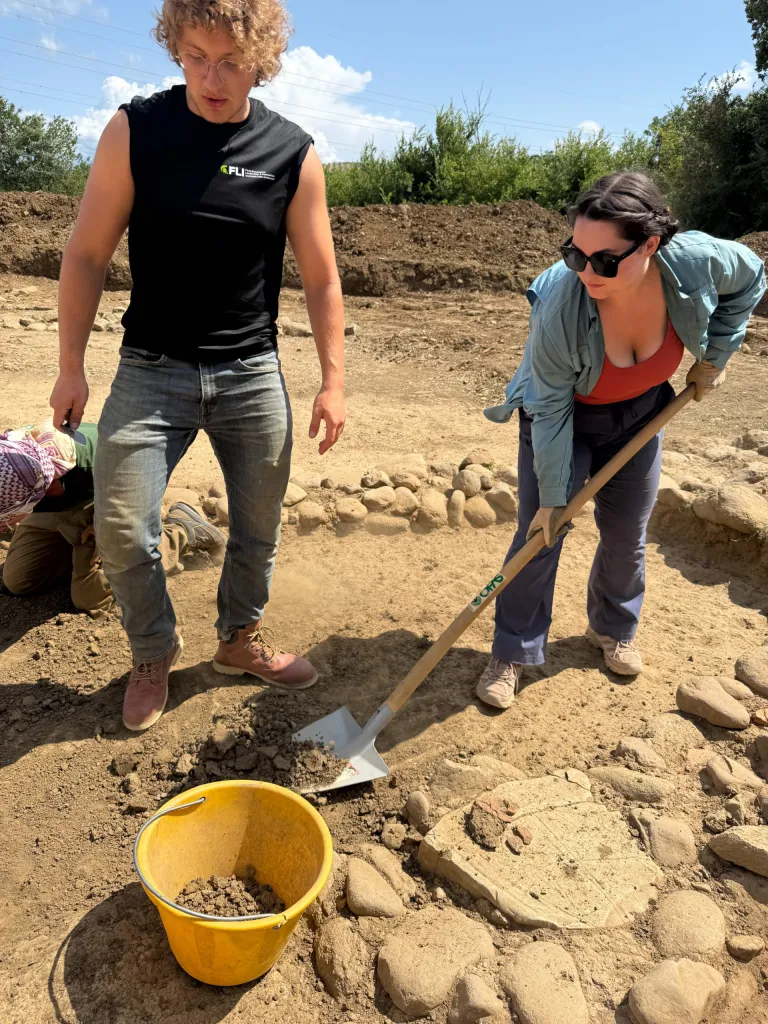
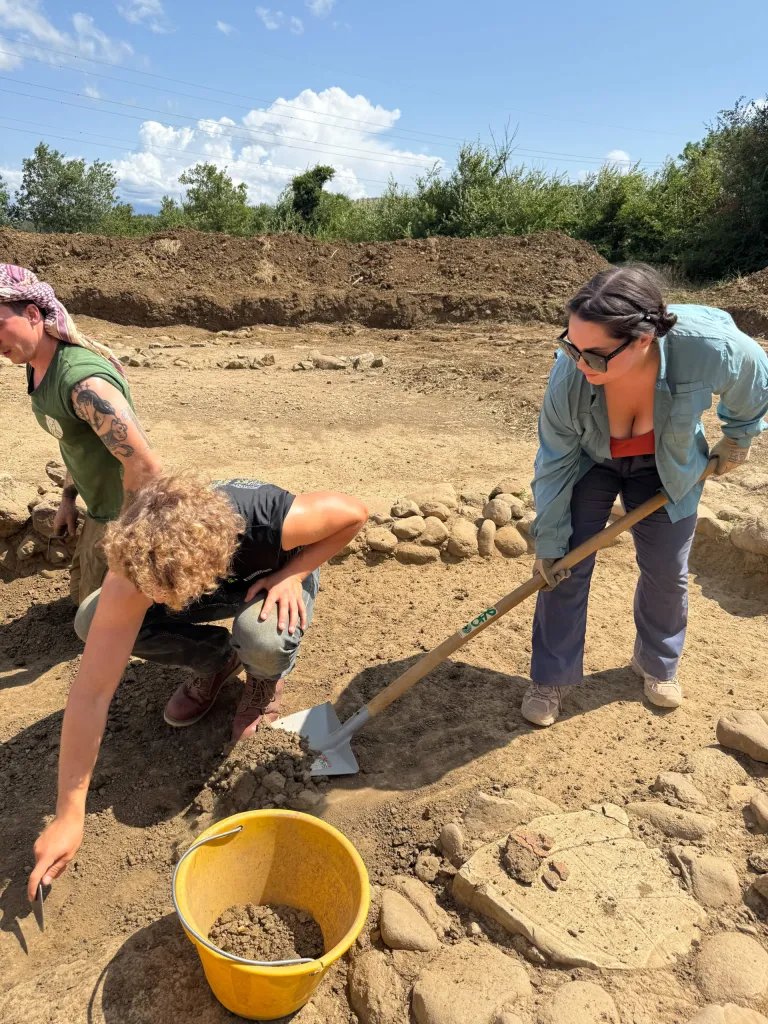
    A day on-site ran from 8:00 a.m. to 5:30 p.m., with a lunch break at 1:00 p.m. Each morning began with grabbing tools and having a brief team discussion to review the goals for the morning. Then we got to work, which involved troweling, pickaxing, or shoveling. Once we completed a context, we transitioned to documentation, which included drone work, GPS mapping, photography and paperwork. After lunch, we would either continue the morning’s tasks or focus on documenting the finds from earlier in the day.

    How did this experience enhance your understanding of archaeology or anthropology?

    This experience gave me incredible insight into the daily life of a professional archaeologist, both from the perspective of a site manager and as a fieldworker. Our site manager was highly engaged and committed to our learning—he often had us help him with documentation and background tasks. Beyond fieldwork, we attended lectures led by staff members who shared their research interests and experiences in archaeology. Having both hands-on field training and classroom-style learning was extremely helpful in enhancing my understanding of the diverse career paths available within archaeology and anthropology.”

    Students working at dig site.

    Did you gain any new skills or insights that you’ll use in your future studies or career? 

    This experience significantly deepened my understanding of archaeological practices while also equipping me with transferable skills that I can use beyond the field. I’ve grown more confident in how I communicate about my work and engage with others professionally. Additionally, I built several relationships with both staff and students, expanding my network of social scientists and potential research collaborators.

    Do you have a favorite memory from your time in Tuscany you would like to share? 

    One of my favorite memories was spending weekends cooking with my roommates or staying up late talking with everyone in someone’s apartment. Those small, everyday moments brought a real sense of community to the experience. They gave me a chance to learn so much about my fellow students and friends.

    Is there anything else you’d like to share?

    Archaeology is hard—but it is incredibly rewarding to see the physical work you have done. Being part of something bigger than yourself, something that will continue years after graduation is a truly surreal and humbling experience.  If you’re a student even slightly curious about archaeology, I encourage you to explore it! It’s a multidisciplinary field filled with so many wonderful people.

    By Louise Henderson

  • New study reveals how breastfeeding mothers adapt to environmental stress

    New study reveals how breastfeeding mothers adapt to environmental stress

    Can a mother’s body protect her breast milk even if she is malnourished? Yes.

    In her new study, Dual Behavioral–Physiological Buffering of Mothers’ Milk Facilitates Drought Adaptability of Pastoralists and Agropastoralists in Northern KenyaDr. Masako Fujita examines how environmental challenges—like drought—affect the nutrition and health of 221 breastfeeding mothers living in northern Kenya.

    Young boys herding goats and cattle in northern Kenya.

    “During a severe drought, we found that mothers protect both their own nutrition and the nutrients in their breast milk—safeguarding their babies—through a combination of social support, behavioral choices, and biological responses,” Fujita said.

    By Louise Henderson

  • MSU helps advance efforts to reduce ligament injury in dog knee replacements

    MSU helps advance efforts to reduce ligament injury in dog knee replacements

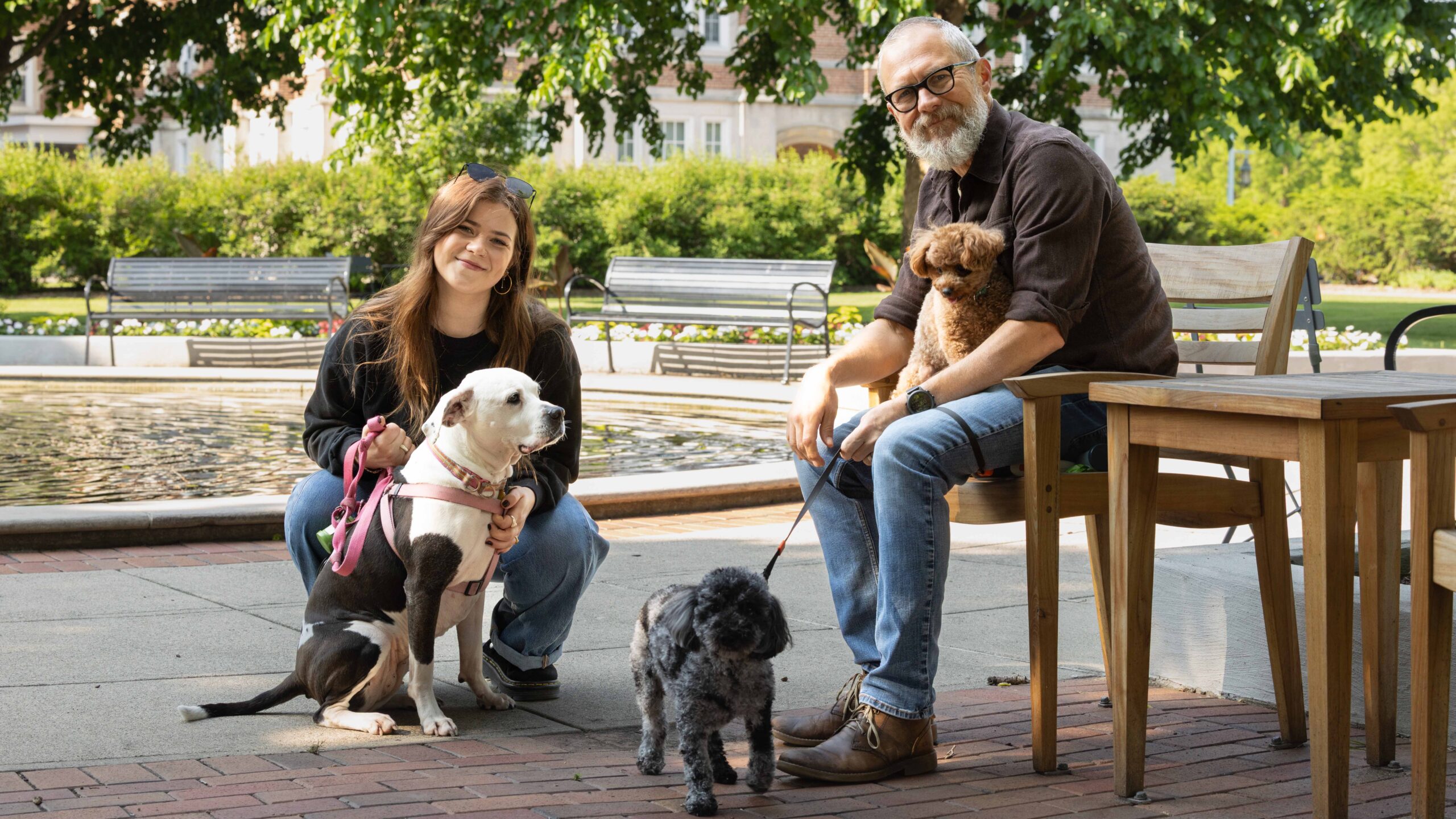
    Savannah Holcombe, doctoral student and Dr. Joe Hefner pictured with their dogs.

    An unexpected collaboration between forensic anthropologists and veterinarians could help reduce ligament injuries during total knee replacement (TKR) surgeries in dogs.

    Dr. Joe Hefner, a forensic anthropologist, and Savannah Holcombe, a doctoral student at Michigan State University (MSU), partnered with researchers from MSU’s College of Veterinary Medicine and Cambridge Veterinary School to improve the accuracy of identifying collateral ligament attachment points in dogs. Their goal is to enhance surgical planning by providing orthopedic veterinarians with more precise imaging and anatomical reference points.

    Hefner explained many TKRs in dogs are less successful due to the limited visibility of the lateral and medial collateral ligaments in pre-surgical scans.

    “If a medial or lateral ligament is damaged during surgery, the dog’s mobility can be severely affected,” Hefner said. “The leg will never regain its original mechanical strength.”

    To address this is, Dr. Matthew Allen of Cambridge reached out to Hefner for his expertise in 3D digitization of bone specimens.

    “The goal of this project was to create a scanning method that enables precise surgical cuts using dry bone specimens as a reference—that’s where we came in,” Hefner said.

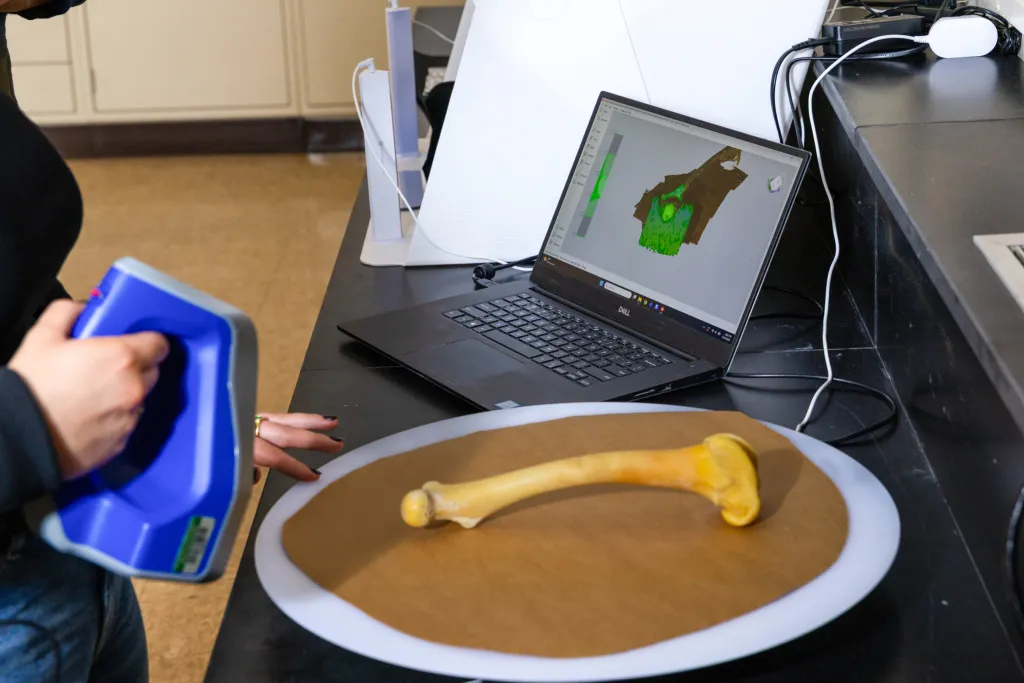
    Using the Artec Space Spider, a high-resolution 3D scanner, Holcombe created detailed 3D digital models of the femur, tibia and fibula from 12 donor dogs. The bones, which varied in size, were marked with fluorescent green dots to indicate the exact attachment points of the medial and lateral collateral ligaments.

    Holcombe performs a 3D scan of a nonhuman bone using the Artec Space Spider scanner. 

    “The final scan resembled high-resolution photographs, capturing every detail in full color and allowing for interactive 3D viewing,” Holcombe said. “Because the scanner records both color and surface detail, it accurately captured the fluorescent markers showing where the ligaments attach.”

    Dr. Joe Hefner and Savannah Holcombe.

    Hefner and Holcombe’s background in forensic anthropology—rather than veterinary medicine—helped bring a fresh perspective to the project.

    “It’s exciting to explore more anatomy-focused area of the field,” Holcombe said. “Using MRI and 3D scans for clinical purposes like reducing surgical risk is a valuable way we can contribute as anthropologists.”

    Their research, titled Evaluation of Collateral Ligament Location and Risk of Injury During Total Knee Replacement in Dogs, won the Collaborative Grant Award at the Veterinary Orthopedic Society’s 52nd Annual Conference.

    As the research progresses, Hefner and Holcombe hope their scans enhance surgical precision and significantly reduce the risk of ligament injury during TKRs.

    By Louise Henderson

  • Anthropology researchers examine COVID-19’s ongoing impact on families and nations

    Anthropology researchers examine COVID-19’s ongoing impact on families and nations

    A new open-access publication features the work of Dr. Heather Howard, associate professor of anthropology at Michigan State University, and MSU doctoral candidate Priyanka Jayakodi. The book, titled Covid’s Chronicities: From Urgency to Stasis in a Pandemic Era, examines how the COVID-19 pandemic has evolved from a global emergency to a state of chronic unpredictability. Drawing on research from across five continents, the volume documents the pandemic’s continuing impact on health systems, economies and communities, while also highlighting the creativity and resilience of local responses.

    The full publication is available as a free PDF.

    By Louise Henderson

  • Discovery of ancient wolf mandibles links the Illinois Hopewell to Michigan 

    Discovery of ancient wolf mandibles links the Illinois Hopewell to Michigan 

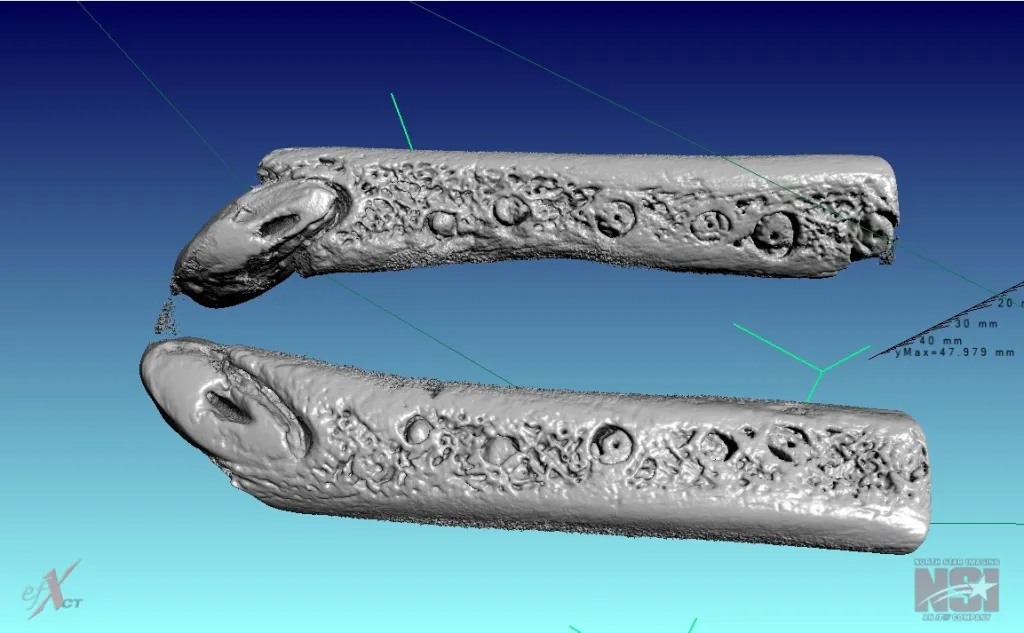
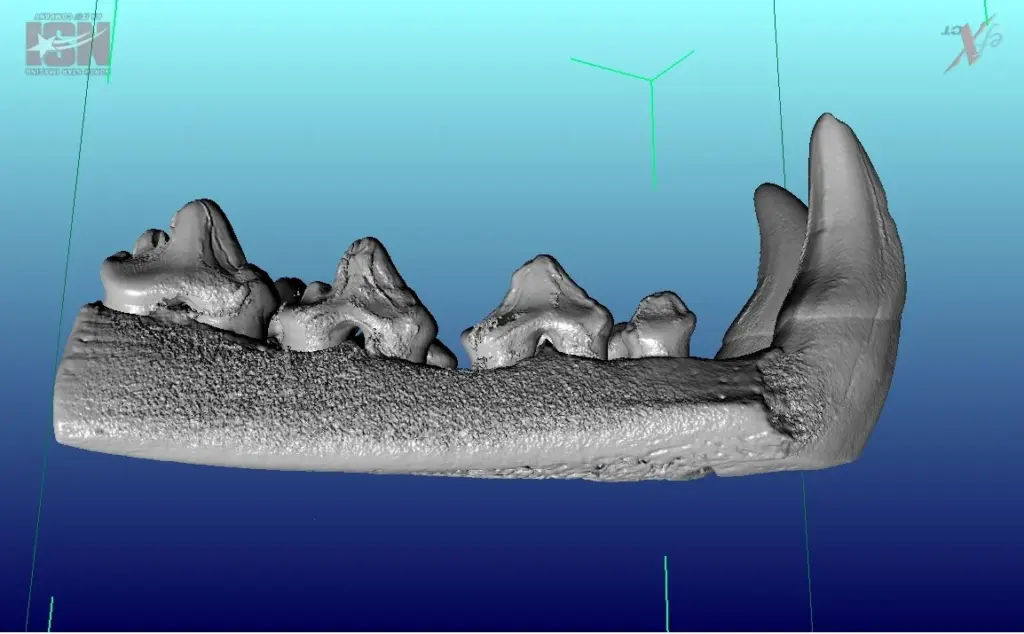
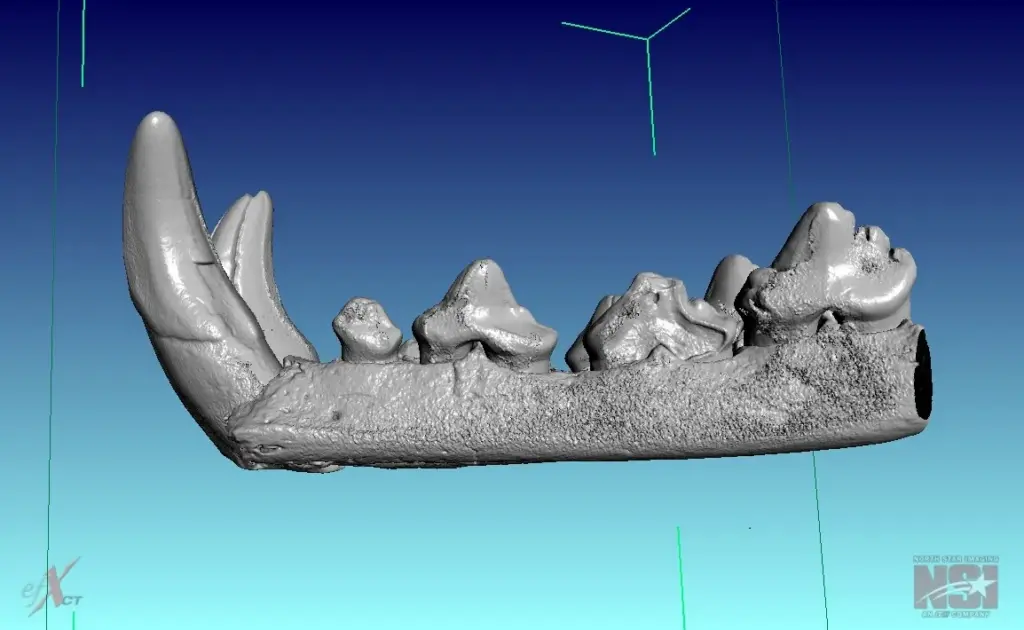
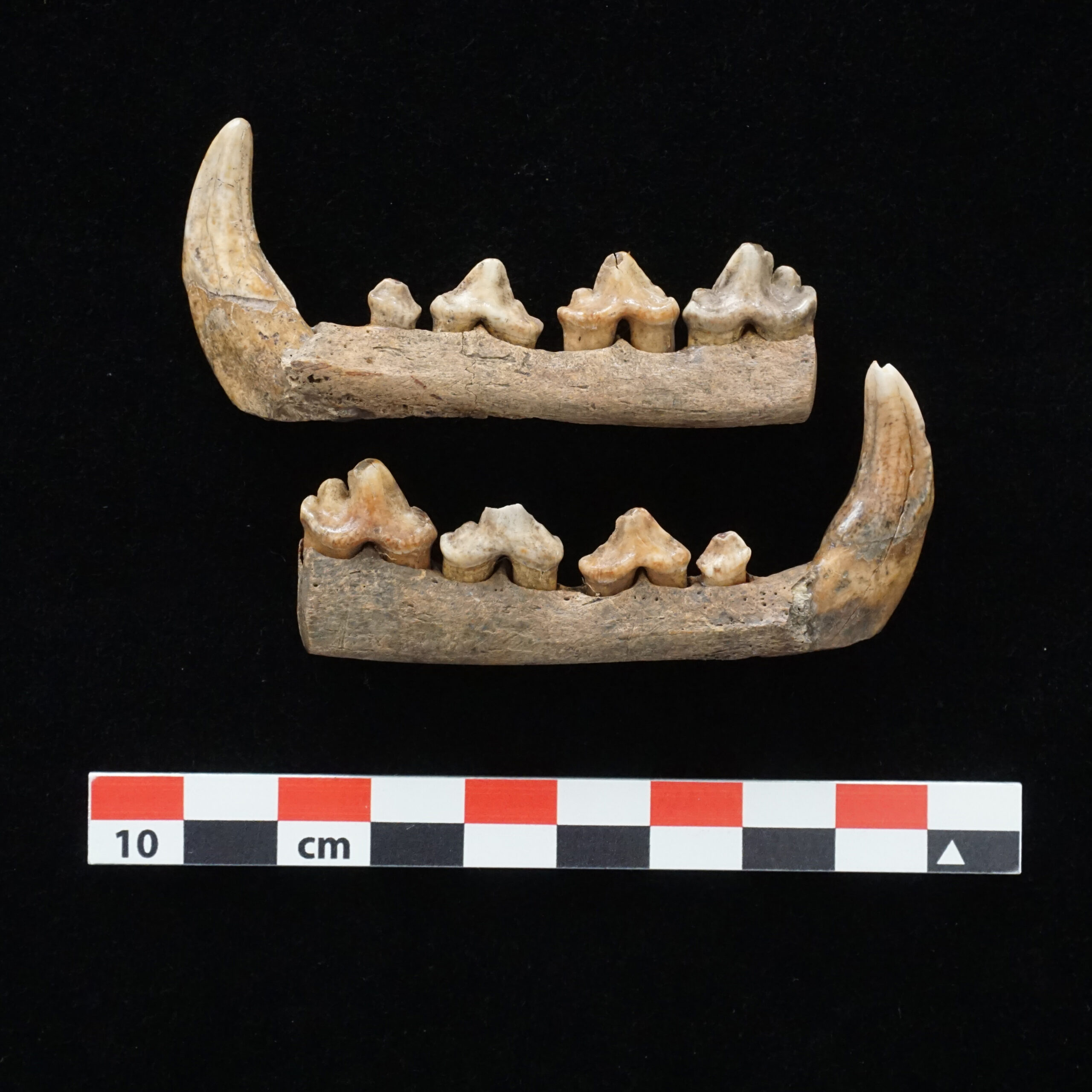
    The discovery of two 2,000-year-old modified wolf mandibles has provided new insight linking the Illinois Hopewell to southern Michigan. 

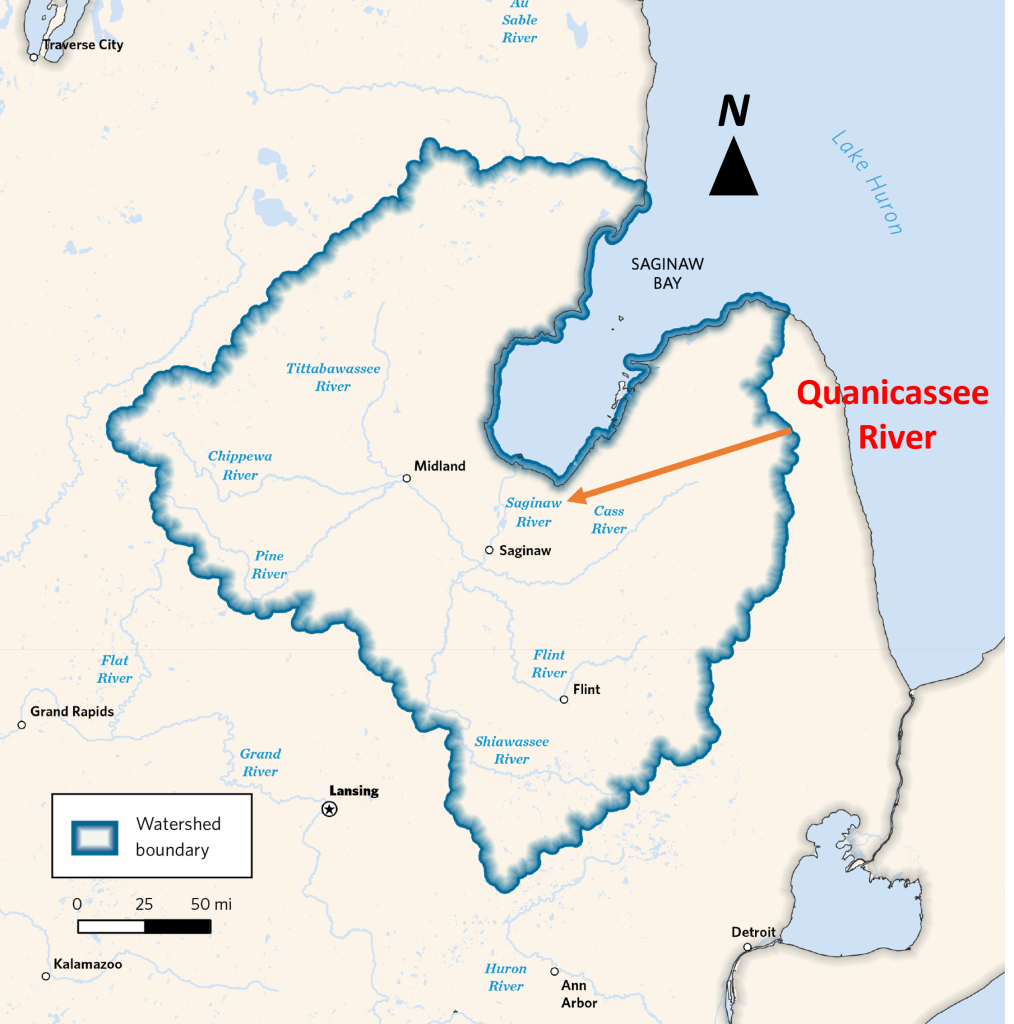
    Professor Emeritus Dr. William Lovis of the Department of Anthropology at Michigan State University and the late Maurice O. Haag published an article in Illinois Archaeology, “Cut and Polished Wolf Mandible Segments from the Quanicassee River Drainage, Michigan,” revealing evidence that connects these artifacts to the Illinois Hopewell. 

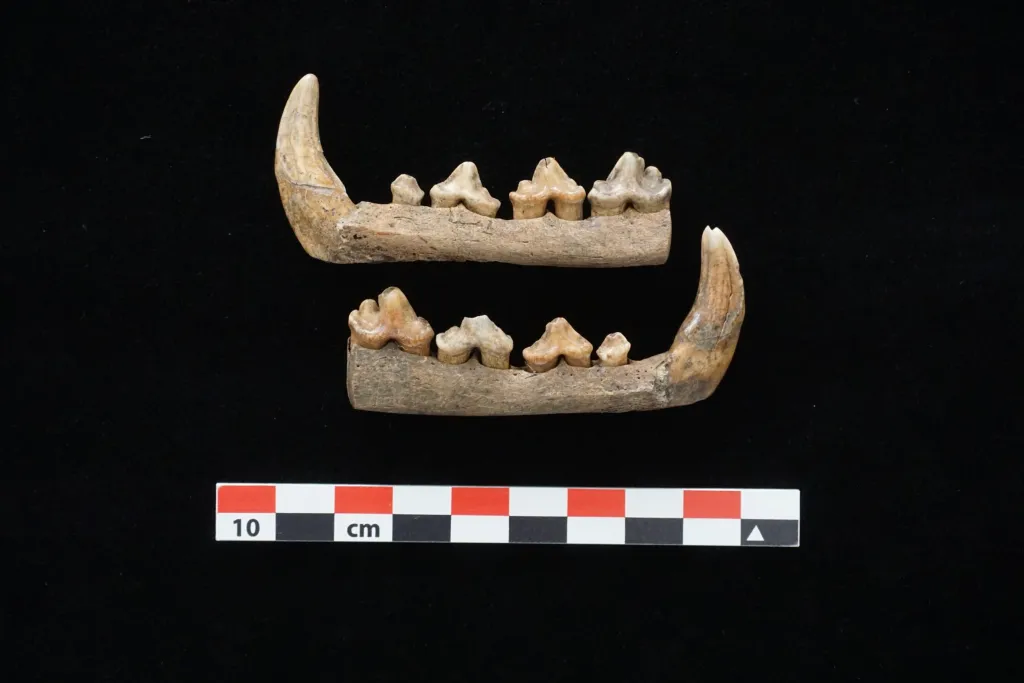
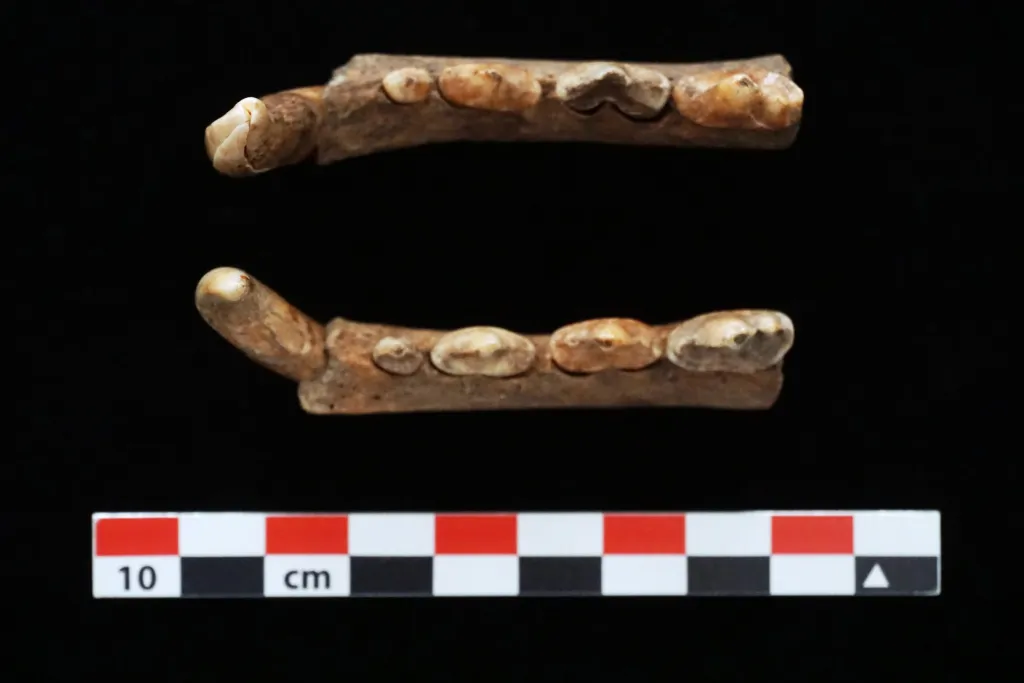
    Lovis said the mandibles were intentionally modified in a style used by the Illinois Hopewell, a Native American civic and ceremonial complex that existed in the Midwest before European contact, particularly in Ohio and Illinois.  

    Although the exact purpose for the modifications remains uncertain, Lovis agrees with others who believe they were likely meant to help an individual to embody an animal spirit or clan totem during personal or communal ceremonies. 

    Wolf mandibles, top view. 
    (Photos by W. A. Lovis)
    Wolf mandibles, lateral view.
    Wolf mandibles, top view.

    “Large parts of the jawbones—including the teeth and palate—were precisely cut away and discarded, with the remainder polished, most likely so the resulting parts could fit in a person’s mouth or be attached to a mask or piece of headgear,” he said. 

    Although the presence of Illinois Hopewell was widespread in the Midwest, evidence in Michigan is uncommon. Lovis explained that occasional archaeological discoveries in Michigan have suggested a connection between the state and Hopewell’s more central areas in the south.  

    Lovis and Haag shared an interest in the Saginaw Bay region and developed a trusted relationship over the past few decades. When Haag found and recorded the modified wolf mandibles, he recognized their importance and connected with Lovis to perform further evaluation on the artifacts.  

    “Community members, like Haag, as well as professionals, can make significant contributions to our knowledge of the past,” Lovis said.  

    To digitally preserve the mandibles, researchers conducted a micro-computed tomography and structured light scan to capture 3D imagery of the intricate bone modifications. These methods ensured that the data could be shared with future researchers—even more crucial after Lovis explained that, following Haag’s death, his artifact collection was stolen, including the modified wolf jaws. 

    Scans above are Computer Assisted Tomography (Micro CT) Scan of Wolf Mandible Segments. Top view, bottom view, right lateral view and left lateral view (left to right). (Images by D. Chittenden.  Imaging software by North Star Imaging [NSI], an ITW Company.  www.4nsi.com; xrayinspectionservice.com)

    “Unless the theft is recovered, the digital imagery and our article will be the only pieces of information available,” Lovis said. 

    Dr. William Lovis

    For more information and access to the article, contact Dr. William Lovis (lovis@msu.edu).

    By Louise Henderson