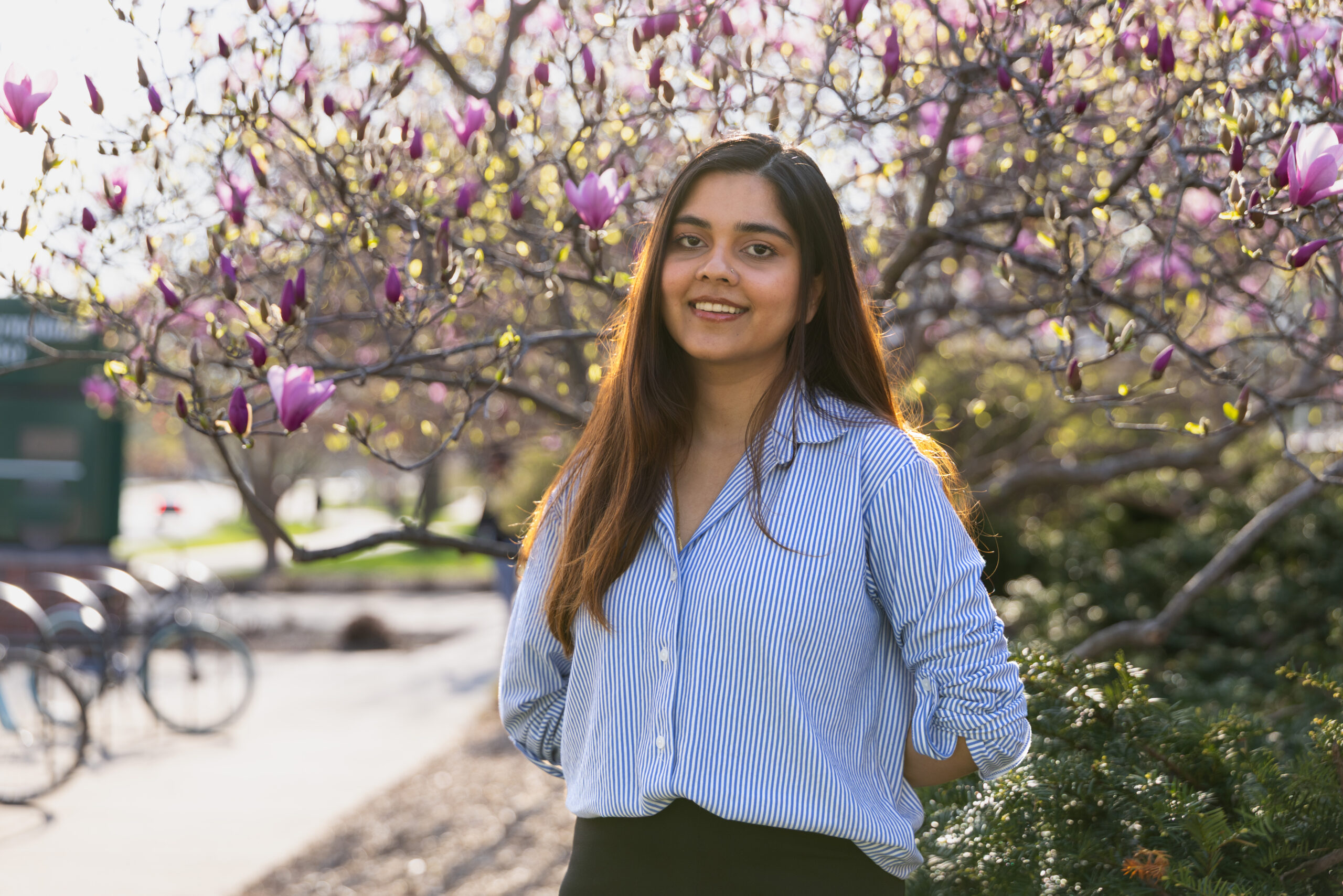
Gungun Islam, an anthropology doctoral student, won first place in the 2024-2025 Shao Chang Lee Best Paper Competition. Islam said receiving this award was a ‘powerful reminder’ that her research is significant.
“It’s rewarding to see my hard work, long hours of research, and emotional investment in the topic recognized in such a tangible way,” she said. “It reaffirmed that the questions I am exploring and the lens I bring to my research are contributing something valuable to broader conversations.”
Shaped by her everyday experiences, Islam’s decision to pursue a graduate degree in anthropology grew from her curiosity to understand how individuals navigate their lives within larger social contexts.
“Anthropology offered me not just a framework to explore these questions, but a language and method to engage with them thoughtfully and with depth,” she said.
Islam hopes her paper emphasizes the powerful influenced the past has on the present.
“Unless we confront that history, we risk repeating its patterns,” she said.
It’s one of those rare warm and sunny days in early April when I meet Adena Norwood for the first time. The sky is perfectly blue, and for a minute, I remember why I enjoy living in Michigan. As I walk into a local East Lansing coffee shop, I hear the barista call Adena’s name. I wave and introduce myself.
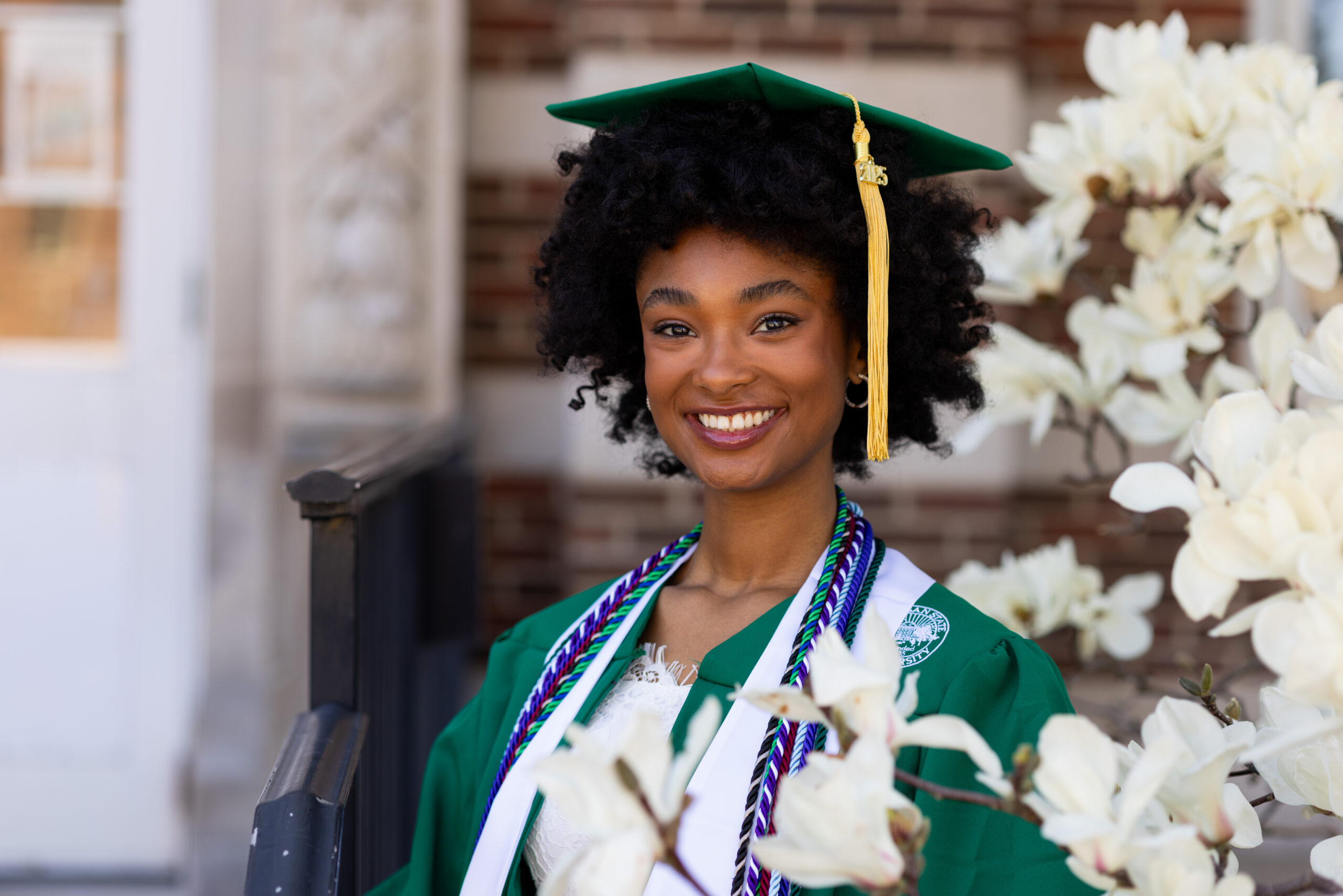
I’m instantly drawn to her bubbly energy, authentic smile and poised demeanor as she welcomes me to a table in the corner for us to talk. Immediately, I see why Adena was selected by the Dean’s Student Advisory Council to be the College of Social Science’s commencement speaker.
Adena is graduating this May with a degree in Anthropology and a minor in International Development. Adena mentions that four years ago, she set a goal to become the speaker and marked her calendar to manifest it.
“When I went in for my interview where I shared my speech, I got emotional because as I looked at the council of students, I saw one person from each organization I’m a part of,” she says. “I just knew it was meant to be that I applied. “
She smiles as she shares how honored and ‘over the moon’ it felt to be selected. She hopes people find her speech inspiring, interesting, but also entertaining. Adena explains that her speech emphasizes the importance of figuring out when to make sacrifices for the things you love. It’s evident her appreciation for life and desire to help those around her is the legacy she wants to create.
“The important things in life are building who you are, figuring out what’s important to you and choosing when to sacrifice,” Adena says.
And that’s exactly what Adena has done over the past four years. As our conversation unfolds into hobbies and the organizations she has spent time with while at MSU, Adena emphasizes that each decision she makes is intentional. From the classes she chooses, study aboard opportunities she embraces, leadership roles she undertakes, and part-time jobs she accepts – Adena strives to differentiate her skill set and engage with life in unique ways.
“I think leaders require diversity in their abilities,” she explains. “As an expert I can only do one thing and that is suffocating to me.”
Adena’s goal is to become a public foreign service officer with the State Department or the United States Agency for International Development (USAID). She will be starting her master’s program this fall in International Migration and Refugees at Georgetown University.
“I want to create research-informed solutions to finding migrant crisis solutions in Arabic-speaking African countries, whether it’s working with governmental organizations or developing political systems and governance,” Adena said.
I ask her if this has always been a dream, and she tells me she engaged with politics and public service at a young age as her father is a civil engineer for the Navy.
Growing up in a miliary family, Adena moved frequently. She was born in Novi, Michigan but since has spent time in Canada, Delaware, and now her family resides in Southern Maryland.
“It’s rural and I love it,” Adena says.
Adena attended Elizabeth Seaton High School, an all-girls Catholic school. She attributes these years to be some of her most formative experiences of her life.
“I became who I am there, and it gave me the confidence I have,” she says. “It was incredible to be in an environment surrounded by women, all striving for something greater.”
While in high school, Adena obtained several summer internships that allowed her to work with the public defender’s office, the court of appeal and the D.C. Historical Museum. These opportunities fueled her love for politics, law and international work. Although staying near the DC area may have provided Adena with a more direct path toward her career as a future diplomat, she was ready to leave and headed to Michigan State University (MSU).
“I have found peace with never doing things the way people expect me to,” Adena tells me. “It may be more difficult, more expensive, I may be in debt, but I’m happy and I’m doing it in a way that gives me interesting experiences and I love who I am now.”
Adena chose a focus in cultural and linguistic anthropology as it allows her to be an ethnographic researcher. She tells me how she values learning, but also experiencing different communities, languages and cultures.
During her sophomore year, Adena was accepted into the Social Science Scholars Program. She said Social Science gave her the flexibility she needed to figure out what she wanted to study and allowed her opportunities to try new things.
“The College of Social Science gave me the ability to see what I really wanted to do and become someone multifaceted,” she says.
Adena truly embodies this multidimensional philosophy. She tells me that outside of her academics, she participates in several extracurriculars. She’s a member of Black Girl Fitness Club, started a career in modeling and is a member of both the Women’s Leadership Institute and Delta Phi Epsilon, a Professional Foreign Service Sorority.
Tears begin to fill Adena’s eyes and her voice begins to catch as she speaks about the meaningful female relationships she has formed through her sorority. She tells me she longed for a ‘best friend forever’ but her frequent moves made it difficult her to be able to create lasting friendships.
“Media and television aimed at women and girls often emphasized a dreamy and elusive best friend, almost partner-like relationship that I never had, and thought only existed in fantasy,” she said. “But when I came to MSU, I was able to reconsider whether a friendship like that was possible for me and I’m happy to say I have finally found it.”
One of Adena’s most grounding hobbies is yoga. She shares that her journey to become a yoga instructor began over a year ago and since has fallen in love with its core principles. With her busy lifestyle, yoga helps her slow her down and maintain balance.
“Yoga teaches me resilience, discipline and can be applied everywhere in my life,” she says. “I’m lucky to have found my creative outlet, my physical outlet, my academic outlet, and I’ve got an amazing community here at Michigan State through all the organizations I’ve been in.”
As we sipped our chai tea, we reflected on the impact MSU has left on Adena. She explains that the university has given her a ‘tapestry’ of different experiences, people and communities that fuel her to keep searching for ‘what’s next.’
“I don’t want to be forgettable; I want to make sure that I leave my mark wherever I go,” Adean says. “I don’t like to leave a place the same.”
As we wrap up our conversation, she shares with me a quote from Maya Angelou, “ask for what you want and be prepared to get it.”
Adena has lived this personal mantra throughout undergrad. She explains that she meticulously prepares for each goal she pursues, and even if things don’t go as planned, she perseveres.
“If you’re not worried about what it’ll look like getting there, keep going,” she says. “It’s not going to look the same way you expect it to, but it will happen.”
When a medical examiner needs help identifying a deceased person and determining how that person died, they turn to forensic anthropologists.
To aid in the identification of unknown human remains, forensic anthropologists are often called upon to create a biological profile, or an estimation of the unknown individual’s age, biological sex, social race (or ancestry) and stature.
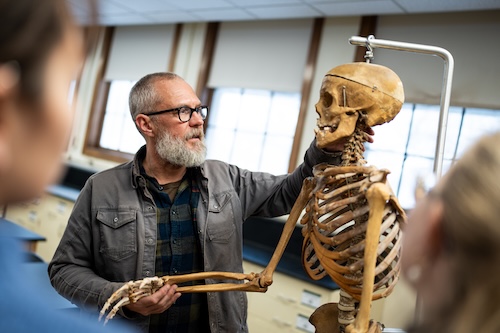
Joe Hefner in his lab. Hefner is leading a project to develop a a computer program that produces a holistic biological profile of human remains. Credit: Nick Schrader.
If you’ve watched the TV show, “Bones,” in which the FBI teams up with a forensic anthropologist to solve federal cases that may involve murder and human skeletal remains, you have some familiarity with the field of forensic anthropology. However, the real work of a forensic anthropologist isn’t exactly like it’s portrayed on the show; their work is generally slow, methodical, and often low-tech. Like the show’s protagonist, forensic anthropologists do work with a bewildering array of methods, but those methods may produce idiosyncratic results. Currently, forensic anthropologists have no way to determine how differing results should be weighed or reported.
Joe Hefner in his lab. Hefner is leading a project to develop a a computer program that produces a holistic biological profile of human remains. Credit: Nick Schrader.
Michigan State University is leading the effort to create a computer program that produces a holistic biological profile of human remains and makes the investigative process clearer and more efficient. The project, called MOSAIC, or Methods of Sex, Stature, Affinity and Age for Identification through Computational Standardization, is funded through a $2.1 million grant from the National Institute of Justice.
“MOSIAC will take data from skeletal remains and put them into a single algorithm, which will determine what is and isn’t important for the various components of the biological profile,” said Joe Hefner associate professor of anthropology in MSU’s College of Social Science. “This is the first time this has ever been attempted and it’s the first program in forensic anthropology that’ll do it.”
Hefner noted there are other programs that can estimate age, biological sex, height and social race, referred to as “population affinity” in forensic anthropology, separately. These existing programs measure each component in a vacuum: They do not talk to each other. It’s up to forensic anthropologists who specialize in specific elements of determining a biological profile to work together and form a comprehensive picture.
Joe Hefner measures a bone. Credit: Nick Schrader.
Hefner mainly researches aspects of social race and specializes in how skull shapes vary across the globe. So, if he was analyzing a skull, he would look at the size of the brow ridge above the eye and the shape of the bone behind the ear to determine biological sex. He would check the roof of the palate to see if sutures there are fusing and the level of tooth development to determine age. He would measure the long bones to determine their height and look at the base of the nose, the shape of the eye orbits, and the muscle attachment points on the cheek to determine roughly where their ancestors would have been from.
“But I do all of those independent of one another and they don’t inform each other,” he said. “MOSIAC is going to leverage the relationship between all those structures and actually provide estimates for us without potentially biasing ourselves by focusing on one aspect of the biological profile, and then another, and another, and so on. Instead, MOSAIC processes everything at one time.”
The MOSIAC project originated from conversations Hefner had with Kate Spradley, a professor of anthropology at Texas State University and one of his co-principal investigators on the project. Other MOSIAC collaborators include Heather Joy Hecht Edgar, professor of anthropology and forensic anthropologist in the Office of the Medical Investigator at the University of New Mexico; Kate Lesciotto, assistant professor at the University of North Texas Health Science Center; and Alexandra Klales, professor of forensic anthropology at Washburn University.
“[Spradley and I] started talking about how we can combine our data, which led us to think about combining other anthropologists’ data,” Hefner said.” The next step was MOSAIC, which takes all of this to the next level.”
To gather skeletal data for this project, Hefner and his research team will be visiting collections across the U.S., but also in Mexico, Japan and South Africa.
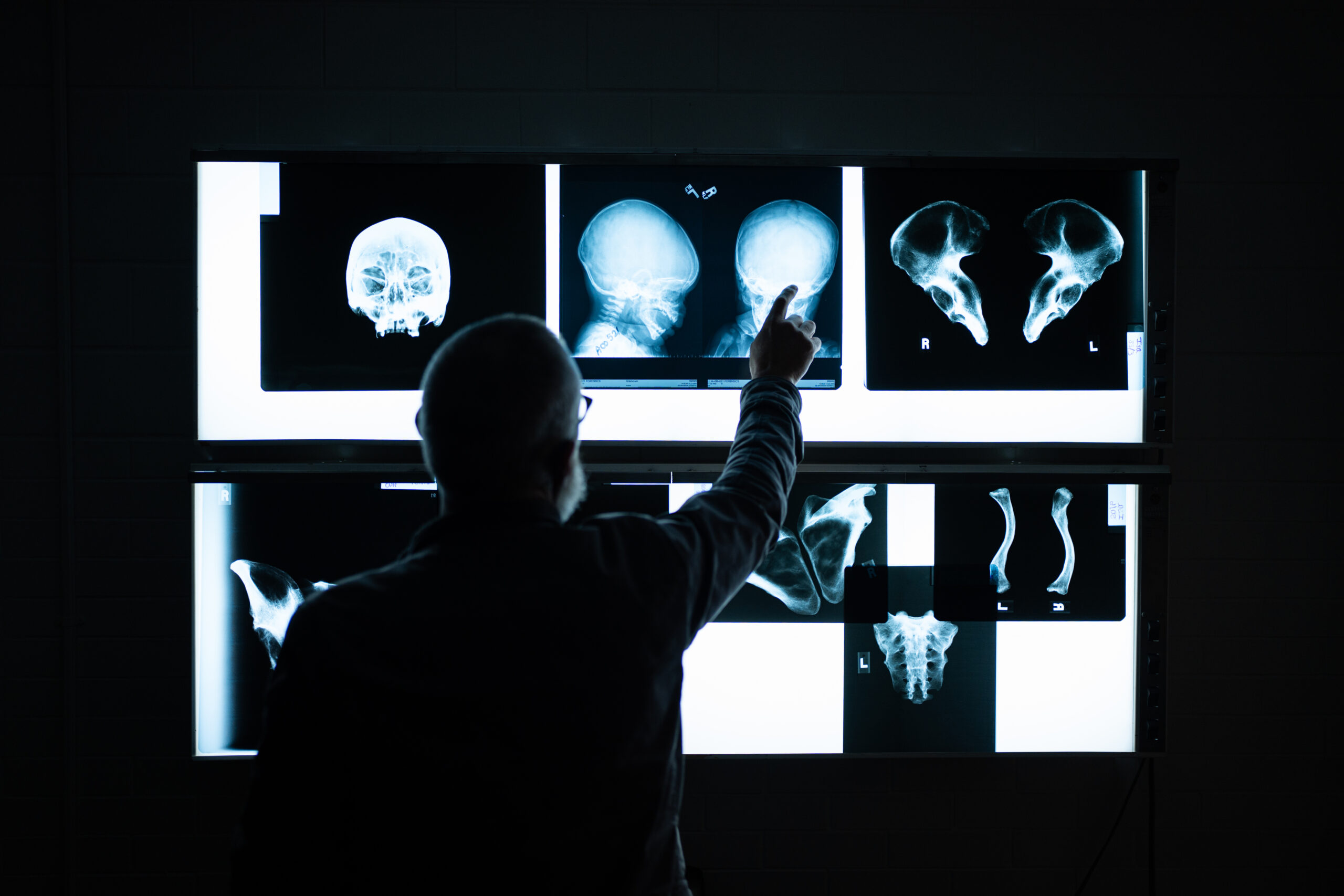
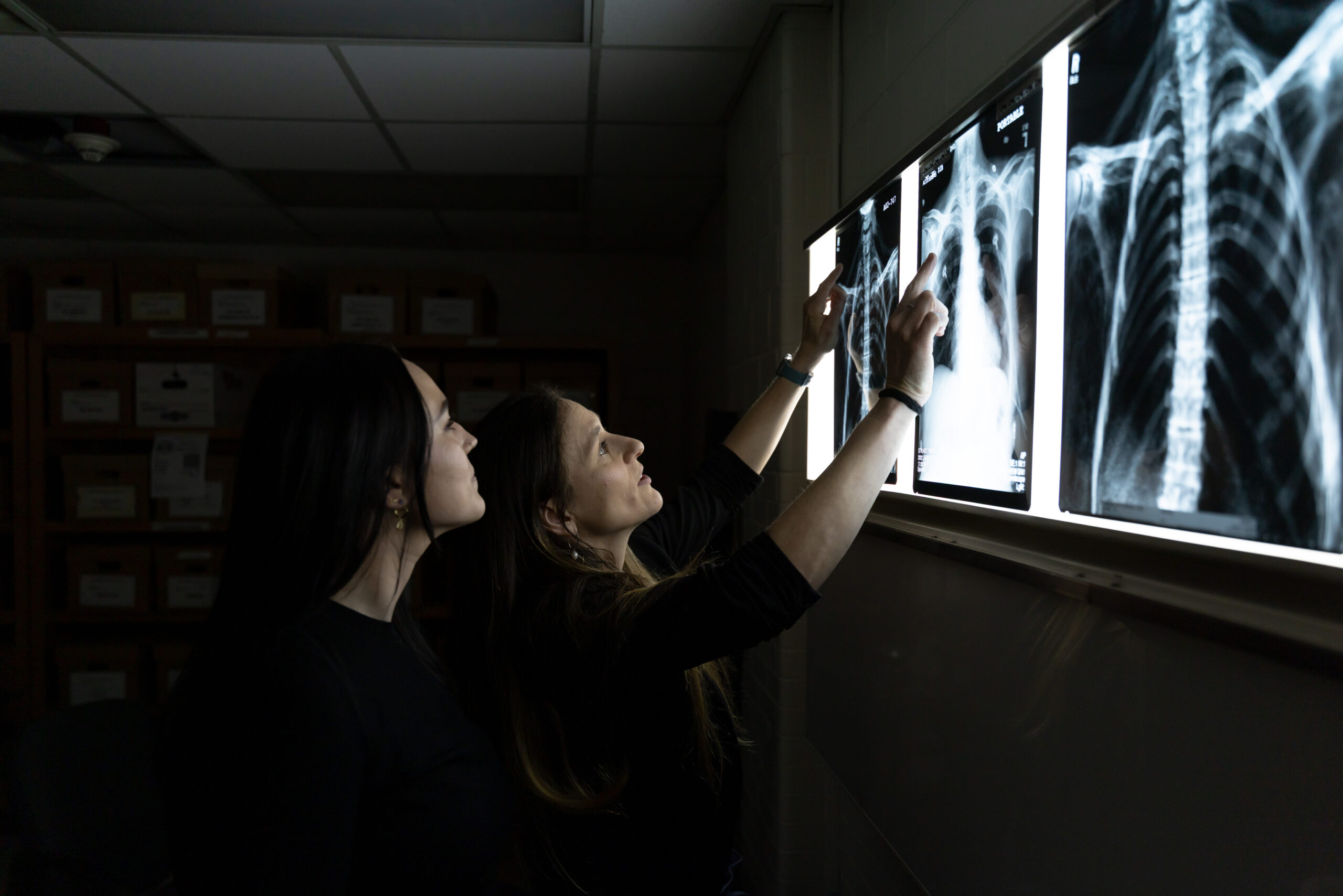
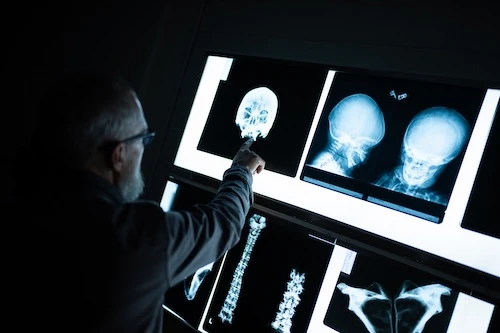
Joe Hefner analyzes radiographs in his lab. Credit: Nick Schrader.
“All of those data are going to better account for human variation, or the range of physical characteristics humans can have, that exists around the globe,” Hefner said. “That expands the possibilities for MOSIAC — it can be used not only by U.S.-based forensic anthropologists, but also by forensic anthropologists around the world.”
Hefner is in the process of hiring a postdoctoral researcher to be part of the project and will be bringing a graduate student on in fall semester 2025. These researchers will travel around the world logging skeletal collections to create the MOSIAC database and develop and test the software.
“We’re going to get to train the next generation of forensic anthropologists at MSU,” he said. “The MOSIAC Lab is going to give our graduate students exciting real-world experience; they basically get to create a computer program that I believe will change forensic anthropology.”
Hefner said he’s proud to continue MSU’s legacy of innovation.
“In 20 years, the work we did with this project will remain incredibly important and will have resulted in a true paradigm shift in how data are collected, analyzed and interpreted in forensic anthropology,” he said.
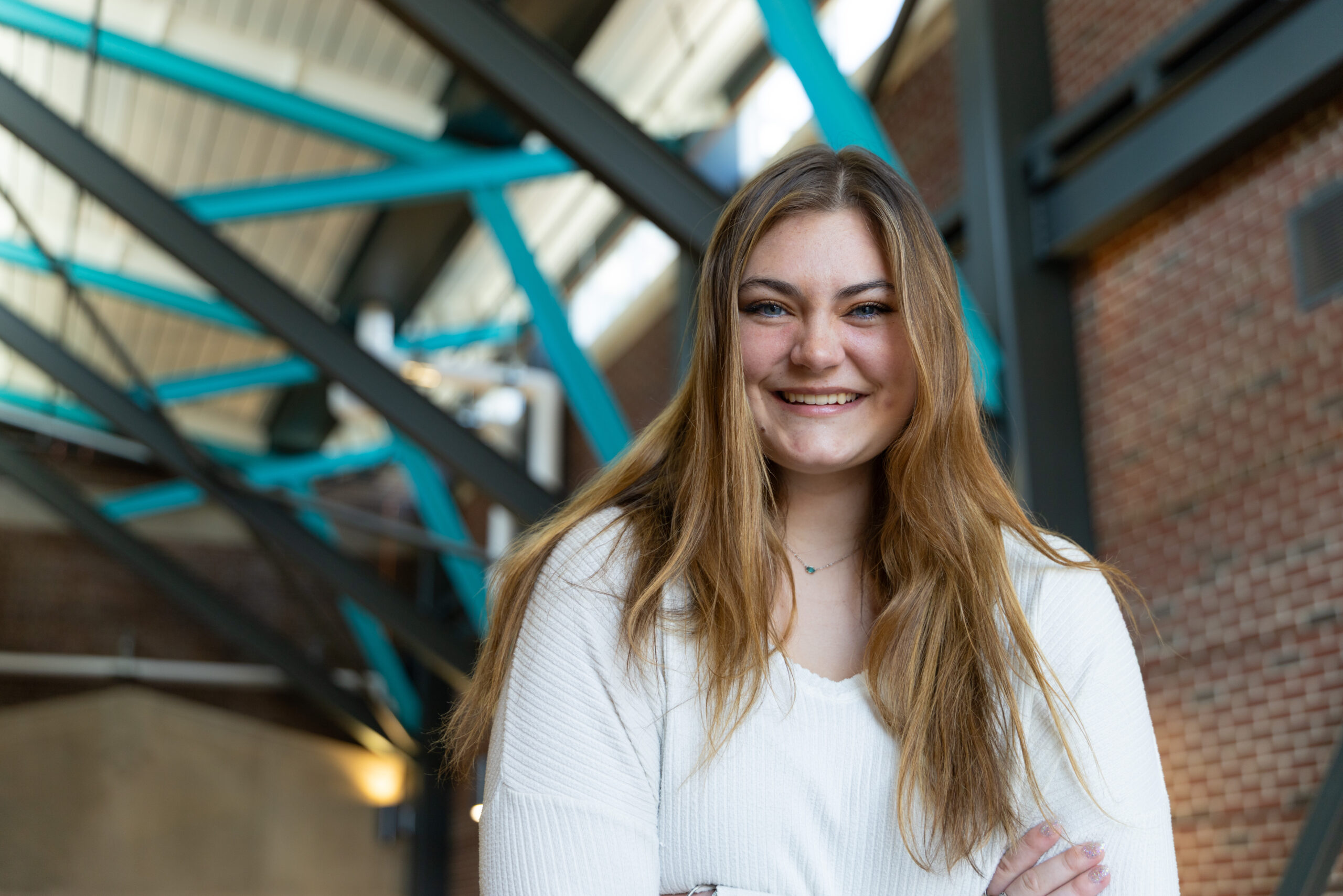
Melissa Teja, a junior majoring in anthropology, started her journey at Michigan State University (MSU) seeking a communications degree. But after taking Introduction to Archaeology and participating in a study abroad field school in Belize her freshmen year, something changed her mind.
“I cannot think of a month that went better for me, where I was constantly covered in dirt and bugs,” she said. “I loved it.”
Two years later, the College of Social Science’s Dean’s Student Advisory Council named Teja the recipient of the 2025 Undergraduate Research Award.
“Archaeology and anthropology involve listening to people’s stories through data and ethnography, and sharing those stories with the world,” Teja said. “I love using data to tell people’s stories.”
Recently, Teja was awarded two research scholarships through the College of Social Science: the Dean’s Assistantship and the Andrew Undergraduate Fellowship. The funding will support Teja’s research in creating a geographic information system (GIS) map for an archaeological site in Sarteneja, Belize. GIS is a type of map that enables researchers to visualize, analyze, and interpret spatial data in ways that were once challenging or unattainable.
“It was exciting to share my project and get support from the college,” Teja said.
Teja will share her findings from this project at the Society for American Archaeology’s (SAA) annual meeting next year. At the end of April, Teja will travel to Denver, Colorado for the 2025 SAA meeting to present her current research project, “Estimation of Sex by Discriminant Function Analysis for Maya Skeletal Remains,”which was funded through a 2024-2025 Provost’s Undergraduate Research Initiative (PURI) from the College of Social Science.
“There’s this really cool opportunity to have an open dialogue in research where you learn from other people, and then you can adapt that,” she said.
MSU has provided Teja numerous opportunities to engage with the research community including her new role as an Undergraduate Research Ambassador, which she will start this fall. Ambassadors work with MSU’s Undergraduate Research Office and assist students in navigating research.
“So many people are involved in amazing projects here on campus and I am excited to help connect students with these opportunities,” Teja said. “I love being a part of a university that values research.”
Last week, we had the opportunity to visit Dr. Monir Moniruzzaman’s Medical Anthropology class during student presentations. Claire Siegert, a sophomore anthropology student, and her group presented on a case study discussing global health issues and programs. Discover her story and learn how this class broadened her perspectives.
What interested you about obtaining a degree in anthropology?
When I started at MSU I hadn’t thought I would be obtaining a degree in anthropology. It had been a lifelong interest, but I didn’t know much about it as a career path or the sort of research it involved. I started at MSU as an environmental biology/zoology major. I didn’t really know what I wanted, but I knew science. Both my parents are entomologists and many family friends growing up were other scientists, so I figured that was the direction I would go in as well. That changed my first semester at MSU. I took an entry level ISS class that was about animals in society. It had been recommended to me by my advisor as a class many people in my major enjoyed. The class opened my eyes to the scope of anthropological research and realized that this is what I wanted to do. I changed my major to anthropology that winter break, choosing to minor in the environment and health in hopes of continuing my interest in both science and the humanities.
What about Dr. Monir’s class do you most enjoy?
I really enjoy the subject of the class itself and think Dr. Monir structures it in a way that allows for the coverage of so many different ideas and case studies to be included and easily comprehensible. Most of all, I think I enjoy the articles and case studies we read for the class because they allow for a different perspective and deeper understanding of not only medicine itself, but also culture and how the two interact. Medicine shapes culture and culture shapes medicine. Dr. Monir does a good job at explaining how culture and medicine interact and the potential consequences of the separation of culture and medicine and how this has shaped our modern world.
What insights/key ideas did you gain and hope your peers took away from your presentation?
I think this presentation helped me understand that there is no easy or right answer to issues involving medicine across cultures. From a Western perspective, the answer to some of these things seem obvious, but that’s not the case because the Western perspective is not the only perspective, but rather one of many. I hope that the presentation made my peers look at these problems from a different perspective. What is seen as abuse and mutilation in the West is a female coming of age ceremony for various ethnic groups in Africa and Asia and there is no easy solution to this issue. If we say that these ethnic groups are no longer allowed to practice this coming of age ceremony we are not only enforcing our own views upon other cultures, but we also risk putting the people who undergo this ritual in more danger by forcing them to turn to illegal methods, surgeries done in poor and unsanitary conditions, increasing the possibilities of infections post operation among other things. I hope that this made my peers understand that there are multiple perspectives in every situation and that right and wrong depend on who is asked.
An interdisciplinary team comprising of faculty and doctorial students from the Department of Anthropology and Computer Science and Engineering, have found a way to use artificial intelligence (AI) to help forensic anthropologists identify individuals faster and more efficiently.
Radiograph showing the four regions of interest (ROIs) evaluated in this research, thoracic vertebrae 1-5 (green), entire vertebral column (blue), and clavicles (pink), and the overall radiograph.
Members of the Michigan State University Forensic Anthropology Lab (MSUFAL), including Dr. Carolyn Isaac, Dr. Todd Fenton, Dr. Joseph Hefner, and doctoral student Alexis VanBaarle, co-authored a new study which analyzed over 5,000 chest radiographs, identifying different regions of interest (ROIs) that aid in identifying a person. The study used deep neural networks, a type of AI program, which allow for large numbers of radiographs to be analyzed in a fraction of the time.
“In mass fatality situations when a large number of individuals require identification, this system can assist by short-listing potential matches for a practitioner to visually assess,” Isaac said. “It can do this for over 1,800 radiographs in 17 seconds rather than the 30 to 60 hours it would take a human practitioner.”
Isaac shared that this research could also be used in unidentified or missing person databases to propose potential matches for consideration which helps reduce practitioner bias.
“These (deep neural networks) compare target radiographs to thousands of others to find the most likely matches,” Isaac said. “This research shows how AI can be used to enhance forensic casework by making tasks more efficient.”
This AI approach is the first of its kind to evaluate how different ROIs within radiographs can be used for human identification in forensic contexts.
“There has not been this type of application previously, so it is showing the computer science world how forensics uses radiographs differently than the medical field, which primarily uses them to diagnose disease,” she said.
Isaac said she has enjoyed collaborating with the team of researchers to develop this approach which includes Dr. Arun Ross and Redwan Sony of the iPROBE Lab in Computer Science and Engineering.
“I love when we are brainstorming on the project and get to see the unique perspectives of computer science versus the domain experts in forensic anthropology,” Isaac said.
According to Defense POW/MIA Accounting Agency (DPAA), approximately 81,096 military personnel remain unaccounted for. Allison Thomson wants to change that.
Thomson, senior anthropology undergraduate at Michigan State University (MSU), was selected for an internship with the DPAA in Omaha, Nebraska. Out of 135 applications, Thomson was one of six students selected.
“I was incredibly excited because I knew it was competitive, but it will be a great opportunity and provide me with valuable experience,” Thomson said.
DPAA works to identify the thousands of missing military personnel by collaborating with military members, historians, life support specialists, language interpreters, anthropologists, archaeologists, DNA specialists and others to assist in making a positive identification.
Dr. Joe Hefner, associate professor of forensic anthropology for MSU’s Department of Anthropology said he couldn’t be prouder to hear Thomson was selected.
“As a mentor and educator, seeing a student like Allison earn such a competitive internship is both a proud moment and a testament to her hard work and dedication,” Hefner said. “I know this is going to be a transformative experience for her.”
Before joining MSU, Hefner was the Forensic Anthropology Laboratory Manager for the DPAA.
“Interns at the DPAA are not only exposed to cutting-edge forensic anthropology, but they also gain an understanding of the historical, cultural, and ethical significance of identification work in a military setting,” Hefner said. “This opportunity will help Allison develop her technical skills, broaden her understanding of the interdisciplinary nature of forensic anthropology and build connections with professionals in this small field.”
Thomson said she is excited about the hands-on experience, especially developing skills in osteology and archival work.
“Having access to the world’s largest forensic anthropology lab and their resources will be amazing for understanding different approaches in the field and learning from experts through real-world experience,” she said.
Thomson will be graduating this spring after completing her degree in three years. This coming fall she will be attending graduate school in London, England at University College London working toward a masters in anthropology.
Currently, Thomson is in her second year of serving as the president of the Undergraduate Anthropology Club and as the department of anthropology’s representative on the Dean’s Student Advisory Council within the college of social science. Additionally, she is working in both the bioarchaeology and forensic anthropology labs on campus. For the past two summers, Thomson has traveled internationally participating in the Belize Archaeology Field School and London Forensic Study Abroad program.
“MSU and the Department of Anthropology have so many resources,” Thomson said. “The faculty genuinely want you to succeed and get involved in everything, so it’s important not to be afraid to reach out.”
Thomson expressed how grateful she was for the faculty, graduate students and others who have supported her journey at MSU.
“Many people encouraged me to take advantage of various opportunities, and those experiences have helped me get to where I am today,” she said.
During the 1990s, in response to a debt crisis, the Belizean government looked to generate revenue by exploiting its natural resources. The government issued concessions for logging and oil exploration on lands claimed by the Maya. The state also established protected areas to attract ecotourists on lands claimed by Maya communities.
Medina said that these events were unfolding alongside efforts by Indigenous activists to win recognition for Indigenous rights on a global scale, a process covered in the book. As they engaged in this international movement, Belizean Maya leaders found allies from North America who helped them petition the Belizean courts to demand that the government rescind the concessions and recognize these lands as belonging to the Maya communities. When the government ignored their lawsuit, the Maya and their allies took the case to the Inter-American Commission on Human Rights. The case was one of the first Indigenous land rights cases decided by the commission and it played an important role in developing a jurisprudence on Indigenous rights to lands in the Americas. In 2004, the Inter-American Commission on Human Rights ruled in favor of the Maya.
“The most important part of the commission’s decision was the determination that Maya communities’ practice of customary tenure to manage these lands – essentially their practice of culture – rendered those lands Maya collective property.” Medina said. “It didn’t matter if the Belizean government didn’t recognize these lands as Maya property under the state property system.”
Medina was surprised by the enthusiasm of legal experts expressed toward these judicial decisions compared to their reception in Belize.
“The decision set important precedents and they were cited in petitions and decisions from across Latin America that came later,” Medina said. “It was game-changing, but in Belize, the decision was simply not implemented.”
In response, Maya communities returned to the Belizean courts, which affirmed the decision that Maya communities’ practice of customary tenure over the lands they claimed made these lands Maya property. After a decade of litigation, Belizean courts demanded that the executive branch recognize and protect this property, just as the government protects property created through the state property system. However, these legal decisions have still not been fully implemented.
Medina’s book explores the strategies pursued by Maya leaders to advance implementation and by state actors to hinder it. She said that unlike many Indigenous communities in Latin America, Maya communities in southern Belize continue to reside on the lands they claim and continue to manage those lands through their customary tenure practices despite the government’s continued failure to officially grant them titles.
“It’s the practice of customary tenure that brings the community into existence and continues to reproduce it,” Medina said. “As long as that continues to be the case, those communities have stability that many other Indigenous communities in Latin America lack.”
Preserving Maya culture matters greatly to Filberto Rash and Dr. Gabriel Wrobel.
Rash, a Q’eqchi’ Maya and principal of the Tumul K’in Center of Learning in the Toledo District of Belize, spent a week on campus in January as a guest of Wrobel, a professor and associate chair of the Department of Anthropology. The two collaborate through Wrobel’s public archaeology work in Belize.
Through his school, Rash expands educational opportunities for Maya youth, focusing on the preservation of Maya culture for future generations. Wrobel sees their partnership as a natural extension of his commitment to public archaeology.
“Rash’s work is deeply rooted in cultural revitalization among Maya communities in southern Belize,” Wrobel said. “Together, we are exploring ways my research on Maya history can meaningfully engage with descendant communities in valuable and supportive ways.”
During his visit, Rash met with students and faculty from the departments of anthropology and psychology, as well as the College of Education. He delivered a presentation, “Embracing Maya Heritage: Creating Sustainable Development Through Intercultural Education,” organized by the Center for Latin American and Caribbean Studies. His talk highlighted the rich culture of the Toledo District and his school’s efforts to empower marginalized Maya youth.
“We share these traditions with the students so that we do not lose these practices,” Rash said during his presentation. “If we continue to lose our culture, we will cease to exist.”
Rash explained that the school’s name, meaning “a new day” or “a new beginning” in the Mopan language, was chosen to give students without educational opportunities a fresh start. With high poverty rates in Toledo, many had not been attending school, but with the establishment of the learning center, Rash believes there is hope for the future.
“Even if the students don’t further their education beyond the learning center, there’s a hope that they can use the skills they have learned to start a business on their own when they return to their community,” Rash said in an interview. “That was the biggest dream that ever came true for the Maya people in the Toledo District.”
Wrobel emphasized that a key aspect of their collaboration effort involves amplifying and acknowledging Maya heritage as part of their ongoing fight for land rights.
“By integrating archaeological research with community-driven priorities, we aim to reinforce their cultural identity while providing tangible support for their advocacy efforts,” Wrobel said.
Wrobel also noted the enthusiasm of the MSU community for Rash’s work.
“His school is small and underfunded, and I don’t think he realized that his work would be so well-received outside of his local community,” Wrobel said. “It appears he has connected with new partners here at MSU and I’m looking forward to helping foster those relationships in any way I can.”
Associate Professor Dr. Heather Howard of Michigan State University’s Department of Anthropology has always been interested in the politics of food.
“I’ve long been interested in the socio-cultural dimensions of nourishment and how these connect to knowledge about illness and disease,” Howard said.
Howard is part of Wiba Anung—a collaborative partnership between MSU and the Inter-Tribal Council of Michigan who support the health and well-being of indigenous children and families in Michigan. Their research on how Indigenous communities foster cultural, intergenerational, and communal connections is recently published in ScienceDirect.
“We emphasized the importance of Indigenous Knowledge around food and its ties to land, spiritual well-being, reciprocal responsibilities and community connections, which support the healthy development of Indigenous children and advance scholarly understanding of early childhood development,” Howard said.
Collage of PhotoVoice images illustrating Honesty.
Wiba Anung used a method called PhotoVoice, in which participants photographed and shared their experiences. These photos helped prioritize the perspectives of Indigenous families and provided insight into their lived experiences. This method illustrated how traditional practices, such as food-and land-based activities, help children from Indigenous families grow and develop. The study found that many important traditions and lessons were passed down to children through everyday activities.
A key way children in Michigan’s Indigenous communities learn is through observation. This way of learning is called gikinawaabi in the Ojibwe language.
Howard facilitated a podcast titled “Indigenous Food Sovereignty and Our Relational Responsibilities” which featured Ann Cameron, Head Start director with the Inter-Tribal Council of Michigan. Cameron, a co-writer on the publication with Howard, explained that a curriculum called 13 Moons, helps facilitate gikinawaabi methods.
“Kids will participate in learning activities, not only about nutrition, but how they as individuals relate to their own culture and community,” Cameron said.
The research identified three main themes. These included cultural connections, intergenerational connections and connections to community responsibilities through protocol.
“Through the participants’ shared photos, we found themes highlighting decolonization through cultural reclamation, healing in action, and the resources and challenges involved in these efforts,” Howard said.
Howard added that this research is being applied by organizations advocating for appropriate federal policy and legislation for tribal early childhood education programs.